GALLUP NEWS SERVICE
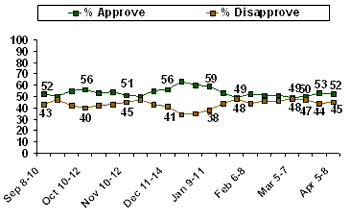
PRINCETON, NJ -- A new Gallup survey finds a significant worsening of Americans' attitudes about the war in Iraq, with a large majority now saying that things are going badly in the war and nearly 3 in 10 willing to withdraw all troops from the country. The poll also shows that Massachusetts Sen. John Kerry and President George W. Bush are essentially tied in the presidential contest, with Kerry enjoying a two-point lead among registered voters, and Bush a three-point lead among likely voters -- both leads within the poll's margin of error. Bush's approval rating of 52% is not much changed from the 53% he received two weeks ago.
The poll, conducted April 5-8, shows that 64% of Americans believe things in Iraq are going either "very badly" (33%) or "moderately badly" (31%) for the United States, up from 43% who felt that way a month ago. Just 35% believe things are going either "very well" or "moderately well," down from 55% in March.
| In general, how would you say things are going for the U.S. in Iraq -- very well, moderately well, moderately badly, or very badly? |
 |
This is the most negative reading measured by Gallup since the war began last year, even worse than the reading last November before the capture of Saddam Hussein.
At the same time, more people are questioning whether the war should have been launched at all. The poll shows close to an evenly divided public, with 50% saying that "all in all" it was worth going to war in Iraq, and 47% saying it was not. Fifty-six percent said the war was worth it in the March 26-28 CNN/USA Today/Gallup poll.
| All in all, do you think it was worth going to war in Iraq, or not? |
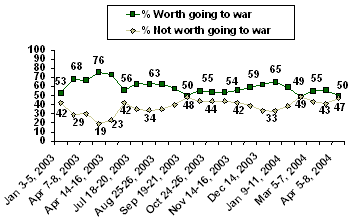 |
On two previous occasions, Gallup has measured an evenly divided public on this issue -- in late January immediately following the Iowa caucuses and the New Hampshire primary, and last September.
Perhaps the most significant change in the public's attitudes is on the question of withdrawal of troops. The poll shows that 46% of Americans would prefer to begin withdrawing U.S. troops from Iraq, including 28% who want to withdraw all of them -- up from 16% who expressed that view in a Jan. 2-5 poll. Another 18% want to withdraw "some" troops, while 29% want to keep the same number in Iraq that are there now, and 20% want more troops.
| Send More Troops, Keep the Number of Troops the Same, Withdraw Some, or Withdraw All Troops? |
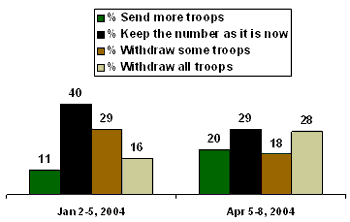 |
Given recent fighting in Iraq, some liberal and conservative commentators have suggested that the United States must either increase the number of troops to provide more security, or withdraw. The public is more disposed to withdrawing (46%) than increasing troops (20%), though public sentiment could become more supportive if the president decides to make the case for additional forces.
Kerry and Bush Tied
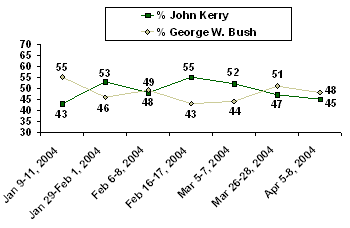
The poll shows that Bush's lead over Kerry among likely voters is three percentage points, 48% to 45%, just a percentage point less than the 51% to 47% margin Bush enjoyed two weeks ago.
| Trial Heat George W. Bush vs. John Kerry Based on likely voters |
 |
Among registered voters, Kerry holds a two-point lead, 48% to 46%. Bush had a three-point lead two weeks ago, 49% to 46%. These changes are not statistically significant.
| Trial Heat George W. Bush vs. John Kerry Based on registered voters |
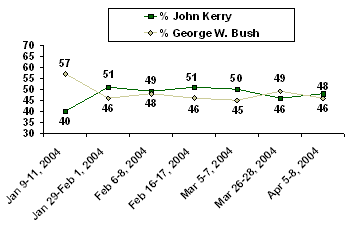 |
Both Bush's and Kerry's leads are within the poll's margin of error, suggesting the race is essentially tied.
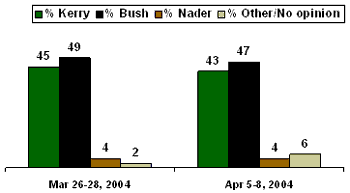
With independent Ralph Nader in the race, Bush enjoys a four-point lead over Kerry among likely voters, one point higher than if Nader were not in the race. Again, the change from the poll two weeks ago is minimal.
| Trial Heat Kerry, Bush, and Nader Based on likely voters |
 |
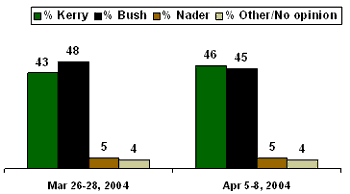
With Nader in the race, Kerry enjoys a one-point lead over Bush among registered voters, a point less than Kerry's lead when Nader's name is not included in the ballot. Two weeks ago, with Nader in the race, Bush had a five-point lead over Kerry among registered voters. All of these changes are not statistically significant.
| Trial Heat Kerry, Bush, and Nader Based on registered voters |
 |
Bush's approval rating continues near the 50% level, where it has been for the past two months, essentially since the beginning of the Democratic Party's caucuses and primaries.
| George W. Bush's Job Approval Rating September 2003 -- Present |
 |
Survey Methods
Results are based on telephone interviews with 1,014 national adults, aged 18 and older, conducted April 5-8, 2004. For results based on the total sample of national adults, one can say with 95% confidence that the margin of sampling error is ±3 percentage points.
Results based on likely voters are based on the subsample of 589 survey respondents deemed most likely to vote in the November 2004 General Election, according to a series of questions measuring current voting intentions and past voting behavior. For results based on the total sample of likely voters, one can say with 95% confidence that the margin of sampling error is ±4 percentage points. The likely voter model assumes a turnout of roughly 50% of national adults, consistent with recent presidential elections. The likely voter sample is weighted down to match this assumption.
For results based on the sample of 904 registered voters, the maximum margin of sampling error is ±4 percentage points.
In addition to sampling error, question wording and practical difficulties in conducting surveys can introduce error or bias into the findings of public opinion polls.
If Massachusetts Senator John Kerry were the Democratic Party's candidate and George W. Bush were the Republican Party's candidate, who would you be more likely to vote for -- [ROTATED: John Kerry, the Democrat (or) George W. Bush, the Republican]?
2A. As of today, do you lean more toward -- [ROTATED: Kerry, the Democrat (or) Bush, the Republican]?
|
|
|
NEITHER (vol.) |
OTHER |
No |
|
|
% |
% |
% |
% |
% |
|
|
Likely Voters |
|||||
|
2004 Apr 5-8 |
45 |
48 |
4 |
1 |
2 |
|
2004 Mar 26-28 |
47 |
51 |
1 |
-- |
1 |
|
2004 Mar 5-7 |
52 |
44 |
2 |
1 |
1 |
|
2004 Feb 16-17 |
55 |
43 |
1 |
* |
1 |
|
2004 Feb 6-8 |
48 |
49 |
1 |
* |
2 |
|
2004 Jan 29-Feb 1 |
53 |
46 |
* |
-- |
1 |
|
2004 Jan 9-11 |
43 |
55 |
1 |
* |
1 |
|
Registered Voters |
|||||
|
2004 Apr 5-8 |
48 |
46 |
3 |
1 |
3 |
|
2004 Mar 26-28 |
46 |
49 |
2 |
* |
3 |
|
2004 Mar 5-7 |
50 |
45 |
2 |
1 |
2 |
|
2004 Feb 16-17 |
51 |
46 |
2 |
* |
1 |
|
2004 Feb 6-8 |
49 |
48 |
1 |
* |
2 |
|
2004 Jan 29-Feb 1 |
51 |
46 |
1 |
-- |
2 |
|
2004 Jan 9-11 |
40 |
57 |
2 |
-- |
1 |
|
2003 Nov 10-12 |
46 |
52 |
1 |
-- |
1 |
|
2003 Sep 19-21 |
48 |
47 |
2 |
1 |
2 |
|
National Adults |
|||||
|
2004 Apr 5-8 |
46 |
47 |
3 |
1 |
3 |
|
2004 Mar 26-28 |
46 |
48 |
3 |
* |
3 |
|
2004 Mar 5-7 |
50 |
45 |
3 |
* |
2 |
|
2004 Feb 16-17 |
51 |
44 |
3 |
* |
2 |
|
2004 Feb 6-8 |
48 |
48 |
2 |
* |
2 |
|
2004 Jan 29-Feb 1 |
52 |
44 |
2 |
-- |
2 |
|
2004 Jan 9-11 |
40 |
57 |
2 |
-- |
1 |
|
2003 Nov 10-12 |
44 |
53 |
1 |
-- |
2 |
|
2003 Sep 19-21 |
47 |
48 |
2 |
1 |
2 |
|
* Less than 0.5% |
|||||
|
(Vol.) Volunteered response |
|||||
3. Now suppose Ralph Nader runs as an independent candidate, who would you be most likely to vote for-- [ROTATED: Kerry, the Democrat, Bush, the Republican,(or) Nader, the independent]?
3A. As of today, do you lean more toward -- [ROTATED: Kerry, the Democrat, Bush, the Republican,(or) Nader, the independent]?
|
|
|
|
NONE (vol.) |
OTHER |
No |
|
|
% |
% |
% |
% |
% |
||
|
Likely Voters |
||||||
|
2004 Apr 5-8 |
43 |
47 |
4 |
2 |
1 |
3 |
|
2004 Mar 26-28 |
45 |
49 |
4 |
1 |
-- |
1 |
|
2004 Mar 5-7 |
50 |
44 |
2 |
1 |
1 |
2 |
|
Registered Voters |
||||||
|
2004 Apr 5-8 |
46 |
45 |
5 |
2 |
* |
2 |
|
2004 Mar 26-28 |
43 |
48 |
5 |
1 |
-- |
3 |
|
2004 Mar 5-7 |
47 |
45 |
5 |
1 |
* |
2 |
|
National Adults |
||||||
|
2004 Apr 5-8 |
45 |
45 |
5 |
2 |
1 |
2 |
|
2004 Mar 26-28 |
44 |
46 |
7 |
1 |
-- |
2 |
|
2004 Mar 5-7 |
47 |
44 |
5 |
1 |
1 |
2 |
|
* Less than 0.5% |
||||||
|
(Vol.) Volunteered response |
||||||
41. All in all, do you think it was worth going to war in Iraq, or not?
|
Worth |
Not worth |
No |
||
|
% |
% |
% |
||
|
2004 Apr 5-8 |
50 |
47 |
3 |
|
|
2004 Mar 26-28 |
56 |
41 |
3 |
|
|
2004 Mar 5-7 |
55 |
43 |
2 |
|
|
2004 Jan 29-Feb 1 |
49 |
49 |
2 |
|
|
2004 Jan 9-11 |
59 |
38 |
3 |
|
|
2003 Dec 15-16 ^ † |
65 |
33 |
2 |
|
|
2003 Dec 14 †‡? |
62 |
33 |
5 |
|
|
2003 Dec 5-7 † |
59 |
39 |
2 |
|
|
2003 Nov 14-16 † |
56 |
42 |
2 |
|
|
2003 Nov 3-5 † |
54 |
44 |
2 |
|
|
2003 Oct 24-26 † |
54 |
44 |
2 |
|
|
2003 Oct 6-8 † |
55 |
44 |
1 |
|
|
2003 Sep 19-21 † |
50 |
48 |
2 |
|
|
2003 Sep 8-10 † |
58 |
40 |
2 |
|
|
2003 Aug 25-26 † |
63 |
35 |
2 |
|
|
2003 Jul 25-27 † |
63 |
34 |
3 |
|
|
2003 Jul 18-20 † |
63 |
35 |
2 |
|
|
2003 Jun 27-29 † |
56 |
42 |
2 |
|
|
2003 Apr 14-16 †‡ |
73 |
23 |
4 |
|
|
2003 Apr 9 †‡? |
76 |
19 |
5 |
|
|
2003 Apr 7-8 †‡ |
67 |
30 |
3 |
|
|
2003 Mar 24-25 †‡ |
68 |
29 |
3 |
|
|
2003 Jan 3-5 †‡ |
53 |
42 |
5 |
|
|
^ |
Asked of a half sample. |
|||
|
† |
WORDING: All in all, do you think the situation in Iraq was worth going to war over, or not? |
|||
|
‡ |
WORDING: All in all, do you think the current situation in Iraq is worth going to war over, or not? |
|||
|
? |
Polls conducted entirely in one day, such as this one, are subject to additional error or bias not found in polls conducted over several days. |
|||
Trends for Comparison
|
Worth |
Not worth |
No |
||
|
% |
% |
% |
||
|
1998 Feb 20-22 |
57 |
36 |
7 |
|
|
Persian Gulf War |
||||
|
1991 Jan 30-Feb 2 ^ |
71 |
24 |
5 |
|
|
1991 Jan 11-13 † |
46 |
44 |
10 |
|
|
1991 Jan 3-6 † |
47 |
44 |
9 |
|
|
1990 Dec 13-16 † |
49 |
44 |
7 |
|
|
1990 Dec 6-9 † |
47 |
45 |
8 |
|
|
1990 Nov 29-Dec 2 † |
51 |
41 |
8 |
|
|
1990 Nov 15-18 † |
46 |
45 |
9 |
|
|
1990 Sep 27-30 † |
49 |
41 |
10 |
|
|
1990 Aug 30-Sep 2 † |
45 |
44 |
11 |
|
|
1990 Aug 23-26 † |
49 |
41 |
10 |
|
|
^ |
All in all, do you think the situation in the Middle East involving Iraq and Kuwait is worth going to war over, or not? |
|||
|
† |
All in all, is the current situation in the Mideast is worth going to war over, or not? |
|||
42. In general, how would you say things are going for the U.S. in Iraq -- [ROTATED: very well, moderately well, moderately badly, (or) very badly]?
|
Very |
Moder- |
Moder- |
Very |
No |
||
|
% |
% |
% |
% |
% |
||
|
2004 Apr 5-8 |
5 |
30 |
31 |
33 |
1 |
|
|
2004 Mar 5-7 |
9 |
46 |
28 |
15 |
2 |
|
|
2003 Nov 3-5 ^ |
4 |
34 |
34 |
27 |
1 |
|
|
2003 Oct 6-8 ^† |
6 |
36 |
34 |
24 |
* |
|
|
2003 Sep 8-10 ^ |
6 |
41 |
31 |
21 |
1 |
|
|
2003 Aug 25-26 ^ |
6 |
44 |
30 |
19 |
1 |
|
|
2003 Jul 25-27 ^ |
10 |
46 |
28 |
15 |
1 |
|
|
2003 Jul 18-20 ^ |
6 |
48 |
30 |
15 |
1 |
|
|
2003 Jun 27-29 ^ |
5 |
51 |
29 |
13 |
2 |
|
|
2003 May 30-Jun 1 ^ |
11 |
59 |
22 |
7 |
1 |
|
|
2003 May 5-7 ^† |
30 |
56 |
10 |
3 |
1 |
|
|
2003 Apr 22-23 ^† |
21 |
64 |
12 |
2 |
1 |
|
|
^ |
WORDING: How would you say things are going for the U.S. in Iraq now that the major fighting has ended -- [ROTATED: very well, moderately well, moderately badly, (or) very badly]? |
|||||
|
† |
Asked of a half sample. |
|||||
43. Which comes closest to your view about what the U.S. should now do about the number of U.S. troops in Iraq -- [ROTATED: the U.S. should send more troops to Iraq, the U.S. should keep the number of troops as it is now, the U.S. should withdraw some troops from Iraq, (or) the U.S. should withdraw all of its troops from Iraq]?
|
Send |
Keep as |
With- |
With- |
No |
|
|
% |
% |
% |
% |
% |
|
|
2004 Apr 5-8 |
20 |
29 |
18 |
28 |
5 |
|
2004 Jan 2-5 |
11 |
40 |
29 |
16 |
4 |
|
2003 Dec 15-16 |
14 |
40 |
27 |
15 |
4 |
|
2003 Dec 5-7 |
22 |
33 |
25 |
17 |
3 |
|
2003 Nov 3-5 ^ |
17 |
32 |
29 |
19 |
3 |
|
2003 Oct 24-26 ^ |
14 |
27 |
39 |
18 |
2 |
|
2003 Aug 25-26 ^ |
15 |
36 |
32 |
14 |
3 |
|
^ WORDING: Which comes closest to your view about what the U.S. should now do about the number of U.S. troops in Iraq -- [ROTATED: the U.S. should send more troops to Iraq, the U.S. should keep the number of troops as it is now, the U.S. should begin to withdraw some troops from Iraq, (or) the U.S. should withdraw all of its troops from Iraq]? |
|||||