Polling Matters
Explore Gallup's research.

A sophisticated poll watcher's guide to interpreting survey research on religion in America.
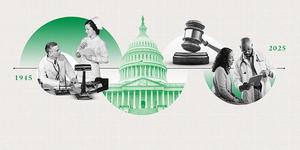
Eight decades of polling offers important lessons about the kinds of healthcare reforms Americans are willing to support.

Americans' ratings of the seriousness of crime nationally continue to be much more negative than their perceptions of crime at home.

Americans have become more liberal on many moral and values issues over the past quarter century, but with some signs of a leveling off in recent years.
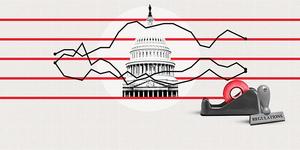
Over half of Americans say there is about the right amount of or too little government regulation of business.
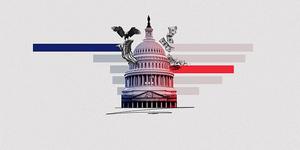
Americans who name the government as the nation's top problem have widely differing explanations, depending on their political identity.

Americans' views on deporting immigrants who are in the U.S. illegally are complex, reflecting the complexity of the issue itself.
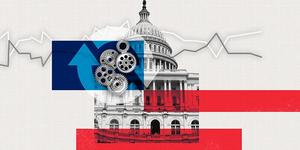
Americans generally support the concept of making the government more efficient and more limited in scope.
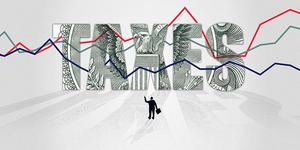
While a majority of Americans say their federal taxes are too high, these views vary significantly by partisanship and have varied widely over time.

Protestants and highly religious Americans, traditionally Israel's most sympathetic supporters, are shrinking in size.

Americans support strict border control and fair pathways for immigrants entering the U.S. illegally. Public opinion favors both deportation and citizenship options.
Americans' lessened confidence in society's institutions and norms may affect society's ability to deal with crucial external and internal threats.

Trends measuring Americans' values need to be analyzed in the context of differences in question wording and changes in methodology.

Despite declining fertility and marriage rates, Americans want to have children and to be married.

Recent Gallup data confirm a significant and growing relationship between religiosity and partisan identity in the U.S.
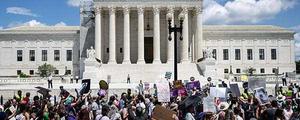
Recent Supreme Court decisions may have conflicting impacts on Americans' overall opinion of the court.

Survey researchers face the difficult challenge of meaningfully defining and measuring evangelicals in the U.S. today.

Knowing what the public is thinking and feeling between elections is an invaluable asset in a representative democracy.

Former U.S. President Jimmy Carter has been identified as an evangelical for most of his public career, but defining exactly what that means today faces a number of challenges.
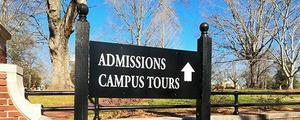
Americans value diversity in higher education but continue to oppose using race as a factor in college admissions.