GALLUP NEWS SERVICE
PRINCETON, NJ -- The transfer of governing authority in Iraq to the Iraqis last month represented a major shift in America's role and responsibilities in that country. But it has triggered no change in Americans' basic attitudes about U.S. involvement in Iraq. According to a July 8-11 Gallup survey, that assessment continues to fall somewhere between tepid and critical in nature.
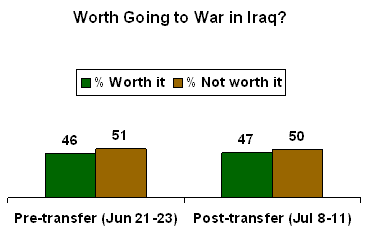
- Americans remain as divided now as they were just prior to the June 28 transfer of power over whether the U.S. military intervention in Iraq was worth it: today, 47% say it was worth going to war in Iraq; 50% say it was not worth it.
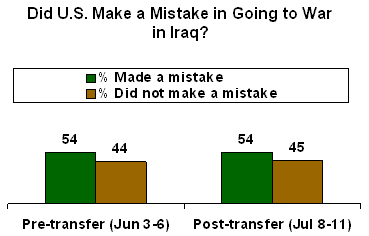
- Similarly, a slim majority -- 54% -- believes that sending U.S. troops to Iraq was a mistake, unchanged from Gallup's measure prior to the transfer of power.
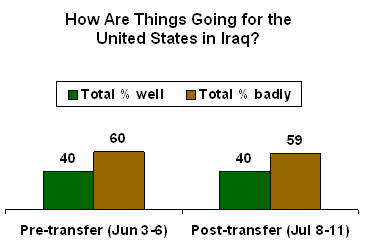
- Also, Americans are no more likely to think things are going well for the United States in Iraq than they were before the transfer. Six in 10 think things are going badly.
How U.S. Casualties Factor Into Perceptions
One might assume that perceptions of how well or badly things are going for the United States in Iraq is a direct function of the magnitude of U.S. casualties. The data suggest this was true to a point, but that criticism of U.S. involvement may have peaked last fall, once the number of casualties became a major point of controversy. It seems that mounting casualties since then may have only reinforced pre-existing public criticism, rather than causing more Americans to believe the situation in Iraq is going badly for the United States.
Nearly 900 U.S. servicemen and women have died thus far in Iraq, including roughly 650 due to hostile fire. The average number of combat deaths per month has been about 40. However, there have been three particularly bad months -- November 2003, April 2004, and May 2004 -- when the number of soldiers dying in combat was 69, 126, and 62, respectively.
The Iraq war officially started on March 19, 2003, and concluded on May 1, when President Bush declared an end to major combat. The following graph focuses on the postwar period, aligning the actual number of combat deaths each month with the percentage of Americans saying things in Iraq were going badly for the United States. (The poll data used are those collected nearest to the end of each month or the beginning of the following month.)
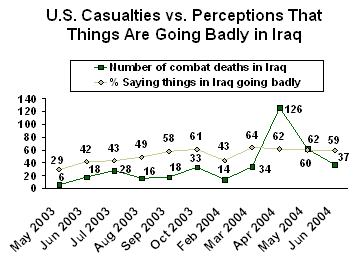
The graph suggests that initially there was some correlation between the two figures. Mounting postwar U.S. casualties from May through October 2003 were generally accompanied by a rise in the percentage of Americans saying things were going badly for the United States in Iraq.
However, despite a large jump in the casualty number in April and May 2004 -- the result of heightened Iraqi insurgent attacks on U.S. soldiers in Fallujah and elsewhere -- Gallup found no corresponding spike in the percentage of Americans saying things were going badly for the United States in Iraq.
It appears that, as long as the casualty rate remains in the range seen thus far, public willingness to say things are going badly for the United States is capped at about 60%. Thus, once that level was reached last fall -- when there was already widespread discussion about the fact that postwar casualties had exceeded wartime casualties -- even the heavy U.S. casualties this spring did not drive this negative perception up any further.
Partisan Split
Naturally, Republicans and Democrats show differing levels of willingness to say that the Iraq war is going badly. As the following graph shows, Democrats (including Democratic-leaning independents) have consistently been more negative in their assessments of the U.S. intervention in Iraq than have Republicans (including Republican leaners). In addition, both groups are much more critical of the Iraq situation now than they were in the spring and early summer of 2003. The percentage of Democrats saying things are going badly for the United States rose from 22% in April 2003 to 83% by November 2003. The trajectory among Republicans was no less steep, rising from 7% last April to 38% by November. With the exception of the March 2004 poll, both groups' assessments have remained relatively close to their November levels.
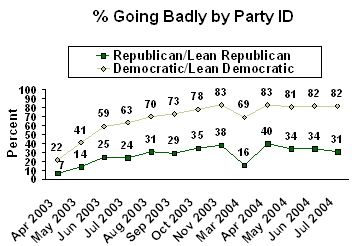
It could be that the current levels of Democratic and Republican criticism of U.S. involvement in Iraq are pushing the upper boundaries of where these figures can be expected to go. If so, this suggests that while public evaluations of the U.S. experience in Iraq could improve if the rate of casualties subsides, absent a major casualty event, these attitudes are not likely to worsen.
Survey Methods
These results are based on telephone interviews with a randomly selected national sample of 1,005 adults, aged 18 and older, conducted July 8-11, 2004. For results based on this sample, one can say with 95% confidence that the maximum error attributable to sampling and other random effects is ±3 percentage points. In addition to sampling error, question wording and practical difficulties in conducting surveys can introduce error or bias into the findings of public opinion polls.
46. All in all, do you think it was worth going to war in Iraq, or not?
BASED ON -- 491 -- NATIONAL ADULTS IN FORM A
|
|
Worth |
Not worth |
No |
|
|
|
% |
% |
% |
|
|
2004 Jul 8-11 ^ |
47 |
50 |
3 |
|
|
2004 Jun 21-23 ^ |
46 |
51 |
3 |
|
|
2004 Jun 3-6 ^ |
46 |
52 |
2 |
|
|
2004 May 21-23 ^ |
45 |
52 |
3 |
|
|
2004 May 7-9 ^ |
44 |
54 |
2 |
|
|
2004 May 2-4 |
50 |
47 |
3 |
|
|
2004 Apr 16-18 ^ |
52 |
46 |
2 |
|
|
2004 Apr 5-8 |
50 |
47 |
3 |
|
|
2004 Mar 26-28 |
56 |
41 |
3 |
|
|
2004 Mar 5-7 |
55 |
43 |
2 |
|
|
2004 Jan 29-Feb 1 |
49 |
49 |
2 |
|
|
2004 Jan 9-11 |
59 |
38 |
3 |
|
|
2003 Dec 15-16 ^ † |
65 |
33 |
2 |
|
|
2003 Dec 14 †‡♠ |
62 |
33 |
5 |
|
|
2003 Dec 5-7 † |
59 |
39 |
2 |
|
|
2003 Nov 14-16 † |
56 |
42 |
2 |
|
|
2003 Nov 3-5 † |
54 |
44 |
2 |
|
|
2003 Oct 24-26 † |
54 |
44 |
2 |
|
|
2003 Oct 6-8 † |
55 |
44 |
1 |
|
|
2003 Sep 19-21 † |
50 |
48 |
2 |
|
|
2003 Sep 8-10 † |
58 |
40 |
2 |
|
|
2003 Aug 25-26 † |
63 |
35 |
2 |
|
|
2003 Jul 25-27 † |
63 |
34 |
3 |
|
|
2003 Jul 18-20 † |
63 |
35 |
2 |
|
|
2003 Jun 27-29 † |
56 |
42 |
2 |
|
|
2003 Apr 14-16 †‡ |
73 |
23 |
4 |
|
|
2003 Apr 9 †‡♠ |
76 |
19 |
5 |
|
|
2003 Apr 7-8 †‡ |
67 |
30 |
3 |
|
|
2003 Mar 24-25 †‡ |
68 |
29 |
3 |
|
|
2003 Jan 3-5 †‡ |
53 |
42 |
5 |
|
|
|
|
|
|
|
|
^ |
Asked of a half sample. |
|||
|
† |
WORDING: All in all, do you think the situation in Iraq was worth going to war over, or not? |
|||
|
‡ |
WORDING: All in all, do you think the current situation in Iraq is worth going to war over, or not? |
|||
|
♠ |
Polls conducted entirely in one day, such as this one, are subject to additional error or bias not found in polls conducted over several days. |
|||
|
|
||||
BASED ON -- 514 -- NATIONAL ADULTS IN FORM B
|
|
Yes |
No |
No opinion |
|
Iraq |
% |
% |
% |
|
2004 Jul 8-11 |
54 |
45 |
1 |
|
2004 Jun 21-23 |
54 |
44 |
2 |
|
2004 Jun 3-6 |
41 |
58 |
1 |
|
2004 May 7-9 |
44 |
54 |
2 |
|
2004 Apr 16-18 |
42 |
57 |
1 |
|
2004 Jan 12-15 |
42 |
56 |
2 |
|
2003 Nov 3-5 |
39 |
60 |
1 |
|
2003 Oct 6-8 |
40 |
59 |
1 |
|
2003 Jul 7-9 |
27 |
72 |
1 |
|
2003 Mar 24-25 |
23 |
75 |
2 |
|
|
|
|
|
|
Afghanistan |
|
|
|
|
2002 Jan 7-9 |
6 |
93 |
1 |
|
2001 Nov 8-11 |
9 |
89 |
2 |
|
|
|
|
|
|
Yugoslavia |
|
|
|
|
1999 Jun 4-5 |
43 |
53 |
4 |
|
1999 Apr 21 |
42 |
51 |
7 |
|
|
|
|
|
|
Persian Gulf War |
|
|
|
|
1991 Jul 18-21 |
15 |
82 |
3 |
|
1991 Feb 28-Mar 3 |
10 |
87 |
3 |
|
1991 Feb 7-10 |
21 |
76 |
3 |
|
1991 Jan 30-Feb 2 |
18 |
80 |
2 |
|
1991 Jan 23-26 |
18 |
77 |
5 |
|
1991 Jan 17-20 |
16 |
80 |
4 |
|
1991 Jan 11-13 |
29 |
65 |
6 |
|
1991 Jan 3-6 |
30 |
61 |
9 |
|
1990 Dec 6-9 |
28 |
66 |
6 |
|
1990 Nov 29-Dec 2 |
29 |
66 |
5 |
|
1990 Nov 15-18 |
27 |
65 |
8 |
|
1990 Nov 8-11 |
27 |
68 |
5 |
|
1990 Nov 2-4 |
25 |
67 |
8 |
|
1990 Oct 25-28 |
24 |
71 |
5 |
|
1990 Oct 18-21 |
26 |
67 |
7 |
|
1990 Oct 11-14 |
27 |
68 |
5 |
|
1990 Oct 3-4 |
21 |
71 |
8 |
|
1990 Sep 27-30 |
20 |
73 |
7 |
|
1990 Sep 14-16 |
18 |
73 |
10 |
|
1990 Sep 10-11 |
19 |
76 |
5 |
|
1990 Aug 30-Sep 2 |
16 |
76 |
8 |
|
1990 Aug 23-26 |
18 |
76 |
6 |
|
1990 Aug 16-19 |
17 |
75 |
8 |
|
|
|
|
|
|
|
Yes |
No |
No opinion |
|
Vietnam War |
% |
% |
% |
|
2000 Nov 13-15 |
69 |
24 |
7 |
|
1995 Apr 21-24 |
71 |
23 |
6 |
|
1990 Mar 15-18 |
74 |
22 |
4 |
|
1973 Jan 12-15 |
60 |
29 |
11 |
|
1971 May 14-17 |
61 |
28 |
11 |
|
1971 Jan 8-11 |
60 |
31 |
9 |
|
1970 May 21-26 |
56 |
36 |
8 |
|
1970 Apr 2-7 |
51 |
34 |
15 |
|
1970 Jan 15-20 |
57 |
32 |
11 |
|
1969 Sep 17-22 |
58 |
32 |
10 |
|
1969 Jan 23-28 |
52 |
39 |
9 |
|
1968 Sep 26-Oct 1 |
54 |
37 |
9 |
|
1968 Aug 7-12 |
53 |
35 |
12 |
|
1968 Apr 4-9 |
48 |
40 |
12 |
|
1968 Feb 22-27 |
49 |
42 |
9 |
|
1968 Feb 1-6 |
46 |
42 |
12 |
|
1967 Dec 7-12 |
45 |
46 |
9 |
|
1967 Oct 6-11 |
47 |
44 |
9 |
|
1967 Jul 13-18 |
41 |
48 |
11 |
|
1967 Apr 19-24 |
37 |
50 |
13 |
|
1967 Jan 26-31 |
32 |
52 |
16 |
|
1966 Nov 10-15 |
31 |
52 |
17 |
|
1966 Sep 8-13 |
35 |
48 |
17 |
|
1966 May 5-10 |
36 |
49 |
15 |
|
1966 Mar 3-8 |
26 |
59 |
15 |
|
1965 Aug 27-Sep 1 |
24 |
60 |
16 |
|
|
|
|
|
|
|
Yes |
No |
No opinion |
|
Korean War |
% |
% |
% |
|
2000 Jun 6-7 |
34 |
47 |
19 |
|
1953 Jan 11-16 |
36 |
50 |
14 |
|
1952 Oct 17-22 |
43 |
37 |
19 |
|
1952 Oct 9-14 |
43 |
37 |
20 |
|
1952 Feb 28-Mar 5 |
51 |
35 |
14 |
|
1951 Aug 3-8 |
42 |
48 |
11 |
|
1951 Jun 16-21 |
43 |
40 |
17 |
|
1951 Apr 16-21 |
37 |
45 |
18 |
|
1951 Mar 26-31 |
45 |
43 |
12 |
|
1951 Feb 4-9 |
49 |
41 |
9 |
|
1951 Jan 1-5 |
49 |
38 |
13 |
|
1950 Aug 20-25 |
20 |
65 |
15 |
|
AFGHANISTAN WORDING: Do you think the United States made a mistake in sending military forces to Afghanistan, or not? |
|||
|
YUGOSLAVIA WORDING: In view of the developments since we entered the fighting in Yugoslavia, do you think the United States made a mistake sending military forces to fight in Yugoslavia? |
|||
|
PERSIAN GULF WAR WORDING (Feb. 28-Mar 3, 1991-Jul. 18-21, 1991): In view of the developments since we first sent our troops to the Persian Gulf region, do you think the United States made a mistake in sending troops to the Persian Gulf region, or not? |
|||
|
PERSIAN GULF WAR WORDING (Aug. 16-19, 1990-Feb. 7-10, 1990): In view of the developments since we first sent our troops to Saudi Arabia, do you think the United States made a mistake in sending troops to Saudi Arabia, or not? |
|||
|
VIETNAM WAR WORDING (1990-2000): Looking back, do you think the United States made a mistake sending troops to fight in Vietnam? |
|||
|
VIETNAM WAR WORDING (1965-1973): In view of the developments since we entered the fighting in Vietnam, do you think the U.S. made a mistake sending troops to fight in Vietnam? |
|||
|
KOREAN WAR WORDING (2000): Based on what you have heard or read, do you think the United States made a mistake in going into the war in Korea, or not? |
|||
|
KOREAN WAR WORDING (Feb. 1951-Jan. 1953): Do you think the United States made a mistake in going into the war in Korea, or not? |
|||
|
KOREAN WAR WORDING (Aug. 1950-Jan. 1951): In view of the developments since we entered the fighting in Korea, do you think the United States made a mistake in deciding to defend Korea, or not? |
|||
48. In general, how would you say things are going for the U.S. in Iraq -- [ROTATED: very well, moderately well, moderately badly, (or) very badly]?
|
|
Very well |
Moderately well |
Moderately badly |
Very badly |
No |
|
|
|
% |
% |
% |
% |
% |
|
|
2004 Jul 8-11 |
5 |
35 |
30 |
29 |
1 |
|
|
|
|
|
|
|
|
|
|
2004 Jun 3-6 |
6 |
34 |
35 |
25 |
* |
|
|
2004 May 21-23 |
7 |
35 |
26 |
31 |
1 |
|
|
2004 May 2-4 |
4 |
33 |
32 |
30 |
1 |
|
|
2004 Apr 5-8 |
5 |
30 |
31 |
33 |
1 |
|
|
2004 Mar 5-7 |
9 |
46 |
28 |
15 |
2 |
|
|
2003 Nov 3-5 ^ |
4 |
34 |
34 |
27 |
1 |
|
|
2003 Oct 6-8 ^† |
6 |
36 |
34 |
24 |
* |
|
|
2003 Sep 8-10 ^ |
6 |
41 |
31 |
21 |
1 |
|
|
2003 Aug 25-26 ^ |
6 |
44 |
30 |
19 |
1 |
|
|
2003 Jul 25-27 ^ |
10 |
46 |
28 |
15 |
1 |
|
|
2003 Jul 18-20 ^ |
6 |
48 |
30 |
15 |
1 |
|
|
2003 Jun 27-29 ^ |
5 |
51 |
29 |
13 |
2 |
|
|
2003 May 30-Jun 1 ^ |
11 |
59 |
22 |
7 |
1 |
|
|
2003 May 5-7 ^† |
30 |
56 |
10 |
3 |
1 |
|
|
2003 Apr 22-23 ^† |
21 |
64 |
12 |
2 |
1 |
|
|
|
|
|
|
|
|
|
|
* Less than 0.5% |
||||||
|
^ |
WORDING: How would you say things are going for the U.S. in Iraq now that the major fighting has ended -- [ROTATED: very well, moderately well, moderately badly, (or) very badly]? |
|||||
|
† |
Asked of a half sample. |
|||||