GALLUP NEWS SERVICE
PRINCETON, NJ -- Americans say terrorism and the situation in Iraq are top priorities for Congress and President George W. Bush to address over the next year, according to the latest CNN/USA Today/Gallup poll. There have only been modest variations in the perceived importance of issues since mid-December. Republicans are more likely than Democrats to say terrorism, same-sex marriages or civil unions, and limits on lawsuits are the top priorities, while Democrats are more inclined to say healthcare costs, education, and the economy. Younger Americans are more likely than any other group to say education is important.
Overall Results
The Feb. 4-6 poll finds that terrorism and the situation in Iraq rank as the most important issues that Congress and the president must deal with over the next year, with 54% of Americans saying terrorism and 53% saying Iraq is extremely important. Following behind terrorism and Iraq are healthcare costs (49%), education (45%), the economy (44%), and Social Security (41%). At the bottom of the list are taxes (31%), same-sex marriages or civil unions (23%), and limits on lawsuits (21%).
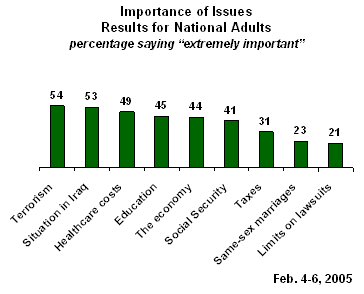
Since Gallup last asked this question on issue importance in December, there has been a noticeable increase in the perceived importance of five issues: healthcare costs (from 42% to 49%); same-sex marriages or civil unions (16% to 23%); terrorism (49% to 54%); taxes (26% to 31%); and the economy (40% to 44%).
|
Importance of Issues |
|||
|
Dec. |
Feb. |
Change, pct. pts. |
|
|
% |
% |
||
|
Healthcare costs |
42 |
49 |
+7 |
|
Same-sex marriages or civil unions |
16 |
23 |
+7 |
|
Terrorism |
49 |
54 |
+5 |
|
Taxes |
26 |
31 |
+5 |
|
The economy |
40 |
44 |
+4 |
|
The situation in Iraq |
51 |
53 |
+2 |
|
Education |
44 |
45 |
+1 |
|
Social Security |
40 |
41 |
+1 |
|
Limits on lawsuits |
22 |
21 |
-1 |
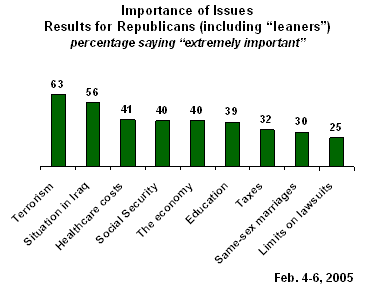
Most of these increases may reflect partisan changes. Democrats (including independents who say they "lean" to the Democratic Party) are now more inclined to say that healthcare costs (43% to 55%), education (from 44% to 52%), taxes (23% to 29%), and the economy (42% to 48%) are extremely important. Republicans (including Republican leaners) are more inclined to view terrorism (from 51% to 63%), same-sex marriages (20% to 30%), and taxes (24% to 32%) as extremely important.
Notable is the fact that there has been virtually no change in the perceived importance of Social Security -- despite the extraordinary attention it has received in the last several weeks.
Partisanship
Views on the most important issues facing Congress and the president show some variation between Republicans and Democrats.
Terrorism and the situation in Iraq are by far the top issues for Republicans. Sixty-three percent of Republicans (including Republican leaners) say terrorism is extremely important, while 56% say the situation in Iraq. Social Security, healthcare costs, the economy, and education score much lower than terrorism and Iraq, with roughly 4 in 10 Republicans saying these four issues are extremely important.
By comparison, 55% of Democrats (including Democratic leaners) say the issue of healthcare costs is extremely important, making it the top priority for Democrats. Education (52%), the situation in Iraq (51%), and the economy (48%) score only slightly lower.
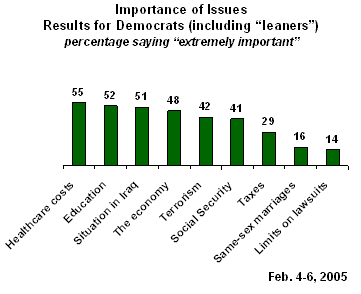
Overall, Republicans are much more likely than Democrats to say three issues are extremely important: terrorism, by a 63% to 42% margin; same-sex marriages or civil unions, by a 30% to 16% margin; and limits on lawsuits, by a 25% to 14% margin. All three of these are issues that Bush has discussed throughout his re-election campaign last year and in this year's State of the Union address.
Democrats are more likely than Republicans to say healthcare costs (55% to 41%), education (52% to 39%), and the economy (48% to 40%) are extremely important.
|
Importance of Issues |
|||
|
Republicans |
Democrats |
Difference, |
|
|
% |
% |
||
|
Terrorism |
63 |
42 |
+21 |
|
Same-sex marriage or civil unions |
30 |
16 |
+14 |
|
Limits on lawsuits |
25 |
14 |
+11 |
|
The situation in Iraq |
56 |
51 |
+5 |
|
Taxes |
32 |
29 |
+3 |
|
Social Security |
40 |
41 |
-1 |
|
The economy |
40 |
48 |
-8 |
|
Education |
39 |
52 |
-13 |
|
Healthcare costs |
41 |
55 |
-14 |
Age
The issue that scores the highest among 18- to 29-year-olds is education, while issues such as terrorism, Iraq, and healthcare costs are more salient among older Americans.
- A majority of adults aged 18 to 29 say education (57%) is extremely important. Moreover, younger Americans are much more likely than people in any other group to say that education is important. Terrorism (49%), healthcare costs (also 49%), the situation in Iraq (47%), and the economy (46%) follow closely behind.
- Among 30- to 49-year-olds, terrorism and Iraq are viewed as the most important issues, with 58% saying terrorism and 57% saying Iraq are extremely important. Next are the economy (47%), education (46%), healthcare costs (44%), and Social Security (also 44%).
- Terrorism (58%), Iraq (57%), and healthcare costs (56%) are the highest-ranking issues among adults aged 50 to 64.
- Among adults aged 65 and older, healthcare costs (49%), the situation in Iraq (48%), and terrorism (47%) are at the top of the priority list. Americans aged 65 and older are much less likely than people in any other age group to say the economy is an extremely important issue.
|
Importance of Issues |
||||
|
18- to 29- year-olds |
30- to 49- year-olds |
50- to 64- year-olds |
65 years and older |
|
|
% |
% |
% |
% |
|
|
Education |
57 |
46 |
45 |
33 |
|
Healthcare costs |
49 |
44 |
56 |
49 |
|
Terrorism |
49 |
58 |
58 |
47 |
|
The situation in Iraq |
47 |
57 |
57 |
48 |
|
The economy |
46 |
47 |
48 |
35 |
|
Social Security |
38 |
44 |
41 |
40 |
|
Taxes |
31 |
34 |
31 |
28 |
|
Same-sex marriage or civil unions |
25 |
24 |
21 |
23 |
|
Limits on lawsuits |
15 |
20 |
22 |
28 |
Gender
Women are more likely than men to rate five of the nine issues as extremely important, including terrorism, education, Iraq, the economy, and healthcare costs.
Overall, terrorism and the situation in Iraq are the two most important issues for both men and women. Healthcare costs, the economy, and education are also near the top of the list for both groups.
|
Importance of Issues |
|||
|
Men |
Women |
Difference, |
|
|
% |
% |
||
|
Same-sex marriage or civil unions |
24 |
22 |
+2 |
|
Limits on lawsuits |
22 |
20 |
+2 |
|
Social Security |
40 |
42 |
-2 |
|
Taxes |
30 |
33 |
-3 |
|
Healthcare costs |
46 |
51 |
-5 |
|
The economy |
42 |
47 |
-5 |
|
The situation in Iraq |
50 |
57 |
-7 |
|
Education |
41 |
49 |
-8 |
|
Terrorism |
49 |
60 |
-11 |
Survey Methods
These results are based on telephone interviews with 1,010 national adults, aged 18 years and older, conducted Feb. 4-6, 2005. For results based on the total sample of national adults, one can say with 95% confidence that the maximum margin of error attributable to sampling and other random effects is ±3 percentage points. In addition to sampling error, question wording and practical difficulties in conducting surveys can introduce error or bias into the findings of public opinion polls.
6. How important is it to you that the president and Congress deal with each of the following issues in the next year -- is it -- extremely important, very important, moderately important, or not that important? How about -- [ITEMS A-I ROTATED]?
A. Education
|
Extremely important |
Very important |
Moderately important |
Not that important |
No |
|
|
% |
% |
% |
% |
% |
|
|
2005 Feb 4-6 |
45 |
40 |
12 |
2 |
1 |
|
2004 Dec 17-19 ^ |
44 |
42 |
13 |
1 |
* |
|
2003 Jan 3-5 ^ |
44 |
39 |
14 |
3 |
0 |
|
2002 May 28-29 ^ |
44 |
42 |
10 |
4 |
* |
|
2002 Jan 11-14 |
46 |
38 |
14 |
2 |
* |
|
2001 Oct 5-6 |
46 |
37 |
14 |
3 |
* |
|
2001 Jun 8-10 |
61 |
32 |
6 |
1 |
* |
|
* Less than 0.5% |
|||||
|
^ Asked of a half sample. |
|||||
B. Taxes
|
Extremely important |
Very important |
Moderately important |
Not that important |
No |
|
|
% |
% |
% |
% |
% |
|
|
2005 Feb 4-6 |
31 |
40 |
24 |
4 |
1 |
|
2004 Dec 17-19 ^ |
26 |
40 |
28 |
5 |
1 |
|
2003 Jan 3-5 ^ |
28 |
37 |
29 |
5 |
1 |
|
2002 May 28-29 ^ |
26 |
39 |
27 |
5 |
3 |
|
2002 Jan 11-14 |
30 |
38 |
27 |
4 |
1 |
|
2001 Jan 10-14 |
31 |
42 |
21 |
4 |
2 |
|
^ Asked of a half sample. |
|||||
C. Same-sex marriages or civil unions
|
Extremely important |
Very important |
Moderately important |
Not that important |
No |
|
|
% |
% |
% |
% |
% |
|
|
2005 Feb 4-6 |
23 |
17 |
21 |
38 |
1 |
|
2004 Dec 17-19 ^ |
16 |
19 |
17 |
46 |
2 |
|
^ Asked of a half sample. |
|||||
D. Limits on lawsuits
|
Extremely important |
Very important |
Moderately important |
Not that important |
No |
|
|
% |
% |
% |
% |
% |
|
|
2005 Feb 4-6 |
21 |
29 |
34 |
14 |
2 |
|
2004 Dec 17-19 ^ |
22 |
30 |
28 |
19 |
1 |
|
^ Asked of a half sample. |
|||||
E. Terrorism
|
Extremely important |
Very important |
Moderately important |
Not that important |
No |
|
|
% |
% |
% |
% |
% |
|
|
2005 Feb 4-6 |
54 |
35 |
10 |
1 |
* |
|
2004 Dec 17-19 ^ |
49 |
38 |
10 |
3 |
* |
|
2003 Jan 3-5 ^ |
59 |
31 |
8 |
2 |
0 |
|
2002 May 28-29 ^ |
53 |
35 |
9 |
2 |
1 |
|
2002 Jan 11-14 |
62 |
31 |
5 |
1 |
1 |
|
2001 Oct 5-6 |
70 |
25 |
4 |
1 |
* |
|
* Less than 0.5% |
|||||
|
^ Asked of a half sample. |
|||||
F. The economy
|
Extremely important |
Very important |
Moderately important |
Not that important |
No |
|
|
% |
% |
% |
% |
% |
|
|
2005 Feb 4-6 |
44 |
44 |
11 |
1 |
* |
|
2004 Dec 17-19 |
40 |
46 |
13 |
1 |
* |
|
2003 Jan 3-5 |
49 |
42 |
8 |
1 |
* |
|
2002 May 28-29 ^ |
38 |
45 |
14 |
2 |
1 |
|
2002 Jan 11-14 |
44 |
43 |
11 |
1 |
1 |
|
2001 Oct 5-6 |
54 |
36 |
10 |
* |
* |
|
2001 Jan 10-14 |
34 |
51 |
12 |
2 |
1 |
|
* Less than 0.5% |
|||||
|
^ Asked of a half sample. |
|||||
G. The situation in Iraq
|
Extremely important |
Very important |
Moderately important |
Not that important |
No |
|
|
% |
% |
% |
% |
% |
|
|
2005 Feb 4-6 |
53 |
36 |
7 |
3 |
1 |
|
2004 Dec 17-19 ^ |
51 |
39 |
7 |
1 |
2 |
|
2003 Jan 3-5 ^ |
46 |
35 |
15 |
3 |
1 |
|
^ Asked of a half sample. |
|||||
H. Social Security
|
Extremely important |
Very important |
Moderately important |
Not that important |
No |
|
|
% |
% |
% |
% |
% |
|
|
2005 Feb 4-6 |
41 |
38 |
15 |
5 |
1 |
|
2004 Dec 17-19 ^ |
40 |
42 |
14 |
4 |
* |
|
2003 Jan 3-5 ^ |
41 |
36 |
20 |
3 |
* |
|
2002 May 28-29 ^ |
41 |
39 |
16 |
3 |
1 |
|
* Less than 0.5% |
|||||
|
^ Asked of a half sample. |
|||||
I. Healthcare costs
|
Extremely important |
Very important |
Moderately important |
Not that important |
No |
|
|
% |
% |
% |
% |
% |
|
|
2005 Feb 4-6 |
49 |
39 |
11 |
1 |
* |
|
2004 Dec 17-19 ^ |
42 |
45 |
12 |
1 |
* |
|
2003 Jan 3-5 ^ |
45 |
36 |
17 |
1 |
1 |
|
* Less than 0.5% |
|||||
|
^ Asked of a half sample. |
|||||