GALLUP NEWS SERVICE
PRINCETON, NJ -- Amid recent violence sparked by the bombing of a sacred Shiite Muslim mosque, the latest CNN/USA Today/Gallup poll finds three in four Americans saying that civil war in Iraq is likely. Fewer Americans now perceive that the United States can and will win the war in Iraq than did so in December. Meanwhile, basic support for the war is stable, with a majority saying the war was a mistake for the United States. Americans continue to favor a reduction of U.S. troop levels in Iraq, but only about one in four favor an immediate withdrawal.
According to the Feb. 28-March 1 poll, 75% of Americans think "a major civil war involving ethnic or religious groups in Iraq is likely in the next year," or is already occurring. Just 20% think a civil war is unlikely. Fears of a civil war have grown after the bombing of a Shiite Muslim mosque in Samarra, which prompted retaliatory attacks against Sunni Muslim holy sites. Seventy percent of Americans are following the news of these events closely, including 25% who are following them "very closely." Most Americans think civil war is likely, regardless of whether they are paying close attention to the news about the violence.
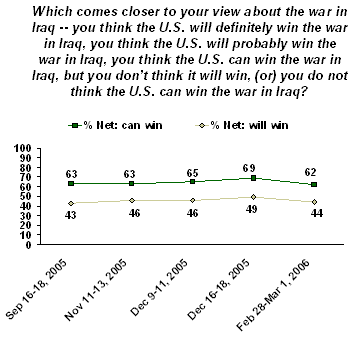
Sixty-two percent of Americans believe the United States can win the war in Iraq, down from 69% in December immediately after the Iraqi elections. The current numbers are about the same as in last September, when opposition to the war was at its highest point. Forty-four percent of Americans currently believe the United States will win the war, down from 49% in December.
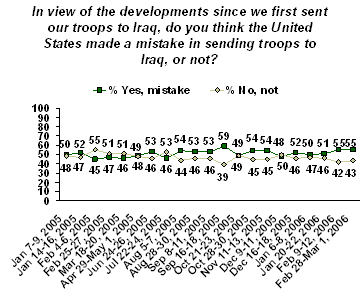
The recent violence has not affected Americans' basic support for the war. Fifty-five percent say the war with Iraq was a mistake, the same percentage who said so in early February. Those numbers are among the worst Gallup has measured since the war began, slightly lower than the highest level of anti-war sentiment (59%) measured last September.
Similarly, the public's views of appropriate U.S. troop levels in Iraq essentially have not changed since December. Roughly two in three Americans favor a reduction of troop levels -- 38% say some troops should be withdrawn and 27% say all of them should be. About one in three wants troop levels kept the same as now (23%) or increased (9%). Since September, at least 6 in 10 Americans have favored troop reductions.
Which comes closest to your view about what the U.S. should now do about the number of U.S. troops in Iraq -- [ROTATED: the U.S. should send more troops to Iraq, the U.S. should keep the number of troops as it is now, the U.S. should withdraw some troops from Iraq, (or) the U.S. should withdraw all of its troops from Iraq]?
|
Send |
Keep as |
Withdraw |
Withdraw |
No |
|
|
% |
% |
% |
% |
% |
|
|
2006 Feb 28-Mar 1 |
9 |
23 |
38 |
27 |
3 |
|
|
|
|
|
|
|
|
2005 Dec 9-11 |
9 |
25 |
38 |
26 |
2 |
|
2005 Sep 16-18 |
8 |
26 |
33 |
30 |
3 |
|
2005 Aug 28-30 |
19 |
26 |
27 |
26 |
2 |
|
2005 Aug 5-7 |
13 |
28 |
23 |
33 |
3 |
|
2005 Jun 6-8 |
10 |
26 |
31 |
28 |
5 |
|
2005 Feb 4-6 |
10 |
38 |
32 |
17 |
3 |
|
2005 Jan 14-16 |
24 |
26 |
21 |
25 |
4 |
|
2004 Sep 24-26 |
21 |
35 |
21 |
18 |
5 |
|
2004 Jun 3-6 |
18 |
30 |
23 |
27 |
2 |
|
2004 May 7-9 |
25 |
24 |
18 |
29 |
4 |
|
2004 Apr 16-18 |
33 |
25 |
16 |
21 |
5 |
|
2004 Apr 5-8 |
20 |
29 |
18 |
28 |
5 |
|
2004 Jan 2-5 |
11 |
40 |
29 |
16 |
4 |
|
2003 Dec 15-16 |
14 |
40 |
27 |
15 |
4 |
|
2003 Dec 5-7 |
22 |
33 |
25 |
17 |
3 |
|
2003 Nov 3-5 ^ |
17 |
32 |
29 |
19 |
3 |
|
2003 Oct 24-26 ^ |
14 |
27 |
39 |
18 |
2 |
|
2003 Aug 25-26 ^ |
15 |
36 |
32 |
14 |
3 |
|
^WORDING: "Which comes closest to your view about what the U.S. should now do about the number of U.S. troops in Iraq -- [ROTATED: the U.S. should send more troops to Iraq, the U.S. should keep the number of troops as it is now, the U.S. should begin to withdraw some troops from Iraq, (or) the U.S. should withdraw all of its troops from Iraq]?" |
|||||
Partisan Views of the War
It is well established that Republicans and Democrats view the war very differently. In the current poll, their opinions are basic mirror images of each other -- 78% of Republicans think the United States did not make a mistake in sending troops to Iraq, while 79% of Democrats think it did. Independents' views on this and other measures are closer to Democrats' -- 62% of independents think the war was a mistake.
Views of Iraq War as a Mistake, by Party Affiliation
|
Democrat |
Independent |
Republican |
|
|
A mistake |
79% |
62 |
21 |
|
Not a mistake |
19% |
36 |
78 |
Republicans are much more optimistic about the United States' prospects in the war. Eighty-three percent think the United States can win and 72% believe it will. By comparison, just 47% of Democrats believe the United States can win and only 29% think it will.
Views of United States' Ability to Win Iraq War, by Party Affiliation
|
Democrat |
Independent |
Republican |
|
|
Can win |
47% |
57 |
83 |
|
Will win |
29% |
33 |
72 |
Republicans and Democrats also have different views on U.S. policy toward the war. While 56% of Republicans favor keeping the same number of troops in Iraq or increasing them, only 17% of Democrats share that view. Eighty-one percent of Democrats want some troop reductions, compared with 41% of Republicans.
Views of United States' Ability to Win Iraq War, by Party Affiliation
|
Democrat |
Independent |
Republican |
|
|
% |
% |
% |
|
|
Increase troops |
6 |
7 |
15 |
|
Keep troops the same |
11 |
19 |
41 |
|
Withdraw troops |
81 |
70 |
41 |
|
(Withdraw some) |
44 |
35 |
33 |
|
(Withdraw all) |
37 |
35 |
8 |
|
|
|
|
Survey Methods
These results are based on telephone interviews with a randomly selected national sample of 1,020 adults, aged 18 and older, conducted Feb. 28-March 1, 2006. For results based on this sample, one can say with 95% confidence that the maximum error attributable to sampling and other random effects is ±3 percentage points. In addition to sampling error, question wording and practical difficulties in conducting surveys can introduce error or bias into the findings of public opinion polls.
Next, we'd like to ask you some questions about Iraq. First,
11. In view of the developments since we first sent our troops to Iraq, do you think the United States made a mistake in sending troops to Iraq, or not?
|
Yes |
No |
No opinion |
|
|
% |
% |
% |
|
|
|
|
|
|
|
2006 Feb 28-Mar 1 |
55 |
43 |
2 |
|
2006 Feb 9-12 ^ |
55 |
42 |
3 |
|
2006 Jan 20-22 |
51 |
46 |
3 |
|
2006 Jan 6-8 ^ |
50 |
47 |
3 |
|
2005 Dec 16-18 |
52 |
46 |
2 |
|
2005 Dec 9-11 |
48 |
50 |
2 |
|
2005 Nov 11-13 ^ |
54 |
45 |
1 |
|
2005 Oct 28-30 |
54 |
45 |
1 |
|
2005 Oct 21-23 |
49 |
49 |
2 |
|
2005 Sep 16-18 |
59 |
39 |
2 |
|
2005 Sep 8-11 |
53 |
46 |
1 |
|
2005 Aug 28-30 |
53 |
46 |
1 |
|
2005 Aug 5-7 ^ |
54 |
44 |
2 |
|
2005 Jul 22-24 |
46 |
53 |
1 |
|
2005 Jun 24-26 |
53 |
46 |
1 |
|
2005 Apr 29-May 1 ^ |
49 |
48 |
3 |
|
2005 Mar 18-20 ^ |
46 |
51 |
3 |
|
2005 Feb 25-27 |
47 |
51 |
2 |
|
2005 Feb 4-6 |
45 |
55 |
* |
|
2005 Jan 14-16 |
52 |
47 |
1 |
|
2005 Jan 7-9 |
50 |
48 |
2 |
|
2004 Nov 19-21 |
47 |
51 |
2 |
|
2004 Oct 29-31 ^ |
44 |
52 |
4 |
|
2004 Oct 22-24 |
47 |
51 |
2 |
|
2004 Oct 14-16 |
47 |
52 |
1 |
|
2004 Oct 9-10 ^ |
46 |
53 |
1 |
|
2004 Oct 1-3 |
48 |
51 |
1 |
|
2004 Sep 24-26 |
42 |
55 |
3 |
|
2004 Sep 3-5 ^ |
38 |
57 |
5 |
|
2004 Aug 23-25 ^ |
48 |
50 |
2 |
|
2004 Jul 30-Aug 1 |
47 |
51 |
2 |
|
2004 Jul 19-21 |
50 |
47 |
3 |
|
2004 Jul 8-11 |
54 |
45 |
1 |
|
2004 Jun 21-23 |
54 |
44 |
2 |
|
2004 Jun 3-6 |
41 |
58 |
1 |
|
2004 May 7-9 |
44 |
54 |
2 |
|
2004 Apr 16-18 |
42 |
57 |
1 |
|
2004 Jan 12-15 |
42 |
56 |
2 |
|
2003 Nov 3-5 |
39 |
60 |
1 |
|
2003 Oct 6-8 |
40 |
59 |
1 |
|
2003 Jul 7-9 |
27 |
72 |
1 |
|
2003 Mar 24-25 |
23 |
75 |
2 |
|
|
|
|
|
|
^Asked of a half sample |
|||
12. Which comes closest to your view about what the U.S. should now do about the number of U.S. troops in Iraq -- [ROTATED: the U.S. should send more troops to Iraq, the U.S. should keep the number of troops as it is now, the U.S. should withdraw some troops from Iraq, (or) the U.S. should withdraw all of its troops from Iraq]?
|
Send |
Keep as |
Withdraw |
Withdraw |
No |
|
|
% |
% |
% |
% |
% |
|
|
2006 Feb 28-Mar 1 |
9 |
23 |
38 |
27 |
3 |
|
|
|
|
|
|
|
|
2005 Dec 9-11 |
9 |
25 |
38 |
26 |
2 |
|
2005 Sep 16-18 |
8 |
26 |
33 |
30 |
3 |
|
2005 Aug 28-30 |
19 |
26 |
27 |
26 |
2 |
|
2005 Aug 5-7 |
13 |
28 |
23 |
33 |
3 |
|
2005 Jun 6-8 |
10 |
26 |
31 |
28 |
5 |
|
2005 Feb 4-6 |
10 |
38 |
32 |
17 |
3 |
|
2005 Jan 14-16 |
24 |
26 |
21 |
25 |
4 |
|
2004 Sep 24-26 |
21 |
35 |
21 |
18 |
5 |
|
2004 Jun 3-6 |
18 |
30 |
23 |
27 |
2 |
|
2004 May 7-9 |
25 |
24 |
18 |
29 |
4 |
|
2004 Apr 16-18 |
33 |
25 |
16 |
21 |
5 |
|
2004 Apr 5-8 |
20 |
29 |
18 |
28 |
5 |
|
2004 Jan 2-5 |
11 |
40 |
29 |
16 |
4 |
|
2003 Dec 15-16 |
14 |
40 |
27 |
15 |
4 |
|
2003 Dec 5-7 |
22 |
33 |
25 |
17 |
3 |
|
2003 Nov 3-5 ^ |
17 |
32 |
29 |
19 |
3 |
|
2003 Oct 24-26 ^ |
14 |
27 |
39 |
18 |
2 |
|
2003 Aug 25-26 ^ |
15 |
36 |
32 |
14 |
3 |
|
|
|
|
|
|
|
|
^WORDING: "Which comes closest to your view about what the U.S. should now do about the number of U.S. troops in Iraq -- [ROTATED: the U.S. should send more troops to Iraq, the U.S. should keep the number of troops as it is now, the U.S. should begin to withdraw some troops from Iraq, (or) the U.S. should withdraw all of its troops from Iraq]?" |
|||||
13. Which comes closer to your view about the war in Iraq -- [ROTATED: you think the U.S. will definitely win the war in Iraq, you think the U.S. will probably win the war in Iraq, you think the U.S. can win the war in Iraq, but you don't think it will win, (or) you do not think the U.S. can win the war in Iraq]?
|
|
|
Can win, but don't think |
|
|
|
|
|
|
% |
% |
% |
% |
% |
% |
% |
|
|
2006 Feb 28-Mar 1 |
24 |
20 |
18 |
34 |
5 |
62 |
44 |
|
|
|
|
|
|
|
|
|
|
2005 Dec 16-18 ^ |
24 |
25 |
20 |
27 |
4 |
69 |
49 |
|
2005 Dec 9-11 ^ |
25 |
21 |
19 |
30 |
5 |
65 |
46 |
|
2005 Nov 11-13 |
23 |
23 |
17 |
33 |
4 |
63 |
46 |
|
2005 Sep 16-18 |
21 |
22 |
20 |
34 |
3 |
63 |
43 |
|
|
|||||||
|
^Asked of a half sample |
|||||||
14. Just your best guess, do you think it is likely or unlikely that there will be a major civil war involving ethnic or religious groups in Iraq in the next year?
|
|
|
ALREADY |
No |
|
|
|
|
|
|
|
|
2006 Feb 28-Mar 1 |
73% |
20 |
2 |
5 |
|
(vol.) = Volunteered response |
||||
15. How closely have you been following the news about last week's bombings of major religious buildings in Iraq and the violence that followed -- very closely, somewhat closely, not too closely, or not at all?
|
|
Very |
Somewhat |
Not too |
Not |
No |
|
|
|
|
|
|
|
|
2006 Feb 28-Mar 1 |
25% |
45 |
19 |
11 |
* |