GALLUP NEWS SERVICE
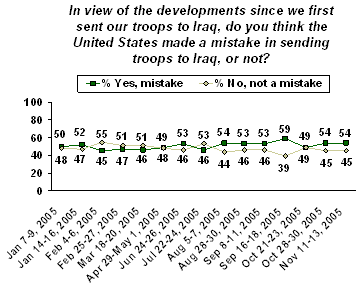
PRINCETON, NJ -- Gallup's latest update on Iraq shows no fundamental changes in recent weeks in attitudes about war support -- more Americans say the United States made a mistake in sending troops to Iraq than say it did not. Though fairly closely divided, more Americans express pessimism than optimism that the United States will win the war in Iraq. Amid increased Senate discussion about setting concrete policies and objectives regarding the war, a majority of Americans say they favor withdrawing U.S. troops either immediately or within a year.
Basic Support for the War
Since August, an average of 54% of Americans have said the war with Iraq was a mistake, with an average of 45% saying it was not. The new CNN/USA Today/Gallup poll, conducted Nov. 11-13, shows no basic change in that sentiment; in fact, the poll's numbers exactly match the recent average.
Americans are slightly more critical of the war when they are asked whether it was "worth going to war in Iraq." Thirty-eight percent of Americans say it was worth going; 60% say it was not. The latest measure is down slightly from recent readings, the last of which was a 45%-53% split in mid-September.
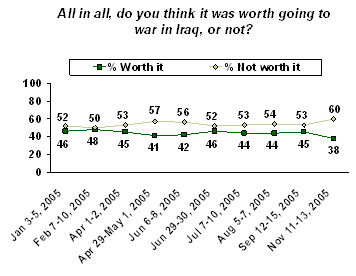
The current reading is the most negative evaluation of the war on this measure since the war began in March 2003.
Assessing Current Progress
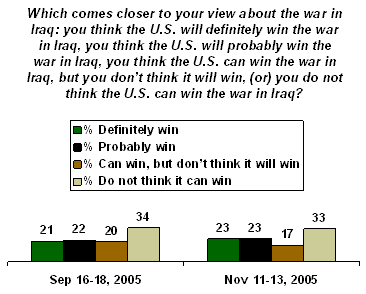
Americans' assessments of the United States' prospects in the war are mixed. In fact, the public is largely divided as to whether the United States will win the war. Forty-six percent believe the United States will "definitely" or "probably win the war," while 50% believe the country will not win, including 17% who believe the United States is capable of winning the war, and 33% who believe it is not capable of winning.
These assessments are fairly stable when compared to the last reading, from mid-September. The percentage of Americans who believe the U.S. can win the war (regardless of whether it will win) is the same now as then -- 63%.
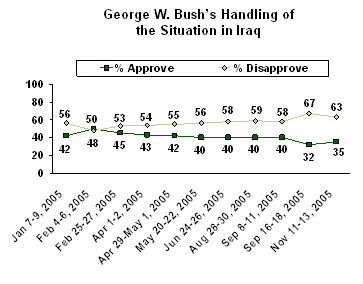
The public's most critical attitudes toward the war concern the way George W. Bush is handling it. Just 35% of Americans approve of how Bush is handling the situation in Iraq, while 63% disapprove. This is just slightly higher than Bush's worst rating on Iraq, a 32% approval rating in September.
The public has grown increasingly negative in its review of Bush's handling of Iraq this year. Since February, the drop in Bush approval ratings has been more pronounced than the drops in basic war support evident on the "mistake" and "worth it" questions.
What Now?
On Tuesday, the U.S. Senate voted on proposals on Iraq, approving a Republican proposal and defeating a Democratic one. Both proposals called for the president to regularly update Congress and the American public on the progress of the war and the administration's strategy for completing the mission in Iraq. The Democratic proposal also asked the president to estimate dates for U.S. troop withdrawal.
The poll presented Americans with four options for dealing with the war in Iraq. Nineteen percent say the United States should immediately withdraw troops from Iraq, and another 33% say the United States should withdraw its troops by next November. Thirty-eight percent say the United States should withdraw, but should take as many years as needed to turn control of the country over to the Iraqis. Just 7% say the United States should send more troops to Iraq.
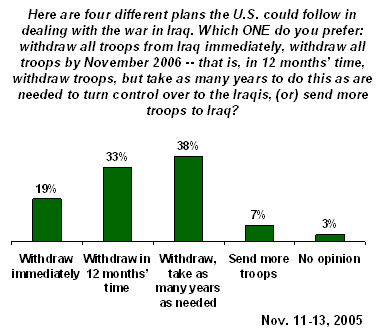
Most Republicans, 58%, prefer that the United States withdraw troops but take as many years as needed to do so. A majority of independents and Democrats favor immediate withdrawal or withdrawal of troops by next November.
U.S. Troops in Iraq, by Party Affiliation
|
|
Overall |
Democrat |
Independent |
Republican |
|
% |
% |
% |
% |
|
|
Immediate withdrawal |
19 |
28 |
20 |
7 |
|
Withdraw by November 2006 |
33 |
39 |
36 |
25 |
|
Withdraw, take as many years as needed |
38 |
25 |
34 |
58 |
|
Send more troops |
7 |
5 |
8 |
8 |
|
No opinion |
3 |
3 |
2 |
2 |
Gallup asked a similar question about the Vietnam War in July and August 1970, when a majority of Americans thought the United States made a mistake in sending troops to Vietnam. As is the case now, more Americans favored withdrawal in the short term than favored a longer-term withdrawal or increased troop deployments.
Forty-eight percent of Americans thought the United States should withdraw its troops immediately (23%) or within 12 months (25%). That compares with 33% who wanted to withdraw troops, but to take as many years as necessary in order to turn the war over to the South Vietnamese, and 10% who wanted to "send more troops to Vietnam and step up the fighting."
Survey Methods
These results are based on telephone interviews with a randomly selected national sample of 1,006 adults, aged 18 and older, conducted Nov. 11-13, 2005. For results based on this sample, one can say with 95% confidence that the maximum error attributable to sampling and other random effects is ±3 percentage points. In addition to sampling error, question wording and practical difficulties in conducting surveys can introduce error or bias into the findings of public opinion polls.
2. Do you approve or disapprove of the way George W. Bush is handling -- [RANDOM ORDER]?
C. The situation in Iraq
|
|
Approve |
Disapprove |
No |
|
% |
% |
% |
|
|
2005 Nov 11-13 |
35 |
63 |
2 |
|
|
|
|
|
|
2005 Sep 16-18 |
32 |
67 |
1 |
|
2005 Sep 8-11 |
40 |
58 |
2 |
|
2005 Aug 28-30 |
40 |
59 |
1 |
|
2005 Jun 24-26 |
40 |
58 |
2 |
|
2005 May 20-22 ^ |
40 |
56 |
4 |
|
2005 Apr 29-May 1 |
42 |
55 |
3 |
|
2005 Apr 1-2 |
43 |
54 |
3 |
|
2005 Feb 25-27 |
45 |
53 |
2 |
|
2005 Feb 4-6 |
50 |
48 |
2 |
|
2005 Jan 7-9 |
42 |
56 |
2 |
|
2004 Nov 7-10 |
47 |
51 |
2 |
|
2004 Oct 14-16 |
46 |
52 |
2 |
|
2004 Sep 24-26 |
48 |
49 |
3 |
|
2004 Aug 9-11 |
45 |
52 |
3 |
|
2004 Jun 21-23 ^ |
42 |
56 |
2 |
|
2004 Jun 3-6 |
41 |
57 |
2 |
|
2004 May 7-9 ^ |
41 |
58 |
1 |
|
2004 May 2-4 |
42 |
55 |
3 |
|
2004 Apr 16-18 |
48 |
49 |
3 |
|
2004 Mar 26-28 |
51 |
47 |
2 |
|
2004 Jan 29-Feb 1 |
46 |
53 |
1 |
|
2004 Jan 2-5 |
61 |
36 |
3 |
|
2003 Dec 5-7 |
50 |
47 |
3 |
|
2003 Nov 3-5 |
45 |
54 |
1 |
|
2003 Oct 6-8 |
47 |
50 |
3 |
|
2003 Sep 8-10 |
51 |
47 |
2 |
|
2003 Aug 25-26 |
57 |
41 |
2 |
|
2003 Jul 25-27 |
60 |
38 |
2 |
|
2003 Jul 18-20 |
57 |
39 |
4 |
|
2003 Jul 7-9 |
58 |
39 |
3 |
|
2003 Jun 12-15 |
63 |
34 |
3 |
|
2003 Apr 14-16 |
76 |
21 |
3 |
|
2003 Mar 29-30 |
71 |
27 |
2 |
|
2003 Mar 24-25 |
71 |
26 |
3 |
|
2003 Mar 14-15 |
56 |
41 |
3 |
|
2003 Jan 31-Feb 2 |
54 |
42 |
4 |
|
2003 Jan 3-5 |
55 |
40 |
5 |
|
2002 Dec 9-10 |
55 |
39 |
6 |
|
2002 Oct 21-22 |
52 |
40 |
8 |
|
^ Asked of a half sample |
|||
Next, we'd like to ask you some questions about Iraq. First,
Q.18-19 SPLIT SAMPLED
18. In view of the developments since we first sent our troops to Iraq, do you think the United States made a mistake in sending troops to Iraq, or not?
BASED ON 491 NATIONAL ADULTS IN FORM A
|
Yes |
No |
No |
|
|
% |
% |
% |
|
|
2005 Nov 11-13 ^ |
54 |
45 |
1 |
|
2005 Oct 28-30 |
54 |
45 |
1 |
|
2005 Oct 21-23 |
49 |
49 |
2 |
|
2005 Sep 16-18 |
59 |
39 |
2 |
|
2005 Sep 8-11 |
53 |
46 |
1 |
|
2005 Aug 28-30 |
53 |
46 |
1 |
|
2005 Aug 5-7 ^ |
54 |
44 |
2 |
|
2005 Jul 22-24 |
46 |
53 |
1 |
|
2005 Jun 24-26 |
53 |
46 |
1 |
|
2005 Apr 29-May 1 ^ |
49 |
48 |
3 |
|
2005 Mar 18-20 ^ |
46 |
51 |
3 |
|
2005 Feb 25-27 |
47 |
51 |
2 |
|
2005 Feb 4-6 |
45 |
55 |
* |
|
2005 Jan 14-16 |
52 |
47 |
1 |
|
2005 Jan 7-9 |
50 |
48 |
2 |
|
2004 Nov 19-21 |
47 |
51 |
2 |
|
2004 Oct 29-31 ^ |
44 |
52 |
4 |
|
2004 Oct 22-24 |
47 |
51 |
2 |
|
2004 Oct 14-16 |
47 |
52 |
1 |
|
2004 Oct 9-10 ^ |
46 |
53 |
1 |
|
2004 Oct 1-3 |
48 |
51 |
1 |
|
2004 Sep 24-26 |
42 |
55 |
3 |
|
2004 Sep 3-5 ^ |
38 |
57 |
5 |
|
2004 Aug 23-25 ^ |
48 |
50 |
2 |
|
2004 Jul 30-Aug 1 |
47 |
51 |
2 |
|
2004 Jul 19-21 |
50 |
47 |
3 |
|
2004 Jul 8-11 |
54 |
45 |
1 |
|
2004 Jun 21-23 |
54 |
44 |
2 |
|
2004 Jun 3-6 |
41 |
58 |
1 |
|
2004 May 7-9 |
44 |
54 |
2 |
|
2004 Apr 16-18 |
42 |
57 |
1 |
|
2004 Jan 12-15 |
42 |
56 |
2 |
|
2003 Nov 3-5 |
39 |
60 |
1 |
|
2003 Oct 6-8 |
40 |
59 |
1 |
|
2003 Jul 7-9 |
27 |
72 |
1 |
|
2003 Mar 24-25 |
23 |
75 |
2 |
|
* Less than 0.5% |
|||
|
^ Asked of a half sample |
|||
19. All in all, do you think it was worth going to war in Iraq, or not?
BASED ON 515 NATIONAL ADULTS IN FORM B
|
|
Worth |
Not worth |
No |
|
% |
% |
% |
|
|
2005 Nov 11-13 ^ |
38 |
60 |
2 |
|
2005 Sep 12-15 |
45 |
53 |
2 |
|
2005 Aug 5-7 ^ |
44 |
54 |
2 |
|
2005 Jul 7-10 |
44 |
53 |
3 |
|
2005 Jun 29-30 |
46 |
52 |
2 |
|
2005 Jun 6-8 |
42 |
56 |
2 |
|
2005 Apr 29-May 1 |
41 |
57 |
2 |
|
2005 Apr 1-2 |
45 |
53 |
2 |
|
2005 Feb 7-10 |
48 |
50 |
2 |
|
2005 Jan 3-5 |
46 |
52 |
2 |
|
2004 Oct 9-10 ^ |
44 |
54 |
2 |
|
2004 Sep 3-5 ^ |
49 |
48 |
3 |
|
2004 Aug 23-25 ^ |
51 |
46 |
3 |
|
2004 Aug 9-11 ^ |
49 |
48 |
3 |
|
2004 Jul 8-11 ^ |
47 |
50 |
3 |
|
2004 Jun 21-23 ^ |
46 |
51 |
3 |
|
2004 Jun 3-6 ^ |
46 |
52 |
2 |
|
2004 May 21-23 ^ |
45 |
52 |
3 |
|
2004 May 7-9 ^ |
44 |
54 |
2 |
|
2004 May 2-4 |
50 |
47 |
3 |
|
2004 Apr 16-18 ^ |
52 |
46 |
2 |
|
2004 Apr 5-8 |
50 |
47 |
3 |
|
2004 Mar 26-28 |
56 |
41 |
3 |
|
2004 Mar 5-7 |
55 |
43 |
2 |
|
2004 Jan 29-Feb 1 |
49 |
49 |
2 |
|
2004 Jan 9-11 |
59 |
38 |
3 |
|
2003 Dec 15-16 ^ † |
65 |
33 |
2 |
|
2003 Dec 14 †‡# |
62 |
33 |
5 |
|
2003 Dec 5-7 † |
59 |
39 |
2 |
|
2003 Nov 14-16 † |
56 |
42 |
2 |
|
2003 Nov 3-5 † |
54 |
44 |
2 |
|
2003 Oct 24-26 † |
54 |
44 |
2 |
|
2003 Oct 6-8 † |
55 |
44 |
1 |
|
2003 Sep 19-21 † |
50 |
48 |
2 |
|
2003 Sep 8-10 † |
58 |
40 |
2 |
|
2003 Aug 25-26 † |
63 |
35 |
2 |
|
2003 Jul 25-27 † |
63 |
34 |
3 |
|
2003 Jul 18-20 † |
63 |
35 |
2 |
|
2003 Jun 27-29 † |
56 |
42 |
2 |
|
2003 Apr 14-16 †‡ |
73 |
23 |
4 |
|
2003 Apr 9 †‡# |
76 |
19 |
5 |
|
2003 Apr 7-8 †‡ |
67 |
30 |
3 |
|
2003 Mar 24-25 †‡ |
68 |
29 |
3 |
|
2003 Jan 3-5 †‡ |
53 |
42 |
5 |
|
^ Asked of a half sample |
|||
|
† WORDING: All in all, do you think the situation in Iraq was worth going to war over, or not? |
|||
|
‡ WORDING: All in all, do you think the current situation in Iraq is worth going to war over, or not? |
|||
|
# Polls conducted entirely in one day, such as this one, are subject to additional error or bias not found in polls conducted over several days. |
|||
20. Here are four different plans the U.S. could follow in dealing with the war in Iraq. Which ONE do you prefer -- [ROTATED: withdraw all troops from Iraq immediately, withdraw all troops by November 2006 -- that is, in 12 months' time, withdraw troops, but take as many years to do this as are needed to turn control over to the Iraqis, (or) send more troops to Iraq]?
|
|
Withdraw |
Withdraw |
Withdraw, |
Send |
No |
|
2005 Nov 11-13 |
19% |
33 |
38 |
7 |
3 |
Trends for Comparison: The Vietnam War -- Here are four different plans the U.S. could follow in dealing with the war in Vietnam. Which ONE do you prefer? Plan A: Withdraw all troops from Vietnam immediately; Plan B: Withdraw all troops by July 1971 -- that is, in 12 months' time; Plan C: Withdraw troops but take as many years to do this as are needed to turn the war over to the South Vietnamese; or Plan D: Send more troops to Vietnam and step up the fighting?
|
|
Withdraw |
Withdraw |
Withdraw, |
Send |
No |
|
1970 Jul 31-Aug 2 |
23% |
25 |
33 |
10 |
9 |
21. Which comes closer to your view about the war in Iraq -- [ROTATED: you think the U.S. will definitely win the war in Iraq, you think the U.S. will probably win the war in Iraq, you think the U.S. can win the war in Iraq, but you don't think it will win, (or) you do not think the U.S. can win the war in Iraq]?
|
|
Definitely |
Probably |
Can win, |
Do not |
No |
|
2005 Nov 11-13 |
23% |
23 |
17 |
33 |
4 |
|
|
|
|
|
|
|
|
2005 Sep 16-18 |
21% |
22 |
20 |
34 |
3 |