GALLUP NEWS SERVICE
PRINCETON, NJ -- The latest Gallup measures of the economy suggest little change in the public's evaluation of the economy since last month. Ratings of both current economic conditions and their immediate trend show slight slippage, but still within the poll's margin of error. Americans remain mostly positive about where the economy is headed, with more people saying it is getting better than getting worse. Expectations for the stock market, economic growth, and unemployment during the next six months are all quite similar to last month's ratings, but significantly lower than Gallup observed in March. Also, the percentage of people saying the United States is currently in a recession is identical to last month's.
Current Economic Conditions
The poll was conducted May 6-9, and shows that 35% of Americans currently say that economic conditions are excellent or good, while 14% say poor. Last month, the comparable figures were 39% and 14%.
| Rating Of Current Economic Conditions |
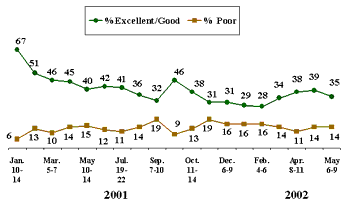 |
Despite a surge in economic optimism after the Sept. 11 terrorist attacks, the ratings resumed their low levels by November and stayed there through February. Beginning in March and continuing in April, the ratings showed a modest recovery, in the wake of news that the recession had technically ended. However, the increases have subsided and the current rating is about the same as it was in March.
Trend in Economy
The poll also shows that 52% of Americans say economic conditions are getting better, while 39% say worse. Last month, 53% said better, and 35% said worse. The changes in both this measure and the rating of current economic conditions are within the poll's margin of error.
| Economic Conditions: Getting Better or Getting Worse? |
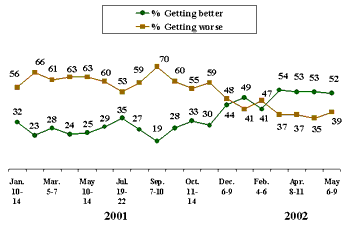 |
In March, the public's assessment of where the economy is headed surged into positive territory following the announcement that the recession was over. For the first time since January, and only the second time since November 2000, more people said the economy was getting better than said it was getting worse. There has been little change in the public's perceptions on this matter since then.
Perceptions of Recession
One other measure of the overall economy also shows no change -- 45% of Americans say the economy is currently in a recession, the same percentage as last month. Two months ago, 56% of Americans expressed that view.
| Are We In a Recession? |
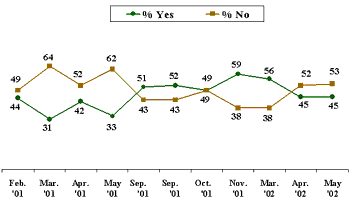 |
For seven months, from just before the Sept. 11 terrorist attacks until April, more Americans said the economy was in a recession than said it was not. Currently, slightly more people say the United States is not in a recession than say it is.
Stock Market Expectations
The announcement in March that the recession was over also brought about a surge in positive predictions for the stock market's performance. Fifty-six percent of Americans said the stock market would rise over the next six months and just 19% said it would decline. But actual performance of the stock market since then appears to have dampened these expectations, as the Dow Jones Industrial Average has been unable to maintain a sustained recovery substantially above the 10,000 level.
| Stock Market: Go Up or Go Down in the Next Six Months? |
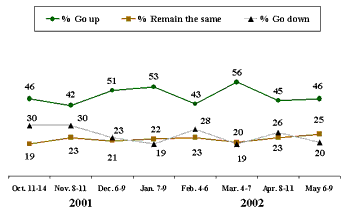 |
By April, the percentage of optimists regarding the stock market had slipped to 45%, but still more than the 26% who said they expected the market to decline. This month the ratio of optimists to pessimists is slightly better than it was last month, with 46% expecting the market to increase and 20% expecting decline. Still, the percentages are significantly lower than those measured in March.
Economic Growth Expectations
Similarly, expectations for economic growth remain mostly positive, as 54% say that the economy will grow over the next six months and just 16% disagree. However, these figures are less positive than the 61% to 18% margin of two months ago.
| Economic Growth: Go Up or Go Down in the Next Six Months? |
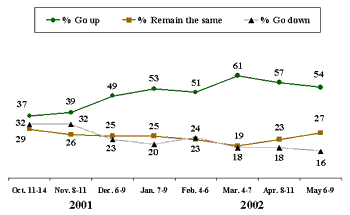 |
Overall, since last fall, expectations for economic growth have been rising. While October found the American public about evenly divided between those who expected growth to increase (37%) and those who expected a decline (32%), the difference between the positive and the negative views has grown considerably.
Unemployment Expectations
In February and March of this year, the percentages expecting unemployment to increase over the next six months were only a few points higher than the percentages of Americans expecting unemployment to decline.
| Unemployment: Go Up or Go Down in the Next Six Months? |
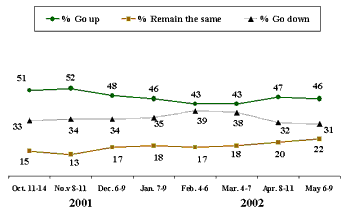 |
Americans have become more pessimistic about unemployment since then, as the current poll shows a 15-point difference in those expecting an increase, rather than a decrease, in unemployment -- the same as last month.
Survey Methods
Results are based on telephone interviews with 1,012 national adults, aged 18+, conducted April May 6-9, 2001. For results based on the total sample of national adults, one can say with 95% confidence that the margin of sampling error is +/- 3 percentage points. In addition to sampling error, question wording and practical difficulties in conducting surveys can introduce error or bias into the findings of public opinion polls.
Over the next six months, do you think that each of the following will -- [ROTATED: go up a lot, go up a
little, remain the same, go down a little, (or) go down a lot]? How about -- [RANDOM ORDER]?
The Stock Market
|
|
|
|
main same |
Go down |
Go down |
|
|
|
|
% |
% |
% |
% |
% |
% |
% |
% |
|
|
2002 May 6-9 |
7 |
39 |
25 |
14 |
6 |
9 |
46 |
20 |
|
2002 Apr 8-11 |
8 |
37 |
23 |
20 |
6 |
6 |
45 |
26 |
|
2002 Mar 4-7 |
9 |
47 |
20 |
13 |
6 |
5 |
56 |
19 |
|
2002 Feb 4-6 |
7 |
36 |
23 |
20 |
8 |
6 |
43 |
28 |
|
2002 Jan 7-9 |
9 |
44 |
22 |
15 |
4 |
6 |
53 |
19 |
|
2001 Dec 6-9 |
9 |
42 |
21 |
17 |
6 |
5 |
51 |
23 |
|
2001 Nov 8-11 |
8 |
34 |
23 |
22 |
8 |
5 |
42 |
30 |
|
2001 Oct 11-14 |
10 |
36 |
19 |
22 |
8 |
5 |
46 |
30 |
Economic Growth
|
|
|
|
main same |
Go down |
Go down |
ion |
|
|
|
% |
% |
% |
% |
% |
% |
% |
% |
|
|
2002 May 6-9 |
7 |
47 |
27 |
12 |
4 |
3 |
54 |
16 |
|
2002 Apr 8-11 |
9 |
48 |
23 |
13 |
5 |
2 |
57 |
18 |
|
2002 Mar 4-7 |
9 |
52 |
19 |
14 |
4 |
2 |
61 |
18 |
|
2002 Feb 4-6 |
7 |
44 |
23 |
18 |
6 |
2 |
51 |
24 |
|
2002 Jan 7-9 |
6 |
47 |
25 |
15 |
5 |
2 |
53 |
20 |
|
2001 Dec 6-9 |
8 |
41 |
25 |
18 |
5 |
3 |
49 |
23 |
|
2001 Nov 8-11 |
6 |
33 |
26 |
26 |
6 |
3 |
39 |
32 |
|
2001 Oct 11-14 |
6 |
31 |
29 |
24 |
8 |
2 |
37 |
32 |
Unemployment
|
|
|
|
Go down |
Go down |
|
|
|
|
|
% |
% |
% |
% |
% |
% |
% |
% |
|
|
2002 May 6-9 |
15 |
31 |
22 |
24 |
7 |
1 |
46 |
31 |
|
2002 Apr 8-11 |
19 |
28 |
20 |
25 |
7 |
1 |
47 |
32 |
|
2002 Mar 4-7 |
13 |
30 |
18 |
30 |
8 |
1 |
43 |
38 |
|
2002 Feb 4-6 |
12 |
31 |
17 |
29 |
10 |
1 |
43 |
39 |
|
2002 Jan 7-9 |
16 |
30 |
18 |
26 |
9 |
1 |
46 |
35 |
|
2001 Dec 6-9 |
18 |
30 |
17 |
24 |
10 |
1 |
48 |
34 |
|
2001 Nov 8-11 |
21 |
31 |
13 |
23 |
11 |
1 |
52 |
34 |
|
2001 Oct 11-14 |
20 |
31 |
15 |
20 |
13 |
1 |
51 |
33 |
Do you think the economy is now in a recession, or not?
|
Yes |
No |
No opinion |
||
|
% |
% |
% |
||
|
2002 May 6-9 |
45 |
53 |
2 |
|
|
2002 Apr 8-11 |
45 |
52 |
3 |
|
|
2002 Mar 8-9 ^ |
56 |
38 |
6 |
|
|
2001 Nov 8-11 |
59 |
38 |
3 |
|
|
2001 Oct 11-14 |
49 |
49 |
2 |
|
|
2001 Sep 21-22 |
52 |
43 |
5 |
|
|
2001 Sep 7-10 |
51 |
43 |
6 |
|
|
2001 May 10-14 |
33 |
62 |
5 |
|
|
2001 Apr 6-8 |
42 |
52 |
6 |
|
|
2001 Mar 5-7 ^ |
31 |
64 |
5 |
|
|
2001 Feb 1-4 ^ |
44 |
49 |
7 |
|
|
1994 May 20-22 |
35 |
61 |
4 |
|
|
1994 Feb 26-28 |
34 |
62 |
4 |
|
|
1993 Dec 4-6 |
45 |
50 |
5 |
|
|
1992 Sep 11-15 |
79 |
19 |
2 |
|
|
1992 Jan 3-6 |
84 |
14 |
2 |
|
|
1991 Mar |
81 |
16 |
4 |
|
|
^ |
Asked of a half sample. |
|||
* -- Less than 0.5%