GALLUP NEWS SERVICE
PRINCETON, NJ -- Nuestro Himno, the Spanish-language version of the U.S. national anthem The Star-Spangled Banner, was released last week amid much criticism throughout the country. President George W. Bush publicly opposed the release of the song, saying, "I think the national anthem ought to be sung in English, and I think people who want to be a citizen of this country ought to learn English, and they ought to learn to sing the national anthem in English."
A new USA Today/Gallup poll, conducted April 28-30, asked Americans for their views on the issue. Nearly 7 in 10 Americans, 69%, say it is only appropriate to sing the national anthem in English, while 29% say it is appropriate for people to sing the song in Spanish.

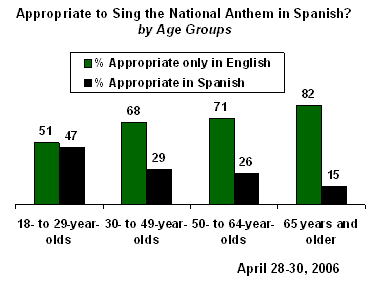
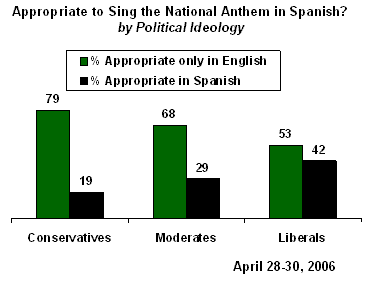
The public's views about the national anthem vary by age and self-described political ideology.
Younger adults, between the ages of 18 and 29, are divided in their views on this measure, with 51% saying it is only appropriate to sing the national anthem in English and 47% saying it is appropriate to sing the song in Spanish. Older Americans are much more inclined to say the national anthem should only be sung in English, with 68% of 30- to 49-year-olds, 71% of 50- to 64-year-olds, and 82% of adults aged 65 and older sharing this point of view.
Self-described conservatives are more likely than moderates or liberals to say it is appropriate to only sing the national anthem in English. Seventy-nine percent of conservatives say it is only appropriate in English, while 68% of moderates and roughly half of liberals (53%) express this sentiment.
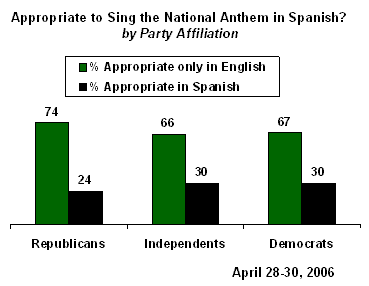
The results show only modest variation by partisanship, with 74% of Republicans, 67% of Democrats, and 66% of independents saying the national anthem is only appropriate in English.
Survey Methods
Results are based on telephone interviews with 1,011 national adults, aged 18 and older, conducted April 28-30, 2006. For results based on the total sample of national adults, one can say with 95% confidence that the maximum margin of sampling error is ±3 percentage points. In addition to sampling error, question wording and practical difficulties in conducting surveys can introduce error or bias into the findings of public opinion polls.