GALLUP NEWS SERVICE
PRINCETON, NJ -- It appears that the upcoming transfer of sovereignty in Iraq from the Coalition Provisional Authority to an Iraqi-led government will happen at a time when Americans are more negative than positive in their assessments of the United States' involvement in Iraq.
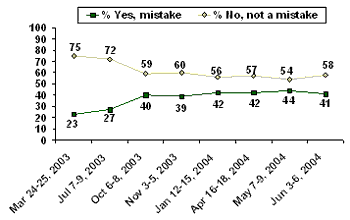
According to the latest Gallup Poll, conducted June 3-6, a majority of Americans (57%) disapprove of the way President Bush is handling the situation there. A majority also says it was not worth going to war in Iraq (52%) and believes that things are going badly for the United States there (60%). Half of Americans would now like to see some or all U.S. troops withdrawn from Iraq. Despite all of this, Americans are still reluctant to describe the U.S. military involvement in Iraq as a "mistake." Today, 41% say it was a mistake, while 58% say it was not.
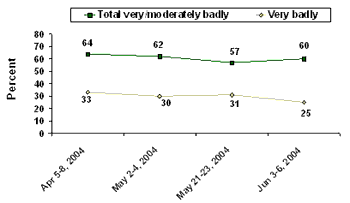
These figures are generally similar to what Gallup found in polling last month, amidst the political furor over the Abu Ghraib prisoner abuse scandal. The only statistically significant change seen in the current poll is that Americans have become slightly less negative about the way things are going in Iraq for the United States. The percentage saying that things are going "very badly" has declined from 31% in late May to 25% today. But the overall number saying the situation is going very or moderately badly has not changed since April, still hovering around 60%.
| How Would You Say Things Are Going for the U.S. in Iraq? |
 |
Attitudes about the Iraq war remain highly politicized: Republicans give broad support to the war effort and to George W. Bush's handling of it, while Democrats generally disapprove of Bush's Iraq performance and the war more generally. Throughout the poll, the views of independents are more moderate, but tend to be more similar to Democrats' views than to those of Republicans. For example, 76% of Republicans think it was worth going to war in Iraq. This compares with only 39% of independents and 22% of Democrats.
Details of the New Poll
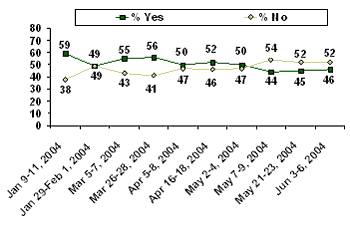
In answer to a fundamental question about support for the war, Americans remain closely split over whether or not it was worth going to war in Iraq. Just 46% today say it was worth it; 52% say it was not worth it. This result is similar to the last two readings on this question in May, and represents the latest plateau in a long-term decline in this measure seen since the major combat phase of the war last year.
| Was It Worth Going to War in Iraq? January -- June 2004 |
 |
Americans are even more critical of the war when it comes to assessing how the United States is doing. One in four believe things are going "very badly" and another 35% say things are going "moderately" badly. Only 40% say things are going well to any degree.
| How Would You Say Things Are Going for the U.S. in Iraq? |
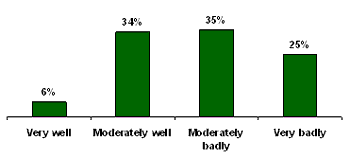 |
| June 3-6, 2004 |
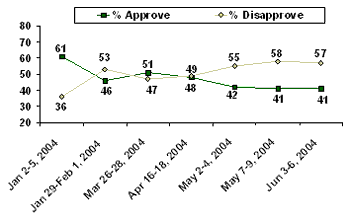
Public assessment of how Bush is handling the situation in Iraq is nearly as negative: 41% approve of the job he is doing, while 57% disapprove. While similar to his Iraq approval scores from May, the 41% figure is markedly lower than where Bush began the year. In early January (shortly after the capture of Saddam Hussein), 61% approved of his handling of Iraq, but even in late March, 51% still approved.
| George W. Bush's Job Approval on the Situation in Iraq January -- June 2004 |
 |
At the same time, only 41% of Americans think the United States made a mistake in sending troops to Iraq; 58% disagree. This attitude has been markedly stable for the last eight months, although earlier in 2003, far fewer Americans (roughly one-quarter) felt the troop deployment was a mistake.
| Did U.S. Make Mistake in Sending Troops to Iraq? |
 |
Half of all Americans believe U.S. troops in Iraq should head home, including 27% who favor withdrawing all troops and 23% who would withdraw some troops. Only 18% of Americans support sending more troops at this time, while 30% would keep the number the same.
Americans have become more wary of U.S. troop involvement in Iraq in recent months. Since April, the percentage favoring a total withdrawal of troops has averaged 26%; prior to April, no more than 19% took this position. The percentage favoring an increase in troop deployment also increased in April to 33% (around the time of fierce Iraqi resistance attacks against U.S. troops) but support for increased troop strength has since subsided.
Prisoner Abuse Scandal Has Limited Impact on Attitudes About Iraq
The treatment of Iraqi prisoners at the hands of U.S. soldiers working at Abu Ghraib prison outside Baghdad became the fodder for a major military scandal last month. While already under investigation by the U.S. Army, the abuse charges became public on April 28 when CBS' 60 Minutes II broadcast graphic photographs documenting the apparent abuse.
Gallup's Iraq war trends suggest that the scandal has triggered some public backlash against the conflict, but that most of the decline in public support for the war seen since the official end of major combat on May 1, 2003, occurred earlier (associated with mounting U.S. casualties in the "postwar" period). The following table compares the current poll results to attitudes just prior to the outbreak of the Abu Ghraib scandal in late April 2004, and to attitudes in the immediate post-major-combat period last year (June/July 2003).
The trend shows that just before the Abu Ghraib revelations, Americans had already concluded that things were going badly for the United States in Iraq: 64% felt this way in April, compared with 60% today. Also, even before the Abu Ghraib abuse came to light, the percentage saying the United States had made a mistake in sending troops to Iraq had risen to its current level in the low 40s. Neither of these negative assessments has increased since the Abu Ghraib scandal broke.
At the same time, Gallup has detected moderate increases since April 2004 in the percentage of Americans disapproving of Bush's handling of the situation in Iraq (up eight points, from 49% pre-Abu Ghraib to 57% today) and the percentage saying it was not worth going to war in Iraq (up six points, from 46% to 52%).
|
Trend in Negative Assessments of Iraq War
|
|||
|
(After Major Combat) |
(Before Abu Ghraib) |
(After Abu Ghraib) |
|
|
% |
% |
% |
|
|
Disapprove of Bush's handling of Iraq |
34 |
49 |
57 |
|
Think it was not worth going to war in Iraq |
42 |
46 |
52 |
|
Think U.S. made a mistake in sending troops to Iraq |
27 |
42 |
41 |
|
Think things are going badly for U.S. in Iraq |
42 |
64 |
60 |
Survey Methods
These results are based on telephone interviews with a randomly selected national sample of 1,000 adults, aged 18 and older, conducted June 3-6, 2004. For results based on this sample, one can say with 95% confidence that the maximum error attributable to sampling and other random effects is ±3 percentage points. In addition to sampling error, question wording and practical difficulties in conducting surveys can introduce error or bias into the findings of public opinion polls.
15. Do you approve or disapprove of the way George W. Bush is handling -- [RANDOM ORDER]?
C. The situation in Iraq
|
Approve |
Disapprove |
No opinion |
|
|
% |
% |
% |
|
|
2004 Jun 3-6 |
41 |
57 |
2 |
|
2004 May 7-9 ^ |
41 |
58 |
1 |
|
2004 May 2-4 |
42 |
55 |
3 |
|
2004 Apr 16-18 |
48 |
49 |
3 |
|
2004 Mar 26-28 |
51 |
47 |
2 |
|
2004 Jan 29-Feb 1 |
46 |
53 |
1 |
|
2004 Jan 2-5 |
61 |
36 |
3 |
|
2003 Dec 5-7 |
50 |
47 |
3 |
|
2003 Nov 3-5 |
45 |
54 |
1 |
|
2003 Oct 6-8 |
47 |
50 |
3 |
|
2003 Sep 8-10 |
51 |
47 |
2 |
|
2003 Aug 25-26 |
57 |
41 |
2 |
|
2003 Jul 25-27 |
60 |
38 |
2 |
|
2003 Jul 18-20 |
57 |
39 |
4 |
|
2003 Jul 7-9 |
58 |
39 |
3 |
|
2003 Jun 12-15 |
63 |
34 |
3 |
|
2003 Apr 14-16 |
76 |
21 |
3 |
|
2003 Mar 29-30 |
71 |
27 |
2 |
|
2003 Mar 24-25 |
71 |
26 |
3 |
|
2003 Mar 14-15 |
56 |
41 |
3 |
|
2003 Jan 31-Feb 2 |
54 |
42 |
4 |
|
2003 Jan 3-5 |
55 |
40 |
5 |
|
2002 Dec 9-10 |
55 |
39 |
6 |
|
2002 Oct 21-22 |
52 |
40 |
8 |
|
^ Asked of half sample. |
|||
16. All in all, do you think it was worth going to war in Iraq, or not?
BASED ON 513 NATIONAL ADULTS IN FORM A
|
Worth |
Not worth |
No |
||
|
% |
% |
% |
||
|
2004 Jun 3-6 |
46 |
52 |
2 |
|
|
2004 May 21-23 |
45 |
52 |
3 |
|
|
2004 May 7-9 ^ |
44 |
54 |
2 |
|
|
2004 May 2-4 |
50 |
47 |
3 |
|
|
2004 Apr 16-18 ^ |
52 |
46 |
2 |
|
|
2004 Apr 5-8 |
50 |
47 |
3 |
|
|
2004 Mar 26-28 |
56 |
41 |
3 |
|
|
2004 Mar 5-7 |
55 |
43 |
2 |
|
|
2004 Jan 29-Feb 1 |
49 |
49 |
2 |
|
|
2004 Jan 9-11 |
59 |
38 |
3 |
|
|
2003 Dec 15-16 ^ † |
65 |
33 |
2 |
|
|
2003 Dec 14 †‡~ |
62 |
33 |
5 |
|
|
2003 Dec 5-7 † |
59 |
39 |
2 |
|
|
2003 Nov 14-16 † |
56 |
42 |
2 |
|
|
2003 Nov 3-5 † |
54 |
44 |
2 |
|
|
2003 Oct 24-26 † |
54 |
44 |
2 |
|
|
2003 Oct 6-8 † |
55 |
44 |
1 |
|
|
2003 Sep 19-21 † |
50 |
48 |
2 |
|
|
2003 Sep 8-10 † |
58 |
40 |
2 |
|
|
2003 Aug 25-26 † |
63 |
35 |
2 |
|
|
2003 Jul 25-27 † |
63 |
34 |
3 |
|
|
2003 Jul 18-20 † |
63 |
35 |
2 |
|
|
2003 Jun 27-29 † |
56 |
42 |
2 |
|
|
2003 Apr 14-16 †‡ |
73 |
23 |
4 |
|
|
2003 Apr 9 †‡~ |
76 |
19 |
5 |
|
|
2003 Apr 7-8 †‡ |
67 |
30 |
3 |
|
|
2003 Mar 24-25 †‡ |
68 |
29 |
3 |
|
|
2003 Jan 3-5 †‡ |
53 |
42 |
5 |
|
|
^ |
Asked of a half sample. |
|||
|
† |
WORDING: All in all, do you think the situation in Iraq was worth going to war over, or not? |
|||
|
‡ |
WORDING: All in all, do you think the current situation in Iraq is worth going to war over, or not? |
|||
|
~ |
Polls conducted entirely in one day, such as this one, are subject to additional error or bias not found in polls conducted over several days. |
|||
17. In view of the developments since we first sent our troops to Iraq, do you think the United States made a mistake in sending troops to Iraq, or not?
BASED ON 487 NATIONAL ADULTS IN FORM B
|
|
|
No opinion |
|
|
% |
% |
% |
|
|
Iraq |
|||
|
2004 Jun 3-6 |
41 |
58 |
1 |
|
2004 May 7-9 |
44 |
54 |
2 |
|
2004 Apr 16-18 |
42 |
57 |
1 |
|
2004 Jan 12-15 |
42 |
56 |
2 |
|
2003 Nov 3-5 |
39 |
60 |
1 |
|
2003 Oct 6-8 |
40 |
59 |
1 |
|
2003 Jul 7-9 |
27 |
72 |
1 |
|
2003 Mar 24-25 |
23 |
75 |
2 |
|
Afghanistan |
|||
|
2002 Jan 7-9 |
6 |
93 |
1 |
|
2001 Nov 8-11 |
9 |
89 |
2 |
|
Yugoslavia |
|||
|
1999 Jun 4-5 |
43 |
53 |
4 |
|
1999 Apr 21 |
42 |
51 |
7 |
|
Persian Gulf War |
|||
|
1991 Jul 18-21 |
15 |
82 |
3 |
|
1991 Feb 28-Mar 3 |
10 |
87 |
3 |
|
1991 Feb 7-10 |
21 |
76 |
3 |
|
1991 Jan 30-Feb 2 |
18 |
80 |
2 |
|
1991 Jan 23-26 |
18 |
77 |
5 |
|
1991 Jan 17-20 |
16 |
80 |
4 |
|
1991 Jan 11-13 |
29 |
65 |
6 |
|
1991 Jan 3-6 |
30 |
61 |
9 |
|
1990 Dec 6-9 |
28 |
66 |
6 |
|
1990 Nov 29-Dec 2 |
29 |
66 |
5 |
|
1990 Nov 15-18 |
27 |
65 |
8 |
|
1990 Nov 8-11 |
27 |
68 |
5 |
|
1990 Nov 2-4 |
25 |
67 |
8 |
|
1990 Oct 25-28 |
24 |
71 |
5 |
|
1990 Oct 18-21 |
26 |
67 |
7 |
|
1990 Oct 11-14 |
27 |
68 |
5 |
|
1990 Oct 3-4 |
21 |
71 |
8 |
|
1990 Sep 27-30 |
20 |
73 |
7 |
|
1990 Sep 14-16 |
18 |
73 |
10 |
|
1990 Sep 10-11 |
19 |
76 |
5 |
|
1990 Aug 30-Sep 2 |
16 |
76 |
8 |
|
1990 Aug 23-26 |
18 |
76 |
6 |
|
1990 Aug 16-19 |
17 |
75 |
8 |
|
|
|
No opinion |
|
|
% |
% |
% |
|
|
Vietnam War |
|||
|
2000 Nov 13-15 |
69 |
24 |
7 |
|
1995 Apr 21-24 |
71 |
23 |
6 |
|
1990 Mar 15-18 |
74 |
22 |
4 |
|
1973 Jan 12-15 |
60 |
29 |
11 |
|
1971 May 14-17 |
61 |
28 |
11 |
|
1971 Jan 8-11 |
60 |
31 |
9 |
|
1970 May 21-26 |
56 |
36 |
8 |
|
1970 Apr 2-7 |
51 |
34 |
15 |
|
1970 Jan 15-20 |
57 |
32 |
11 |
|
1969 Sep 17-22 |
58 |
32 |
10 |
|
1969 Jan 23-28 |
52 |
39 |
9 |
|
1968 Sep 26-Oct 1 |
54 |
37 |
9 |
|
1968 Aug 7-12 |
53 |
35 |
12 |
|
1968 Apr 4-9 |
48 |
40 |
12 |
|
1968 Feb 22-27 |
49 |
42 |
9 |
|
1968 Feb 1-6 |
46 |
42 |
12 |
|
1967 Dec 7-12 |
45 |
46 |
9 |
|
1967 Oct 6-11 |
47 |
44 |
9 |
|
1967 Jul 13-18 |
41 |
48 |
11 |
|
1967 Apr 19-24 |
37 |
50 |
13 |
|
1967 Jan 26-31 |
32 |
52 |
16 |
|
1966 Nov 10-15 |
31 |
52 |
17 |
|
1966 Sep 8-13 |
35 |
48 |
17 |
|
1966 May 5-10 |
36 |
49 |
15 |
|
1966 Mar 3-8 |
26 |
59 |
15 |
|
1965 Aug 27-Sep 1 |
24 |
60 |
16 |
|
Korean War |
|||
|
2000 Jun 6-7 |
34 |
47 |
19 |
|
1953 Jan 11-16 |
36 |
50 |
14 |
|
1952 Oct 17-22 |
43 |
37 |
19 |
|
1952 Oct 9-14 |
43 |
37 |
20 |
|
1952 Feb 28-Mar 5 |
51 |
35 |
14 |
|
1951 Aug 3-8 |
42 |
48 |
11 |
|
1951 Jun 16-21 |
43 |
40 |
17 |
|
1951 Apr 16-21 |
37 |
45 |
18 |
|
1951 Mar 26-31 |
45 |
43 |
12 |
|
1951 Feb 4-9 |
49 |
41 |
9 |
|
1951 Jan 1-5 |
49 |
38 |
13 |
|
1950 Aug 20-25 |
20 |
65 |
15 |
Q.17 (MISTAKE SENDING TROOPS TO IRAQ) CONTINUED
|
AFGHANISTAN WORDING: Do you think the United States made a mistake in sending military forces to Afghanistan, or not? |
|
YUGOSLAVIA WORDING: In view of the developments since we entered the fighting in Yugoslavia, do you think the United States made a mistake sending military forces to fight in Yugoslavia? |
|
PERSIAN GULF WAR WORDING (Feb. 28-Mar 3, 1991-Jul. 18-21, 1991): In view of the developments since we first sent our troops to the Persian Gulf region, do you think the United States made a mistake in sending troops to the Persian Gulf region, or not? |
|
PERSIAN GULF WAR WORDING (Aug. 16-19, 1990-Feb. 7-10, 1990): In view of the developments since we first sent our troops to Saudi Arabia, do you think the United States made a mistake in sending troops to Saudi Arabia, or not? |
|
VIETNAM WAR WORDING (1990-2000): Looking back, do you think the United States made a mistake sending troops to fight in Vietnam? |
|
VIETNAM WAR WORDING (1965-1973): In view of the developments since we entered the fighting in Vietnam, do you think the U.S. made a mistake sending troops to fight in Vietnam? |
|
KOREAN WAR WORDING (2000): Based on what you have heard or read, do you think the United States made a mistake in going into the war in Korea, or not? |
|
KOREAN WAR WORDING (Feb. 1951-Jan. 1953): Do you think the United States made a mistake in going into the war in Korea, or not? |
|
KOREAN WAR WORDING (Aug. 1950-Jan. 1951): In view of the developments since we entered the fighting in Korea, do you think the United States made a mistake in deciding to defend Korea, or not? |
18. In general, how would you say things are going for the U.S. in Iraq -- [ROTATED: very well, moderately well, moderately badly, (or) very badly]?
|
Very well |
Moderately well |
Moderately badly |
Very badly |
No |
||
|
% |
% |
% |
% |
% |
||
|
2004 Jun 3-6 |
6 |
34 |
35 |
25 |
* |
|
|
2004 May 21-23 |
7 |
35 |
26 |
31 |
1 |
|
|
2004 May 2-4 |
4 |
33 |
32 |
30 |
1 |
|
|
2004 Apr 5-8 |
5 |
30 |
31 |
33 |
1 |
|
|
2004 Mar 5-7 |
9 |
46 |
28 |
15 |
2 |
|
|
2003 Nov 3-5 ^ |
4 |
34 |
34 |
27 |
1 |
|
|
2003 Oct 6-8 ^† |
6 |
36 |
34 |
24 |
* |
|
|
2003 Sep 8-10 ^ |
6 |
41 |
31 |
21 |
1 |
|
|
2003 Aug 25-26 ^ |
6 |
44 |
30 |
19 |
1 |
|
|
2003 Jul 25-27 ^ |
10 |
46 |
28 |
15 |
1 |
|
|
2003 Jul 18-20 ^ |
6 |
48 |
30 |
15 |
1 |
|
|
2003 Jun 27-29 ^ |
5 |
51 |
29 |
13 |
2 |
|
|
2003 May 30-Jun 1 ^ |
11 |
59 |
22 |
7 |
1 |
|
|
2003 May 5-7 ^† |
30 |
56 |
10 |
3 |
1 |
|
|
2003 Apr 22-23 ^† |
21 |
64 |
12 |
2 |
1 |
|
|
^ |
WORDING: How would you say things are going for the U.S. in Iraq now that the major fighting has ended -- [ROTATED: very well, moderately well, moderately badly, (or) very badly]? |
|||||
|
† |
Asked of a half sample. |
|||||
|
* Less than 0.5% |
||||||
19. Which comes closest to your view about what the U.S. should now do about the number of U.S. troops in Iraq -- [ROTATED: the U.S. should send more troops to Iraq, the U.S. should keep the number of troops as it is now, the U.S. should withdraw some troops from Iraq, (or) the U.S. should withdraw all of its troops from Iraq]?
|
Send more troops |
Keep as it is now |
Withdraw some troops |
Withdraw all troops |
No opinion |
|
|
% |
% |
% |
% |
% |
|
|
2004 Jun 3-6 |
18 |
30 |
23 |
27 |
2 |
|
2004 May 7-9 |
25 |
24 |
18 |
29 |
4 |
|
2004 Apr 16-18 |
33 |
25 |
16 |
21 |
5 |
|
2004 Apr 5-8 |
20 |
29 |
18 |
28 |
5 |
|
2004 Jan 2-5 |
11 |
40 |
29 |
16 |
4 |
|
2003 Dec 15-16 |
14 |
40 |
27 |
15 |
4 |
|
2003 Dec 5-7 |
22 |
33 |
25 |
17 |
3 |
|
2003 Nov 3-5 ^ |
17 |
32 |
29 |
19 |
3 |
|
2003 Oct 24-26 ^ |
14 |
27 |
39 |
18 |
2 |
|
2003 Aug 25-26 ^ |
15 |
36 |
32 |
14 |
3 |
|
^ WORDING: Which comes closest to your view about what the U.S. should now do about the number of U.S. troops in Iraq -- [ROTATED: the U.S. should send more troops to Iraq, the U.S. should keep the number of troops as it is now, the U.S. should begin to withdraw some troops from Iraq, (or) the U.S. should withdraw all of its troops from Iraq]? |
|||||
20. If President Bush decides to send more troops to Iraq, would you be upset, or not?
COMBINED RESPONSES (Q.19-20)
|
2004 |
2004 |
2004 |
|
|
% |
% |
% |
|
|
No, not upset |
48 |
49 |
57 |
|
(Think U.S. should send more troops) |
(19) |
(25) |
(33) |
|
(Do not think U.S. should send more troops) |
(29) |
(24) |
(24) |
|
Yes, upset |
49 |
45 |
38 |
|
No opinion |
3 |
6 |
5 |