GALLUP NEWS SERVICE
PRINCETON, NJ -- Gallup's annual Personal Finance poll finds that retirement is the financial issue Americans are most worried about. While most non-retirees say they are looking forward to retirement, just over half think they will be able to live comfortably when they retire. Non-retirees' expectations for retirement differ from the actual experience of current retirees in a few respects: on average, non-retirees expect to retire four years later than the average age when current retirees stopped working; and retirees rely to a much greater extent on Social Security income than non-retirees expect to.
Financial Concerns
The April 4-7 poll shows that retirement savings is once again Americans' top financial concern, based on reactions to a list of seven items included in the survey. Six in 10 Americans are either very (30%) or moderately (30%) worried about "not having enough money for retirement." Retirement has been the chief financial worry of Americans for each of the last five years.
|
2005 Apr 4-7 |
Very |
Moderately |
Total |
Total |
|
% |
% |
% |
% |
|
|
Not having enough money for retirement |
30 |
30 |
60 |
37 |
|
Not being able to pay medical costs of a serious illness/accident |
30 |
22 |
52 |
47 |
|
Not being able to pay medical costs for normal healthcare |
23 |
19 |
42 |
56 |
|
Not being able to maintain the standard of living you enjoy |
14 |
27 |
41 |
59 |
|
Not having enough to pay your normal monthly bills |
13 |
17 |
30 |
69 |
|
Not being able to pay your rent, mortgage, or other housing costs |
10 |
13 |
23 |
73 |
|
Not being able to make the minimum payments on your credit cards |
7 |
9 |
16 |
67 |
Fifty-two percent of Americans say they are worried about "not being able to pay medical costs in the event of a serious illness or accident," the only other issue for which a majority expresses worry. Four in 10 are worried about paying the costs of normal healthcare and being able to maintain their current standard of living. Americans are far less worried about paying normal monthly bills, their mortgages or housing payments, and the minimum payments on their credit cards.
Retirement
The poll asked an extensive battery of questions about non-retirees' plans for retirement, as well as current retirees' experience.
In general, non-retirees have fairly positive overall attitudes toward retirement, despite the rather high level of concern about retirement and the substantial proportion of Americans who do not expect to live comfortably during retirement. When given a choice, 69% of non-retirees say they are "looking forward to retirement," while 25% say they are "dreading" it.
But those attitudes are not an indication that Americans are counting the days until their working days end. Sixty-four percent of non-retirees say they would like to work part-time when they retire, while 33% would like to stop working altogether.
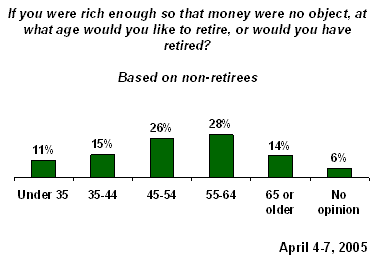
Also, Gallup asked non-retirees at what age they would retire if money were no object. The data suggest they would not necessarily jump at the chance; the average age was 51. Fourteen percent would retire at age 65 or older.
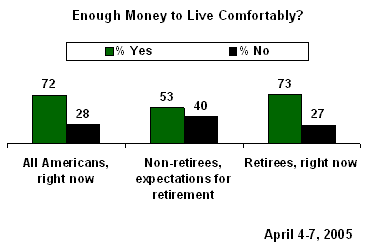
Despite these relatively positive views on retirement, just slightly more than half of non-retired Americans, 53%, say they think they will have enough money to live comfortably when they retire; 40% do not think so. That represents a slight drop from each of the prior three years, when 59% said they thought they would have enough money in retirement. It compares with 72% of all Americans who say they have enough to live comfortably now -- and 73% of retired Americans who say they are now living comfortably.
Nearly half of non-retirees expect a 401(k) plan or Individual Retirement Account to be a major source of income when they retire, significantly more than any of the other sources tested in the poll. Given the uncertainty regarding the future of the Social Security system in its current form, it is perhaps not surprising that only 28% of non-retirees say Social Security will be a major source of retirement funding. About one in four expect a pension plan or their home equity to be a major source of income during retirement.
|
Expected Retirement Income Sources, Non-Retirees |
||
|
Major source |
Major or |
|
|
% |
% |
|
|
401(k), IRA, etc. |
49 |
82 |
|
Social Security |
28 |
81 |
|
Pension plan |
28 |
59 |
|
Home equity |
26 |
67 |
|
Stocks/mutual funds |
21 |
62 |
|
Savings account/CDs |
18 |
73 |
|
Part-time work |
18 |
69 |
|
Annuities/insurance |
9 |
43 |
|
Inheritance |
7 |
35 |
|
Rent/royalties |
6 |
30 |
Gallup has annually updated these trends and found consistent results from year to year.
Non-retirees' expectations differ significantly from retirees' reality. Social Security is clearly the dominant source of income among those who are now retired -- 88% say it is a source of income, including 58% who say it is a major source. Only half of retirees rely on a 401(k) or IRA plan, including just one in five who rely on it a great deal. That could be due to the fact that these savings vehicles are relatively new creations, and may not have been options for (especially older) retirees.
Pension plans are the number-two source of income for current retirees, with over a third saying they are a major income source.
|
Retirement Income Sources, Retirees |
||
|
Major source |
Major or |
|
|
% |
% |
|
|
Social Security |
58 |
88 |
|
Pension plan |
36 |
58 |
|
Home equity |
25 |
44 |
|
401(k), IRA, etc. |
21 |
50 |
|
Stocks/mutual funds |
12 |
44 |
|
Savings account/CDs |
11 |
52 |
|
Annuities/insurance |
6 |
32 |
|
Part-time work |
6 |
23 |
|
Inheritance |
3 |
16 |
|
Rent/royalties |
2 |
15 |
In general, non-retirees are more likely to expect to rely on all of the sources of income to some degree than current retirees do, except for Social Security (the difference on pension plans is negligible). Thus, although many non-retirees expect to rely on a wide range of sources to fund retirement, relatively few current retirees actually do.
|
Retirement Funds: Major + Minor Sources |
|||
|
Non-retirees |
Retirees |
Difference |
|
|
% |
% |
Pct. pts. |
|
|
401(k), IRA, etc. |
82 |
50 |
+32 |
|
Social Security |
81 |
88 |
-7 |
|
Savings account/CDs |
73 |
52 |
+19 |
|
Part-time work |
69 |
23 |
+46 |
|
Home equity |
67 |
44 |
+23 |
|
Stocks/mutual funds |
62 |
44 |
+18 |
|
Pension plan |
59 |
58 |
+1 |
|
Annuities/insurance |
43 |
32 |
+11 |
|
Inheritance |
35 |
16 |
+19 |
|
Rent/royalties |
30 |
15 |
+15 |
Another disconnect between expectation and reality concerns retirement age. The average age of expected retirement for non-retirees is 64, and 56% expect to retire at age 65 or older. Those who are currently retired report an average age of 60 at the time of retirement, and only 29% retired at age 65 or older.
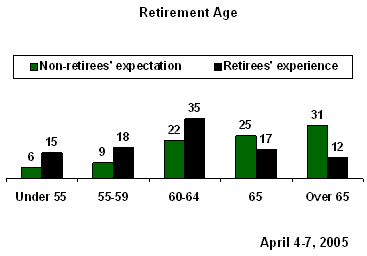
It is unclear whether the differences on retirement age or funding are due to somewhat unrealistic expectations for retirement on the part of non-retirees, or whether they are a reflection of the growing realities concerning retirement. In the past few decades, the age at which Americans are eligible to receive Social Security benefits has increased. Additionally, Social Security gives higher payouts if recipients begin receiving benefits at a later age. Both factors may have encouraged Americans to retire (or want to retire) at later ages. Indeed, the reported average age of retirement for retirees, according to Gallup's data, has increased from 57 in 1991 to the current 60, and the expected average age of retirement has climbed from 60 in 1995 to the current 64.
The differences between non-retirees' expectations and retirees' reality concerning the funding sources of retirement may also be influenced by societal or policy changes. For example, many companies no longer offer pension plans to their workers, and 401(k) plans are growing in popularity as an alternative. Also, the looming concerns about the long-term financial prospects of the Social Security system may be conditioning younger Americans to seek other sources of income to support them during their retirement years.
Survey Methods
These results are based on telephone interviews with a randomly selected national sample of 1,010 adults, aged 18 and older, conducted April 4-7, 2005. For results based on this sample, one can say with 95% confidence that the maximum error attributable to sampling and other random effects is ±3 percentage points. In addition to sampling error, question wording and practical difficulties in conducting surveys can introduce error or bias into the findings of public opinion polls.
For the results based on the sample of 767 non-retirees, the maximum margin of sampling error is ±4 percentage points.
For results based on the sample of 243 retirees, the maximum margin of sampling error is ±7 percentage points.
19. Next, please tell me how concerned you are right now about each of the following financial matters, based on your current financial situation -- are you very worried, moderately worried, not too worried, or not worried at all. If a particular item does not apply to you, please say so. First, how worried are you about … How about -- [RANDOM ORDER]?
A. Not being able to pay medical costs for normal healthcare
|
Very |
Moderately |
Not too |
Not worried |
DOESN'T APPLY |
No |
|
|
% |
% |
% |
% |
% |
% |
|
|
2005 Apr 4-7 |
23 |
19 |
24 |
32 |
2 |
* |
|
2004 Apr 5-8 |
21 |
16 |
24 |
36 |
3 |
* |
|
2003 Apr 7-9 |
17 |
20 |
24 |
36 |
3 |
* |
|
2002 Apr 8-11 |
18 |
17 |
26 |
36 |
2 |
1 |
|
2001 Apr 6-8 |
22 |
22 |
24 |
31 |
1 |
0 |
|
* Less than 0.5% |
||||||
|
(vol.) = Volunteered response |
||||||
B. Not being able to pay medical costs in the event of a serious illness or accident
|
Very |
Moderately |
Not too |
Not worried |
DOESN'T APPLY |
No |
|
|
% |
% |
% |
% |
% |
% |
|
|
2005 Apr 4-7 |
30 |
22 |
25 |
22 |
1 |
* |
|
2004 Apr 5-8 |
26 |
21 |
24 |
27 |
2 |
* |
|
2003 Apr 7-9 |
24 |
22 |
23 |
29 |
2 |
-- |
|
2002 Apr 8-11 |
21 |
24 |
25 |
28 |
1 |
1 |
|
2001 Apr 6-8 |
27 |
23 |
24 |
25 |
1 |
* |
|
* Less than 0.5% |
||||||
|
(vol.) = Volunteered response |
||||||
C. Not being able to pay your rent, mortgage, or other housing costs
|
Very |
Moderately |
Not too |
Not worried |
DOESN'T APPLY |
No |
|
|
% |
% |
% |
% |
% |
% |
|
|
2005 Apr 4-7 |
10 |
13 |
30 |
43 |
4 |
* |
|
2004 Apr 5-8 |
11 |
13 |
26 |
42 |
7 |
1 |
|
2003 Apr 7-9 |
11 |
14 |
27 |
43 |
5 |
* |
|
2002 Apr 8-11 |
8 |
14 |
26 |
47 |
4 |
1 |
|
2001 Apr 6-8 |
10 |
14 |
28 |
44 |
4 |
* |
|
* Less than 0.5% |
||||||
|
(vol.) = Volunteered response |
||||||
D. Not being able to maintain the standard of living you enjoy
|
Very |
Moderately |
Not too |
Not worried |
DOESN'T APPLY |
No |
|
|
% |
% |
% |
% |
% |
% |
|
|
2005 Apr 4-7 |
14 |
27 |
31 |
28 |
* |
* |
|
2004 Apr 5-8 |
16 |
23 |
29 |
31 |
1 |
* |
|
2003 Apr 7-9 |
14 |
24 |
32 |
29 |
1 |
* |
|
2002 Apr 8-11 |
12 |
23 |
31 |
32 |
1 |
1 |
|
2001 Apr 6-8 |
16 |
27 |
30 |
26 |
1 |
* |
|
* Less than 0.5% |
||||||
|
(vol.) = Volunteered response |
||||||
E. Not being able to make the minimum payments on your credit cards
|
Very |
Moderately |
Not too |
Not worried |
DOESN'T APPLY |
No |
|
|
% |
% |
% |
% |
% |
% |
|
|
2005 Apr 4-7 |
7 |
9 |
22 |
45 |
17 |
* |
|
2004 Apr 5-8 |
7 |
10 |
22 |
46 |
15 |
* |
|
2003 Apr 7-9 |
7 |
9 |
21 |
47 |
16 |
* |
|
2002 Apr 8-11 |
7 |
8 |
21 |
48 |
15 |
1 |
|
2001 Apr 6-8 |
9 |
9 |
22 |
41 |
19 |
* |
|
* Less than 0.5% |
||||||
|
(vol.) = Volunteered response |
||||||
F. Not having enough money for retirement
|
Very |
Moderately |
Not too |
Not worried |
DOESN'T APPLY |
No |
|
|
% |
% |
% |
% |
% |
% |
|
|
2005 Apr 4-7 |
30 |
30 |
18 |
19 |
2 |
1 |
|
2004 Apr 5-8 |
26 |
26 |
21 |
23 |
4 |
* |
|
2003 Apr 7-9 |
24 |
30 |
22 |
20 |
4 |
* |
|
2002 Apr 8-11 |
25 |
29 |
19 |
22 |
4 |
1 |
|
2001 Apr 6-8 |
24 |
29 |
24 |
19 |
4 |
* |
|
* Less than 0.5% |
||||||
|
(vol.) = Volunteered response |
||||||
G. Not having enough to pay your normal monthly bills
|
Very |
Moderately |
Not too |
Not worried |
DOESN'T APPLY |
No |
|
|
% |
% |
% |
% |
% |
% |
|
|
2005 Apr 4-7 |
13 |
17 |
32 |
37 |
1 |
* |
|
2004 Apr 5-8 |
12 |
20 |
28 |
39 |
1 |
* |
|
2003 Apr 7-9 |
12 |
18 |
29 |
40 |
1 |
* |
|
2002 Apr 8-11 |
11 |
19 |
27 |
42 |
1 |
* |
|
2001 Apr 6-8 |
12 |
20 |
29 |
39 |
* |
* |
|
* Less than 0.5% |
||||||
|
(vol.) = Volunteered response |
||||||
23. Right now, do you have enough money to live comfortably, or not?
|
Yes |
No |
No opinion |
|
|
% |
% |
% |
|
|
2005 Apr 4-7 |
72 |
28 |
* |
|
2004 Apr 5-8 |
74 |
25 |
1 |
|
2003 Apr 7-9 |
73 |
26 |
1 |
|
2002 Apr 8-11 |
75 |
24 |
1 |
|
* Less than 0.5% |
|||
24. When you retire, do you think you will have enough money to live comfortably, or not?
BASED ON 767 NON-RETIRED ADULTS
|
Yes |
No |
No opinion |
|
|
% |
% |
% |
|
|
2005 Apr 4-7 |
53 |
40 |
7 |
|
2004 Apr 5-8 |
59 |
35 |
6 |
|
2003 Apr 7-9 |
59 |
36 |
5 |
|
2002 Apr 8-11 |
59 |
32 |
9 |
25. When you retire, how much do you expect to rely on each of the following sources of money -- will it be a major source of income, a minor source of income, or not a source at all? How about -- [READ A-J IN ORDER]?
BASED ON 767 NON-RETIRED ADULTS
A. Social Security
|
Major source |
Minor source |
Not a source |
No opinion |
|
|
% |
% |
% |
% |
|
|
2005 Apr 4-7 |
28 |
53 |
18 |
1 |
|
2004 Apr 5-8 |
25 |
56 |
18 |
1 |
|
2003 Apr 7-9 |
29 |
57 |
12 |
2 |
|
2002 Apr 8-11 |
27 |
56 |
15 |
2 |
|
2001 Apr 6-8 |
28 |
57 |
14 |
1 |
B. A 401(k), IRA, Keogh or other retirement savings account
|
Major source |
Minor source |
Not a source |
No opinion |
|
|
% |
% |
% |
% |
|
|
2005 Apr 4-7 |
49 |
33 |
17 |
1 |
|
2004 Apr 5-8 |
54 |
28 |
18 |
* |
|
2003 Apr 7-9 |
47 |
34 |
17 |
2 |
|
2002 Apr 8-11 |
53 |
28 |
16 |
3 |
|
2001 Apr 6-8 |
58 |
26 |
15 |
1 |
|
* Less than 0.5% |
||||
C. Individual stock or stock mutual fund investments
|
Major source |
Minor source |
Not a source |
No opinion |
|
|
% |
% |
% |
% |
|
|
2005 Apr 4-7 |
21 |
41 |
37 |
1 |
|
2004 Apr 5-8 |
20 |
41 |
38 |
1 |
|
2003 Apr 7-9 |
20 |
42 |
36 |
2 |
|
2002 Apr 8-11 |
23 |
43 |
32 |
2 |
|
2001 Apr 6-8 |
24 |
39 |
36 |
1 |
D. Money from an inheritance
|
Major source |
Minor source |
Not a source |
No opinion |
|
|
% |
% |
% |
% |
|
|
2005 Apr 4-7 |
7 |
28 |
63 |
2 |
|
2004 Apr 5-8 |
8 |
31 |
60 |
1 |
|
2003 Apr 7-9 |
7 |
31 |
60 |
2 |
|
2002 Apr 8-11 |
10 |
28 |
60 |
2 |
|
2001 Apr 6-8 |
7 |
29 |
63 |
1 |
E. Other savings such as a regular savings account or CDs
|
Major source |
Minor source |
Not a source |
No opinion |
|
|
% |
% |
% |
% |
|
|
2005 Apr 4-7 |
18 |
55 |
27 |
* |
|
2004 Apr 5-8 |
17 |
52 |
30 |
1 |
|
2003 Apr 7-9 |
19 |
52 |
27 |
2 |
|
2002 Apr 8-11 |
23 |
50 |
25 |
2 |
|
2001 Apr 6-8 |
16 |
51 |
32 |
1 |
|
* Less than 0.5% |
||||
F. A work sponsored pension plan
|
Major source |
Minor source |
Not a source |
No opinion |
|
|
% |
% |
% |
% |
|
|
2005 Apr 4-7 |
28 |
31 |
39 |
2 |
|
2004 Apr 5-8 |
30 |
32 |
37 |
1 |
|
2003 Apr 7-9 |
28 |
32 |
39 |
1 |
|
2002 Apr 8-11 |
29 |
33 |
36 |
2 |
|
2001 Apr 6-8 |
34 |
28 |
37 |
1 |
G. Rent and royalties
|
Major source |
Minor source |
Not a source |
No opinion |
|
|
% |
% |
% |
% |
|
|
2005 Apr 4-7 |
6 |
24 |
69 |
1 |
|
2004 Apr 5-8 |
5 |
25 |
69 |
1 |
|
2003 Apr 7-9 |
5 |
27 |
66 |
2 |
|
2002 Apr 8-11 |
8 |
29 |
60 |
3 |
|
2001 Apr 6-8 |
5 |
22 |
72 |
1 |
H. Annuities or insurance plans
|
Major source |
Minor source |
Not a source |
No opinion |
|
|
% |
% |
% |
% |
|
|
2005 Apr 4-7 |
9 |
34 |
56 |
1 |
|
2004 Apr 5-8 |
8 |
34 |
57 |
1 |
|
2003 Apr 7-9 |
10 |
36 |
53 |
1 |
|
2002 Apr 8-11 |
7 |
40 |
51 |
2 |
|
2001 Apr 6-8 |
7 |
34 |
58 |
1 |
I. Part-time work
|
Major source |
Minor source |
Not a source |
No opinion |
|
|
2005 Apr 4-7 |
18 |
51 |
30 |
1 |
|
2004 Apr 5-8 |
17 |
50 |
32 |
1 |
|
2003 Apr 7-9 |
13 |
57 |
29 |
1 |
|
2002 Apr 8-11 |
16 |
51 |
31 |
2 |
|
2001 Apr 6-8 |
10 |
52 |
36 |
2 |
J. The equity you have built up in your home
|
Major source |
Minor source |
Not a source |
No opinion |
|
|
% |
% |
% |
% |
|
|
2005 Apr 4-7 |
26 |
41 |
31 |
2 |
|
2004 Apr 5-8 |
25 |
38 |
34 |
3 |
|
2003 Apr 7-9 |
25 |
42 |
30 |
3 |
|
2002 Apr 8-11 |
24 |
40 |
33 |
3 |
26. At what age do you expect to retire?
BASED ON 767 NON-RETIRED ADULTS
|
Under |
55-59 |
60-64 |
65 |
Over |
Never |
No |
Mean |
|
|
% |
% |
% |
% |
% |
% |
% |
% |
|
|
2005 Apr 4-7 |
6 |
9 |
22 |
25 |
31 |
-- |
7 |
64 |
|
2004 Apr 5-8 |
9 |
11 |
21 |
26 |
26 |
-- |
7 |
64 |
|
2003 Apr 7-9 |
8 |
11 |
23 |
28 |
22 |
-- |
8 |
63 |
|
2002 Apr 8-11 |
7 |
15 |
21 |
26 |
21 |
-- |
10 |
63 |
|
1995 Dec 15-18 |
15 |
12 |
23 |
29 |
15 |
5 |
4 |
60 |
|
1995 Nov 6-8 |
16 |
11 |
20 |
34 |
12 |
3 |
4 |
60 |
27. If you were rich enough so that money were no object, at what age would you like to retire, or would you have retired?
BASED ON 767 NON-RETIRED ADULTS
|
Under |
35-44 |
45-54 |
55-64 |
65 and |
No opinion |
Mean |
|
|
2005 Apr 4-7 |
11% |
15 |
26 |
28 |
14 |
6 |
51 |
28. Would you say you are mostly -- [ROTATED: looking forward to retirement (or are you mostly) dreading retirement]?
BASED ON 767 NON-RETIRED ADULTS
|
Looking forward |
Dreading |
No |
|
|
2005 Apr 4-7 |
69 |
25 |
6 |
29. Would you like to continue working part-time when you retire, or would you like to stop working altogether?
BASED ON 767 NON-RETIRED ADULTS
|
Work part-time |
Stop work altogether |
No opinion |
|
|
2005 Apr 4-7 |
64% |
33 |
3 |
30. How much do you rely on each of the following sources of income today -- is it a major source of income, a minor source of income, or not a source at all? How about -- [READ A-J IN ORDER]?
BASED ON 243 RETIRED ADULTS
A. Social Security
|
Major source |
Minor source |
Not a source |
No opinion |
|
|
% |
% |
% |
% |
|
|
2005 Apr 4-7 |
58 |
30 |
11 |
1 |
|
2004 Apr 5-8 |
55 |
31 |
13 |
1 |
|
2003 Apr 7-9 |
50 |
35 |
13 |
2 |
|
2002 Apr 8-11 |
58 |
22 |
18 |
2 |
B. A 401(k), IRA, Keogh or other retirement savings account
|
Major source |
Minor source |
Not a source |
No opinion |
|
|
% |
% |
% |
% |
|
|
2005 Apr 4-7 |
21 |
29 |
46 |
4 |
|
2004 Apr 5-8 |
20 |
27 |
50 |
3 |
|
2003 Apr 7-9 |
20 |
26 |
51 |
3 |
|
2002 Apr 8-11 |
19 |
23 |
56 |
2 |
C. Individual stock or stock mutual fund investments
|
Major source |
Minor source |
Not a source |
No opinion |
|
|
% |
% |
% |
% |
|
|
2005 Apr 4-7 |
12 |
32 |
53 |
3 |
|
2004 Apr 5-8 |
10 |
26 |
62 |
2 |
|
2003 Apr 7-9 |
12 |
27 |
57 |
4 |
|
2002 Apr 8-11 |
15 |
31 |
52 |
2 |
D. Money from an inheritance
|
Major source |
Minor source |
Not a source |
No opinion |
|
|
% |
% |
% |
% |
|
|
2005 Apr 4-7 |
3 |
13 |
82 |
2 |
|
2004 Apr 5-8 |
3 |
11 |
85 |
1 |
|
2003 Apr 7-9 |
4 |
11 |
82 |
3 |
|
2002 Apr 8-11 |
4 |
11 |
84 |
1 |
E. Other savings such as a regular savings account or CDs
|
Major source |
Minor source |
Not a source |
No opinion |
|
|
% |
% |
% |
% |
|
|
2005 Apr 4-7 |
11 |
41 |
46 |
2 |
|
2004 Apr 5-8 |
13 |
34 |
51 |
2 |
|
2003 Apr 7-9 |
14 |
39 |
46 |
1 |
|
2002 Apr 8-11 |
15 |
33 |
51 |
1 |
F. A work sponsored pension plan
|
Major source |
Minor source |
Not a source |
No opinion |
|
|
% |
% |
% |
% |
|
|
2005 Apr 4-7 |
36 |
22 |
40 |
2 |
|
2004 Apr 5-8 |
34 |
22 |
42 |
2 |
|
2003 Apr 7-9 |
41 |
14 |
44 |
1 |
|
2002 Apr 8-11 |
29 |
16 |
51 |
4 |
G. Rent and royalties
|
Major source |
Minor source |
Not a source |
No opinion |
|
|
% |
% |
% |
% |
|
|
2005 Apr 4-7 |
2 |
13 |
82 |
3 |
|
2004 Apr 5-8 |
4 |
12 |
82 |
2 |
|
2003 Apr 7-9 |
5 |
17 |
76 |
2 |
|
2002 Apr 8-11 |
6 |
13 |
80 |
1 |
H. Annuities or insurance plans
|
Major source |
Minor source |
Not a source |
No opinion |
|
|
% |
% |
% |
% |
|
|
2005 Apr 4-7 |
6 |
26 |
66 |
2 |
|
2004 Apr 5-8 |
9 |
21 |
67 |
3 |
|
2003 Apr 7-9 |
6 |
23 |
69 |
2 |
|
2002 Apr 8-11 |
8 |
21 |
69 |
2 |
I. Part-time work
|
Major source |
Minor source |
Not a source |
No opinion |
|
|
% |
% |
% |
% |
|
|
2005 Apr 4-7 |
6 |
17 |
75 |
2 |
|
2004 Apr 5-8 |
2 |
17 |
80 |
1 |
|
2003 Apr 7-9 |
1 |
18 |
80 |
1 |
|
2002 Apr 8-11 |
3 |
14 |
82 |
1 |
J. The equity you have built up in your home
|
Major source |
Minor source |
Not a source |
No opinion |
|
|
% |
% |
% |
% |
|
|
2005 Apr 4-7 |
25 |
19 |
49 |
7 |
|
2004 Apr 5-8 |
24 |
19 |
50 |
7 |
|
2003 Apr 7-9 |
25 |
15 |
55 |
5 |
|
2002 Apr 8-11 |
18 |
14 |
60 |
8 |
31. At what age did you retire?
BASED ON 243 RETIRED ADULTS
|
Under |
55-59 |
60-64 |
65 |
Over |
No |
Mean |
|
|
% |
% |
% |
% |
% |
% |
||
|
2005 Apr 4-7 |
15 |
18 |
35 |
17 |
12 |
3 |
60 |
|
2004 Apr 5-8 |
17 |
18 |
37 |
14 |
12 |
2 |
60 |
|
2003 Apr 7-9 |
21 |
14 |
34 |
12 |
15 |
4 |
59 |
|
2002 Apr 8-11 |
19 |
19 |
34 |
13 |
11 |
4 |
59 |
|
1993 Apr ^ |
27 |
18 |
25 |
14 |
11 |
5 |
57 |
|
1992 Apr ^ |
21 |
16 |
36 |
13 |
8 |
6 |
58 |
|
1991 May ^ |
28 |
12 |
36 |
11 |
7 |
6 |
57 |
|
^ Gallup/Employee Benefits Research Institute poll |
|||||||