GALLUP NEWS SERVICE
PRINCETON, NJ -- Investor optimism surged in December nearly matching its February high for the year. This strong positive reaction to the sharp drop in gas prices at the pump during recent months is all the more impressive given the continued uncertainty among investors concerning the future volatility of energy prices over the next year. For example, investors expect gas prices to increase over the next six months by a margin of 42% to 21%. In fact, nearly two in three investors (61%) say it is likely that gas prices will reach $3.00 a gallon once again in 2006.
On the other hand, few investors appear to be anticipating a significant slowdown in housing early next year. As a result, Friday's Commerce Department report, which states that new home sales experienced their biggest drop in almost 12 years during November, is likely to take many investors by surprise. So might the trend in housing prices, as the median price of a new home fell for the third straight month in November.
Few Say "Housing Bubble" Is Over
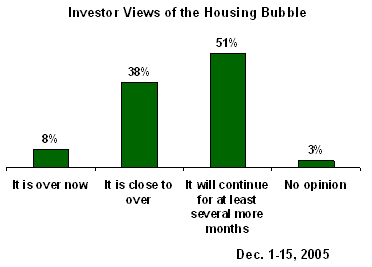
Among the 86% of investors who say they have heard of the so-called "housing bubble," half say they expect it to continue for several more months and 38% say it is close to over. Only 8% of investors say the housing bubble is over now.
Many Expect Housing Prices to Continue Increasing
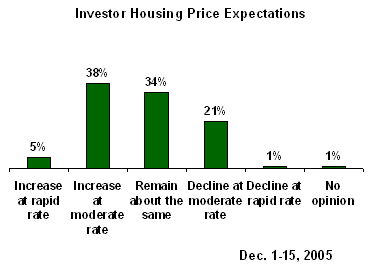
Three in four investors expect housing prices to remain the same or continue increasing over the next year, with 38% saying they expect a moderate rate of housing price increase and 5% saying they expect a rapid increase. In sharp contrast, only one in five investors expect housing prices to decline, with just 1% expecting a rapid price decline.
Investor Optimism Surged in December
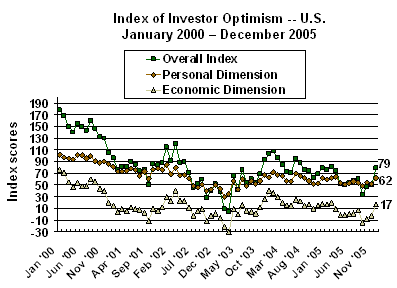
In somewhat of a delayed reaction to plunging gas prices and improving conditions in the job market, investor optimism surged 29 points in December and now stands at 79 -- its highest level since February when it reached 82. This is the fifth straight year investor optimism has increased between November and December, reflecting a seasonal tendency.
In six of the past seven years, the Index has increased between November and December. The average increase over the past three years was 10 to 11 points -- about one third the increase in December 2005. In 2000, the Index actually dropped 24 points from November to December. The previous year, the Index jumped 26 points.
Housing Slowdown Has Major Economic Implications
A Merrill Lynch & Co. report in August 2005 asserts that the real estate boom has accounted for about half of the economic growth and jobs created over the past five years. While such estimates are extremely difficult to substantiate, this assertion appears to have considerable face-validity. The traditional ripple effects of a strong housing market have been magnified in recent years as many consumers have liquefied their housing wealth gains by way of home equity loans and lines. This is one reason consumers have been able to maintain their spending throughout periods of economic adversity during the past five years.
The record fall in new home sales leaves the new home market with a record inventory of unsold homes. In turn, this suggests that the three-month drop in new home prices may continue in the months ahead. Falling new home sales and new home prices also suggest that conditions in the existing home market are likely to continue to deteriorate. Existing home sales fell in October and the number of unsold existing homes reached its highest level since April 1986.
Maybe investors will turn out to be right and the housing slowdown will not send housing prices plunging, nor have a significant impact on the overall economy. Unfortunately, past experience suggests just the opposite, at least as far as the overall economy is concerned.
Survey Methods
Results for the Index of Investor Optimism are based on telephone interviews with 803 investors, aged 18 and older, conducted Dec. 1-15, 2005. For results based on the total sample of investors, one can say with 95% confidence that the maximum margin of sampling error is ±4 percentage points. In addition to sampling error, question wording and practical difficulties in conducting surveys can introduce error or bias into the findings of public opinion polls.