GALLUP NEWS SERVICE
PRINCETON, NJ -- Gallup's latest update on the generic Congressional ballot, from a Sept. 7-10. 2006 poll, finds Democrats with a 53% to 41% advantage over Republicans. For most of the year, Democrats have enjoyed about a 10-percentage point advantage on this measure, though in the two prior polls the lead was less than that.
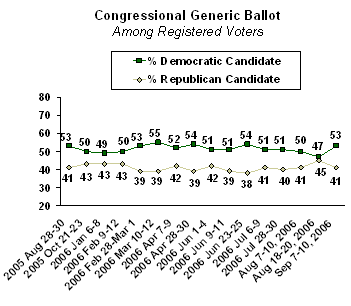
Labor Day is the unofficial beginning of the fall campaign each year. How do this year's post-Labor Day results compare with September generic ballot results from previous election years? Although past September results have not been a perfect predictor of the final outcome, historically, Democrats have generally done well when they have enjoyed a large lead among registered voters at this stage of the campaign.
|
Vote Preference Among Registered Voters |
||||
|
Average of |
Final |
|||
|
Midterm |
Vote |
Democratic |
Vote |
Democratic |
|
% |
|
% |
|
|
|
1974 |
52 - 25 |
+27 |
58 - 41 |
+17 |
|
1978 |
51 - 29 |
+22 |
54 - 45 |
+9 |
|
1982* |
52 - 37 |
+15 |
55 - 43 |
+12 |
|
1986 |
46 - 45 |
+1 |
55 - 45 |
+10 |
|
1990 |
50 - 43 |
+7 |
53 - 45 |
+8 |
|
1994 |
45 - 49 |
-4 |
46 - 52 |
-6 |
|
1998 |
50 - 41 |
+9 |
48 - 48 |
0 |
|
2002 |
47 - 43 |
+4 |
46 - 51 |
-5 |
|
2006 |
53 - 41 |
+12 |
-- |
-- |
|
*No polls were conducted in September 1982. Results shown are for an Aug. 24-30, 1982 poll. |
||||
The Democrats had large leads in 1974 and 1982, which proved to be very strong Democratic years. They also had a sizeable lead in September 1978 -- a year in which they lost seats -- but given their large majority going into that election, they still managed to win a solid majority of all Congressional ballots cast.
Also, Democrats led by an average of nine points among registered voters in September 1998. While the final popular vote was even in 1998, it can be considered a better-than-expected Democratic year since they managed to buck the historical trend by winning seats when a member of their party occupied the White House.
Since 1994, when Republicans took majority control of the House of Representatives from the Democrats after 40 years of Democratic rule, Democratic advantages on the generic ballot have not been as large as they were before then. So the current 12-point Democratic advantage is unusual in the more recent political environment and underscores their strong positioning heading into the final eight weeks of the campaign.
Turnout
Gallup's Congressional vote estimate is based on the voting preferences of registered voters, and as such provides only an indirect sense of what the outcome would be if the election were held today. In midterm elections especially, a much smaller proportion of registered voters actually vote. Thus, a key to the actual outcome will be what the turnout rates are among Democratic supporters versus Republican supporters. In future polls, Gallup will apply its likely voter model to the generic ballot to get a better sense of what the vote will be after turnout is taken into account.
The current poll does provide some insight into how turnout might affect this year's results. First, Gallup finds that Democrats maintain a solid lead among "regular midterm voters," defined as registered voters who voted in the last midterm election and say they "always vote" in elections. This group represents about half of all registered voters, closer to what turnout usually is in midterm election years. Among regular midterm voters, 53% say they plan to vote for the Democratic House candidate, while 41% plan to support the Republican.
Second, one's interest in a particular election can also help motivate them to cast their ballot on Election Day. Gallup asks registered voters if they are "more enthusiastic" or "less enthusiastic" about voting than usual. Throughout the year, a slightly greater percentage of registered voters have said they were "more enthusiastic" about voting this year than have said this in past midterm election years. In the current poll, 44% of registered voters say they are more enthusiastic, while 44% say they are less enthusiastic. This suggests turnout could be slightly higher this year than it has been in past elections.
|
Average Percentage of Registered Voters |
|||
|
% |
|||
|
1994 |
37 |
||
|
1998 |
39 |
||
|
2002 |
41 |
||
|
2006 |
45 |
||
Democrats show a net surplus of enthusiasm, with 47% saying they are more enthusiastic and 42% less so. On the other hand, Republicans show a net deficit, with 40% reporting greater than usual enthusiasm and 47% less enthusiasm. Historically, this measure has not been a good predictor of turnout by the party groups. However, when a party has an advantage on this measure they tend to do better in the election. For example, Republicans showed an advantage in net enthusiasm in the strong Republican years of 1994 and 2002, while Democrats and Republicans were about even on this measure in the close election year of 1998.
Survey Methods
These results are based on telephone interviews with a randomly selected national sample of 925 registered voters, aged 18 and older, conducted Sept. 7-10, 2006. For results based on this sample, one can say with 95% confidence that the maximum error attributable to sampling and other random effects is ±4 percentage points. In addition to sampling error, question wording and practical difficulties in conducting surveys can introduce error or bias into the findings of public opinion polls.
2. If the elections for Congress were being held today, which party's candidate would you vote for in your Congressional district -- [ROTATED: the Democratic Party's candidate or the Republican Party's candidate]?
2A. (Asked of those who are undecided) As of today, do you lean more toward -- [ROTATE: the Democratic Party's candidate or the Republican Party's candidate]?
|
Democratic |
Republican |
Undecided/ |
|
|
Registered Voters |
% |
% |
% |
|
2006 Sep 7-10 |
53 |
41 |
7 |
|
2006 Aug 18-20 |
47 |
45 |
7 |
|
2006 Aug 7-10 |
50 |
41 |
9 |
|
2006 Jul 28-30 |
51 |
40 |
8 |
|
2006 Jul 6-9 |
51 |
41 |
9 |
|
2006 Jun 23-25 |
54 |
38 |
7 |
|
2006 Jun 9-11 |
51 |
39 |
10 |
|
2006 Jun 1-4 |
51 |
42 |
7 |
|
2006 Apr 28-30 |
54 |
39 |
7 |
|
2006 Apr 7-9 |
52 |
42 |
6 |
|
2006 Mar 10-12 |
55 |
39 |
7 |
|
2006 Feb 28-Mar 1 |
53 |
39 |
7 |
|
2006 Feb 9-12 |
50 |
43 |
8 |
|
2006 Jan 6-8 |
49 |
43 |
8 |
|
2005 Oct 21-23 |
50 |
43 |
7 |
|
2005 Aug 28-30 |
53 |
41 |
6 |
|
|
|
|
|
|
Regular Voters^ |
|
|
|
|
2006 Sep 7-10 |
53 |
43 |
4 |
|
2006 Aug 18-20 |
48 |
48 |
4 |
|
2006 Aug 7-10 |
N/A |
N/A |
N/A |
|
2006 Jul 28-30 |
50 |
42 |
7 |
|
2006 Jul 6-9 |
51 |
42 |
7 |
|
2006 Jun 23-25 |
55 |
38 |
7 |
|
2006 Jun 9-11 |
49 |
44 |
7 |
|
2006 Jun 1-4 |
55 |
40 |
5 |
|
2006 Apr 28-30 |
53 |
44 |
3 |
|
2006 Apr 7-9 |
51 |
44 |
5 |
|
^ Regular voters are defined as registered voters who say they "always vote" and who say they voted in the last midterm election. The regular voter sample consists of 558 respondents and has a margin of sampling error of ±5 percentage points. |
|||
Turning back to the election for Congress this year,
29. Compared to previous elections, are you more enthusiastic about voting than usual, or less enthusiastic?
Trend for Midterm Elections
|
More |
Less |
|
No |
|
|
Registered Voters |
% |
% |
% |
% |
|
2006 Sep 7-10 |
44 |
44 |
10 |
1 |
|
2006 Aug 18-20 |
42 |
40 |
16 |
2 |
|
2006 Jun 23-25 |
49 |
36 |
14 |
1 |
|
2006 Apr 28-30 |
46 |
39 |
14 |
1 |
|
2006 Apr 7-9 |
42 |
44 |
13 |
1 |
|
2006 Jan 6-8 |
46 |
37 |
15 |
1 |
|
2002 Oct 31-Nov 3 |
41 |
42 |
15 |
2 |
|
1998 Oct 29-Nov 1 |
41 |
43 |
15 |
1 |
|
1998 Oct 23-25 |
37 |
44 |
18 |
1 |
|
1998 Oct 9-12 |
45 |
38 |
16 |
1 |
|
1998 Aug 21-23 |
39 |
39 |
19 |
3 |
|
1998 Apr 17-19 |
31 |
47 |
20 |
2 |
|
1994 Nov 2-6 |
40 |
45 |
14 |
1 |
|
1994 Oct 7-9 |
34 |
44 |
20 |
2 |
|
|
|
|
|
|
|
National Adults |
|
|
|
|
|
2006 Sep 7-10 |
42 |
46 |
10 |
2 |
|
2006 Aug 18-20 |
39 |
43 |
16 |
3 |
|
2006 Jun 23-25 |
50 |
36 |
13 |
1 |
|
2006 Apr 28-30 |
44 |
42 |
13 |
1 |
|
2006 Apr 7-9 |
40 |
46 |
12 |
2 |
|
2006 Jan 6-8 |
45 |
39 |
14 |
1 |
|
2002 Oct 31-Nov 3 |
38 |
45 |
14 |
3 |
|
1998 Oct 29-Nov 1 |
37 |
46 |
14 |
3 |
|
1998 Oct 23-25 |
35 |
47 |
16 |
2 |
|
1998 Oct 9-12 |
35 |
47 |
16 |
2 |
|
1998 Aug 21-23 |
38 |
41 |
17 |
4 |
|
1998 Apr 17-19 |
30 |
48 |
19 |
3 |
|
1994 Nov 2-6 |
38 |
48 |
13 |
2 |
|
1994 Oct 7-9 |
34 |
46 |
18 |
2 |
|
|
|
|
|
|
|
Republicans/Republican leaners |
||||
|
2006 Sep 7-10 |
40 |
47 |
11 |
1 |
|
2006 Aug 18-20 |
36 |
40 |
22 |
2 |
|
2006 Jun 23-25 |
43 |
35 |
21 |
* |
|
2006 Apr 28-30 |
38 |
46 |
15 |
1 |
|
2006 Apr 7-9 |
33 |
47 |
18 |
2 |
|
2006 Jan 6-8 |
47 |
32 |
20 |
1 |
|
2002 Oct 31-Nov 3 |
42 |
42 |
15 |
1 |
|
1998 Oct 29-Nov 1 |
39 |
46 |
14 |
1 |
|
1998 Oct 23-25 |
44 |
39 |
16 |
1 |
|
1998 Oct 9-12 |
45 |
36 |
17 |
2 |
|
1998 Aug 21-23 |
42 |
39 |
17 |
2 |
|
1998 Apr 17-19 |
31 |
48 |
19 |
2 |
|
1994 Nov 2-6 |
44 |
44 |
11 |
1 |
|
1994 Oct 7-9 |
40 |
42 |
18 |
* |
|
|
|
|
|
|
|
Democrats/Democratic leaners |
||||
|
2006 Sep 7-10 |
47 |
42 |
9 |
2 |
|
2006 Aug 18-20 |
46 |
43 |
9 |
2 |
|
2006 Jun 23-25 |
56 |
35 |
8 |
1 |
|
2006 Apr 28-30 |
50 |
37 |
12 |
1 |
|
2006 Apr 7-9 |
48 |
43 |
8 |
1 |
|
2006 Jan 6-8 |
48 |
44 |
7 |
1 |
|
2002 Oct 31-Nov 3 |
38 |
46 |
13 |
3 |
|
1998 Oct 29-Nov 1 |
39 |
44 |
15 |
2 |
|
1998 Oct 23-25 |
32 |
51 |
16 |
1 |
|
1998 Oct 9-12 |
41 |
45 |
13 |
1 |
|
1998 Aug 21-23 |
37 |
41 |
18 |
4 |
|
1998 Apr 17-19 |
31 |
48 |
19 |
2 |
|
1994 Nov 2-6 |
35 |
50 |
14 |
1 |
|
1994 Oct 7-9 |
29 |
50 |
18 |
3 |
|
(Vol.) Volunteered response |
||||
|
* Less than 0.5% |
||||