
There are many reasons for what is happening in Egypt and the Middle East, and freedom does have a special call. However, the underlying economic conditions appear to be getting far too little attention in the media. In part, this may be due to bad data. For example, the avowed unemployment rate in Egypt is 7.6% -- lower than the government's 9.4% or Gallup measure of 9.6% for the U.S. in December.
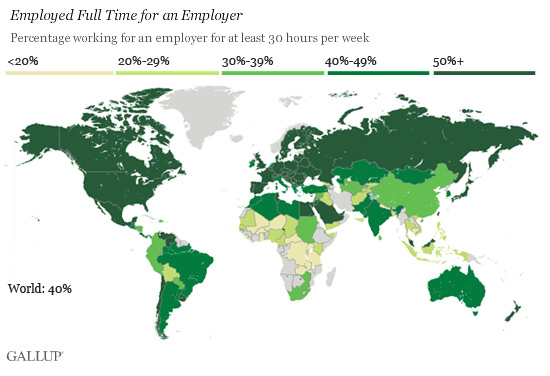
Jobs are clearly a major force driving the current uprising and more attention needs to be focused on measuring this challenge accurately. Gallup's new measure of those employed full time for an employer provides a worldwide measure of good jobs; the kind of pressure lack of jobs can generate is being reflected by people in the streets.
Another driver of the troubles in Egypt that seems to receive far too little coverage in the U.S. -- food price inflation. As commodity prices surge, food prices go up around the world. This may be tolerable for most in the developed world, but creates real hunger in the many countries where most people's money goes toward buying food.
No matter how the crisis in Egypt is resolved, the economic factors of jobs and food prices -- and the underlying drivers of unrest -- need to be measured accurately and addressed, not just in the U.S., but worldwide.