GALLUP NEWS SERVICE
PRINCETON, NJ -- Americans are increasingly likely to say things are not going well for the United States in Iraq, but the latest CNN/USA Today/Gallup poll finds no decline in the past month in public support for the U.S. presence there or in public approval of the way President Bush is handling the situation. Bush's overall job approval rating -- at 59% -- is also little changed across the four Gallup Polls conducted since mid-July.
The recent news on Iraq has largely centered on the rising U.S. death toll in that country, and the fact that there have been more U.S. deaths there since the conclusion of major combat on May 1 than there were in the actual war. Bush made a major speech Tuesday before the American Legion in St. Louis, in large part defending the U.S. presence in Iraq and emphasizing that the U.S. would not back down from its fight against terror in Iraq and/or elsewhere across the world.
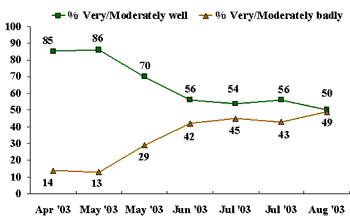
There's little question that Americans are increasingly aware that the United States is running into problems in Iraq. Half of the public perceives that things are going well for the United States now that the major fighting has ended. The percentage saying things are going badly is now 49%, up from 45% in mid-July, 42% in late June, and 29% in late May/early June.
| How would you say things are going for the U.S. in Iraq now that the major fighting has ended -- very well, moderately well, moderately badly, or very badly? |
 |
But despite this recognition of the challenges the United States faces in Iraq, Americans seem resolute in their support of the mission.
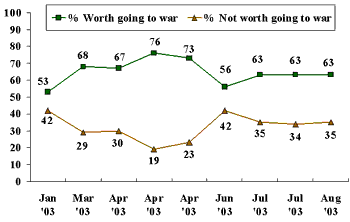
- Sixty-three percent say the situation in Iraq was worth going to war over. That's exactly the same as the readings from two July Gallup Polls that asked this question, and higher than the late June reading of 56%.
| All in all, do you think the situation in Iraq is/was worth going to war over, or not? |
 |
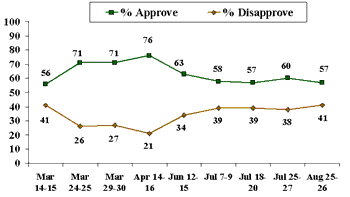
As a result, it should not be surprising that Bush's job approval rating from the American public for his handling of the situation in Iraq has remained fairly stable. The latest poll puts this figure at 57%. Again, that's similar to the ratings he has received over the last two months on this measure:
| George W. Bush's Job of Handling Iraq Situation |
 |
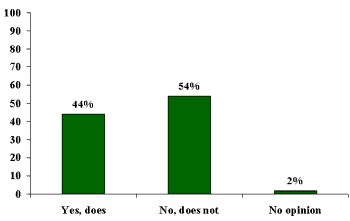
Bush does receive some criticism on one dimension of the Iraq situation, no doubt reflecting the increased concern that things are not going well: A majority of Americans say the Bush administration does not have a clear plan for handling the situation there. But evidently this concern has not translated into criticism of the overall purpose of U.S. efforts in Iraq, nor of Bush's handling of the Iraq situation overall.
| Do you think the Bush administration does -- or does not -- have a clear plan for handling the situation in Iraq? |
 |
| Aug. 25-26, 2003 |
Bush Job Approval: Mixed-Up Messages?
Some interpretations of recent polls have focused on what are perceived to be downturns in Bush's public opinion ratings and support for the Iraqi situation. A Newsweek article this past weekend, for example, said: "Americans are increasingly pessimistic about the U.S. mission in Iraq" and "Against this backdrop, President George W. Bush's approval ratings continue to decline."
But the just-finished CNN/USA Today/Gallup poll does not support the hypothesis that the recent events in Iraq have had a significantly negative impact on how the public views Bush's overall job performance as president:
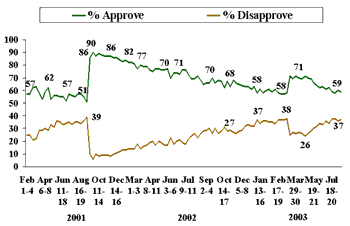
- Bush's overall job approval rating is at 59%, essentially unchanged from the ratings he received in the last three Gallup Polls: 60% in early August, 58% in late July, and 59% in mid-July. Bush's ratings this year were generally in the high 50%/low 60% range for much of the time prior to the initiation of the war with Iraq. His ratings jumped to as high as 71% during the Iraq war, and have dropped back to levels that are now generally the same as he had before the war -- but no lower.
- The key point to emphasize in the current situation is that Bush's ratings have held steady over the last 40 days or so, even in the midst of the less than positive news from Iraq:
| George W. Bush's Job Approval Rating |
 |
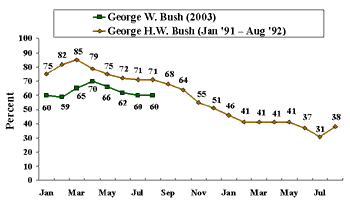
- At the same time, it is worth noting that President Bush could be enjoying what is only a temporary plateau in an otherwise downward trend in his job approval ratings. Bush's father's job approval ratings, which went from a monthly average of 85% in March 1991 to 31% by midyear 1992, leveled out for several months in the summer of 1991 before continuing their downward movement in the fall of that year:
| Job Approval Ratings During the Wars With
Iraq (monthly averages) |
 |
Is Iraq Part of the General War on Terrorism?
There has been a concerted effort on the Bush administration's part to tie America's military efforts in Iraq to the more general war on terrorism. As Bush said in his St. Louis speech: "We've also pursued the war on terror in Iraq. America and our coalition removed a regime that built, possessed and used weapons of mass destruction, a regime that sponsored terror and a regime that persecuted its people."
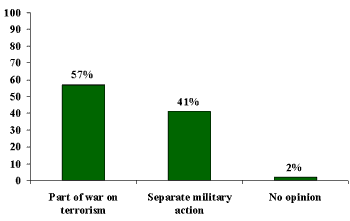
The administration's attempt to connect the Iraq war to terrorism in the minds of the American public has been at least partially successful. Fifty-seven percent of Americans agree that the war in Iraq is "part of the war on terrorism which began on Sept. 11, 2001" while 41% say it is an entirely separate military action. That 57% is actually higher than the percentage who agreed with this statement prior to the initiation of the war, in September 2002 and January of this year.
| Do you consider the war in Iraq to be part of the war on terrorism which began on Sept. 11, 2001, or do you consider it to be an entirely separate military action? |
 |
| Aug. 25-26, 2003 |
Withdraw Troops From Iraq?
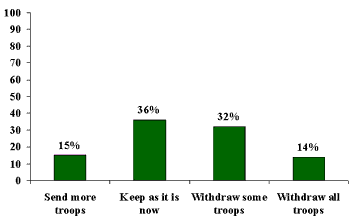
What should the United States do now? The civilian head of the Iraq coalition has asked the Congress for more money, although at the same time Secretary of Defense Donald Rumsfeld has argued that more troops are not needed at this point. The American public has relatively dispersed views on the issue of the level of the military presence in Iraq:
| Which comes closest to your view about what the U.S. should now do about the number of U.S. troops in Iraq -- the U.S. should send more troops to Iraq, the U.S. should keep the number of troops as it is now, the U.S. should begin to withdraw some troops from Iraq, or the U.S. should withdraw all of its troops from Iraq? |
 |
| Aug. 25-26, 2003 |
Only 14% advocate withdrawing all troops from Iraq, while about half say the current level of troops should be kept the same or expanded. A third say the United States should begin to withdraw at least some troops from Iraq.
Survey Methods
These results are based on telephone interviews with a randomly selected national sample of 1,009 adults, 18 years and older, conducted Aug. 25-26, 2003. For results based on this sample, one can say with 95 percent confidence that the maximum error attributable to sampling and other random effects is ±3 percentage points. In addition to sampling error, question wording and practical difficulties in conducting surveys can introduce error or bias into the findings of public opinion polls.
1. Do you approve or disapprove of the way George W. Bush is handling his job as president?
|
|
Disapprove |
No |
|
|
% |
% |
% |
|
|
2003 |
|||
|
2003 Aug 25-26 |
59 |
37 |
4 |
|
2003 Aug 4-6 |
60 |
36 |
4 |
|
2003 Jul 25-27 |
58 |
38 |
4 |
|
2003 Jul 18-20 |
59 |
38 |
3 |
|
2003 Jul 7-9 |
62 |
34 |
4 |
|
2003 Jun 27-29 |
61 |
36 |
3 |
|
2003 Jun 12-15 |
63 |
33 |
4 |
|
2003 Jun 9-10 |
62 |
34 |
4 |
|
2003 May 30-Jun 1 |
64 |
32 |
4 |
|
2003 May 19-21 |
66 |
30 |
4 |
|
2003 May 5-7 |
69 |
28 |
3 |
|
2003 Apr 22-23 |
70 |
26 |
4 |
|
2003 Apr 14-16 |
71 |
24 |
5 |
|
2003 Apr 7-9 |
69 |
26 |
5 |
|
2003 Apr 5-6 |
70 |
27 |
3 |
|
2003 Mar 29-30 |
71 |
26 |
3 |
|
2003 Mar 24-25 |
69 |
27 |
4 |
|
2003 Mar 22-23 |
71 |
25 |
4 |
|
2003 Mar 14-15 |
58 |
38 |
4 |
|
2003 Mar 3-5 |
57 |
37 |
6 |
|
2003 Feb 24-26 |
57 |
37 |
6 |
|
2003 Feb 17-19 |
58 |
37 |
5 |
|
2003 Feb 7-9 |
61 |
34 |
5 |
|
2003 Feb 3-6 |
59 |
35 |
6 |
|
2003 Jan 31-Feb 2 |
61 |
35 |
4 |
|
2003 Jan 23-25 |
60 |
36 |
4 |
|
2003 Jan 20-22 |
58 |
36 |
6 |
|
2003 Jan 13-16 |
61 |
34 |
5 |
|
2003 Jan 10-12 |
58 |
37 |
5 |
|
2003 Jan 3-5 |
63 |
32 |
5 |
|
2002 |
|||
|
2002 Dec 19-22 |
61 |
32 |
7 |
|
2002 Dec 16-17 |
63 |
33 |
4 |
|
2002 Dec 9-10 |
63 |
32 |
5 |
|
2002 Dec 5-8 |
64 |
29 |
7 |
|
2002 Nov 22-24 |
65 |
28 |
7 |
|
2002 Nov 11-14 |
66 |
26 |
8 |
|
2002 Nov 8-10 |
68 |
27 |
5 |
|
2002 Oct 31-Nov 3 |
63 |
29 |
8 |
|
2002 Oct 21-22 |
67 |
28 |
5 |
|
2002 Oct 14-17 |
62 |
31 |
7 |
|
2002 Oct 3-6 |
67 |
28 |
5 |
|
2002 Sep 23-26 |
68 |
26 |
6 |
|
2002 Sep 20-22 |
66 |
30 |
4 |
|
2002 Sep 13-16 |
70 |
26 |
4 |
|
2002 Sep 5-8 |
66 |
30 |
4 |
|
2002 Sep 2-4 |
66 |
29 |
5 |
|
2002 Aug 19-21 |
65 |
28 |
7 |
|
2002 Aug 5-8 |
68 |
26 |
6 |
|
2002 Jul 29-31 |
71 |
23 |
6 |
|
2002 Jul 26-28 |
69 |
26 |
5 |
|
2002 Jul 22-24 |
69 |
24 |
7 |
|
2002 Jul 9-11 |
73 |
21 |
6 |
|
2002 Jul 5-8 |
76 |
18 |
6 |
|
2002 Jun 28-30 |
76 |
19 |
5 |
|
2002 Jun 21-23 |
73 |
21 |
6 |
|
2002 Jun 17-19 |
74 |
20 |
6 |
|
2002 Jun 7-8 |
74 |
18 |
8 |
|
2002 Jun 3-6 |
70 |
23 |
7 |
|
2002 May 28-29 |
77 |
17 |
6 |
|
2002 May 20-22 |
76 |
17 |
7 |
|
2002 May 6-9 |
76 |
19 |
5 |
|
2002 Apr 29-May 1 |
77 |
20 |
3 |
|
2002 Apr 22-24 |
77 |
17 |
6 |
|
2002 Apr 8-11 |
75 |
20 |
5 |
|
2002 Apr 5-7 |
76 |
19 |
5 |
|
2002 Mar 22-24 |
79 |
17 |
4 |
|
2002 Mar 18-20 |
79 |
16 |
5 |
|
2002 Mar 8-9 |
80 |
14 |
6 |
|
2002 Mar 4-7 |
77 |
18 |
5 |
|
2002 Mar 1-3 |
81 |
14 |
5 |
|
2002 Feb 8-10 |
82 |
14 |
4 |
|
2002 Feb 4-6 |
82 |
14 |
4 |
|
2002 Jan 25-27 |
84 |
13 |
3 |
|
2002 Jan 11-14 |
83 |
13 |
4 |
|
2002 Jan 7-9 |
84 |
12 |
4 |
|
|
Disapprove |
No |
|
|
% |
% |
% |
|
|
2001 |
|||
|
2001 Dec 14-16 |
86 |
11 |
3 |
|
2001 Dec 6-9 |
86 |
10 |
4 |
|
2001 Nov 26-27 |
87 |
8 |
5 |
|
2001 Nov 8-11 |
87 |
9 |
4 |
|
2001 Nov 2-4 |
87 |
9 |
4 |
|
2001 Oct 19-21 |
88 |
9 |
3 |
|
2001 Oct 11-14 |
89 |
8 |
3 |
|
2001 Oct 5-6 |
87 |
10 |
3 |
|
2001 Sep 21-22 |
90 |
6 |
4 |
|
2001 Sep 14-15 |
86 |
10 |
4 |
|
2001 Sep 7-10 |
51 |
39 |
10 |
|
2001 Aug 24-26 |
55 |
36 |
9 |
|
2001 Aug 16-19 |
57 |
34 |
9 |
|
2001 Aug 10-12 |
57 |
35 |
8 |
|
2001 Aug 3-5 |
55 |
35 |
10 |
|
2001 Jul 19-22 |
56 |
33 |
11 |
|
2001 Jul 10-11 |
57 |
35 |
8 |
|
2001 Jun 28-Jul 1 |
52 |
34 |
14 |
|
2001 Jun 11-17 |
55 |
33 |
12 |
|
2001 Jun 8-10 |
55 |
35 |
10 |
|
2001 May 18-20 |
56 |
36 |
8 |
|
2001 May 10-14 |
56 |
31 |
13 |
|
2001 May 7-9 |
53 |
33 |
14 |
|
2001 Apr 20-22 |
62 |
29 |
9 |
|
2001 Apr 6-8 |
59 |
30 |
11 |
|
2001 Mar 26-28 |
53 |
29 |
18 |
|
2001 Mar 9-11 |
58 |
29 |
13 |
|
2001 Mar 5-7 |
63 |
22 |
15 |
|
2001 Feb 19-21 |
62 |
21 |
17 |
|
2001 Feb 9-11 |
57 |
25 |
18 |
|
2001 Feb 1-4 |
57 |
25 |
18 |
29. All in all, do you think the situation in Iraq was worth going to war over, or not?
|
Worth |
Not worth |
No |
||
|
% |
% |
% |
||
|
2003 Aug 25-26 |
63 |
35 |
2 |
|
|
2003 Jul 25-27 |
63 |
34 |
3 |
|
|
2003 Jul 18-20 |
63 |
35 |
2 |
|
|
2003 Jun 27-29 |
56 |
42 |
2 |
|
|
2003 Apr 14-16 ^ |
73 |
23 |
4 |
|
|
2003 Apr 9 ^ † |
76 |
19 |
5 |
|
|
2003 Apr 7-8 ^ |
67 |
30 |
3 |
|
|
2003 Mar 24-25 ^ ‡ |
68 |
29 |
3 |
|
|
2003 Jan 3-5 ^ ‡ |
53 |
42 |
5 |
|
|
^ |
WORDING: All in all, do you think the current situation in Iraq is worth going to war over, or not? |
|||
|
† |
Polls conducted entirely in one day, such as this one, are subject to additional error or bias not found in polls conducted over several days. |
|||
|
‡ |
Asked of a half sample. |
|||
Trends for Comparison:
|
Worth |
Not worth |
No |
||
|
% |
% |
% |
||
|
1998 Feb 20-22 |
57 |
36 |
7 |
|
|
Persian Gulf War |
||||
|
1991 Jan 30-Feb 2 ^ |
71 |
24 |
5 |
|
|
1991 Jan 11-13 † |
46 |
44 |
10 |
|
|
1991 Jan 3-6 † |
47 |
44 |
9 |
|
|
1990 Dec 13-16 † |
49 |
44 |
7 |
|
|
1990 Dec 6-9 † |
47 |
45 |
8 |
|
|
1990 Nov 29-Dec 2 † |
51 |
41 |
8 |
|
|
1990 Nov 15-18 † |
46 |
45 |
9 |
|
|
1990 Sep 27-30 † |
49 |
41 |
10 |
|
|
1990 Aug 30-Sep 2 † |
45 |
44 |
11 |
|
|
1990 Aug 23-26 † |
49 |
41 |
10 |
|
|
^ |
All in all, do you think the situation in the Middle East involving Iraq and Kuwait is worth going to war over, or not? |
|||
|
† |
All in all, is the current situation in the Mideast worth going to war over, or not? |
|||
30. How would you say things are going for the U.S. in Iraq now that the major fighting has ended -- [ROTATED: very well, moderately well, moderately badly, (or) very badly]?
|
Very well |
Moderately well |
Moderately badly |
Very badly |
No |
||
|
% |
% |
% |
% |
% |
||
|
2003 Aug 25-26 |
6 |
44 |
30 |
19 |
1 |
|
|
2003 Jul 25-27 |
10 |
46 |
28 |
15 |
1 |
|
|
2003 Jul 18-20 |
6 |
48 |
30 |
15 |
1 |
|
|
2003 Jun 27-29 |
5 |
51 |
29 |
13 |
2 |
|
|
2003 May 30-Jun 1 |
11 |
59 |
22 |
7 |
1 |
|
|
2003 May 5-7 ^ |
30 |
56 |
10 |
3 |
1 |
|
|
2003 Apr 22-23 ^ |
21 |
64 |
12 |
2 |
1 |
|
|
^ |
Asked of a half sample. |
|||||
31. Do you think the Bush administration does -- or does not -- have a clear plan for handling the situation in Iraq?
|
Yes, does |
No, does not |
No opinion |
|
|
2003 Aug 25-26 |
44% |
54 |
2 |
32. Which comes closest to your view about what the U.S. should now do about the number of U.S. troops in Iraq -- [ROTATED: the U.S. should send more troops to Iraq, the U.S. should keep the number of troops as it is now, the U.S. should begin to withdraw some troops from Iraq, (or) the U.S. should withdraw all of its troops from Iraq]?
|
|
|
Withdraw some troops |
|
|
|
|
2003 Aug 25-26 |
15% |
36 |
32 |
14 |
3 |
33. Do you consider the war in Iraq to be part of the war on terrorism which began on September 11, 2001, or do you consider it to be an entirely separate military action?
|
Part of war |
Separate military action |
No |
|
|
2003 Aug 25-26 |
57% |
41 |
2 |
Trends for Comparison:
If the United States goes to war with Iraq, would you consider that to be part of the war on terrorism which began on September 11th, or would you consider it to be an entirely separate military action?
|
Part of war |
Separate military action |
No |
|
|
2003 Jan 23-25 |
50% |
48 |
2 |
|
2002 Sep 20-22 |
55% |
42 |
3 |