In 1998, Gallup conducted a special survey in partnership with USA Today to learn what Americans thought life would be like in the distant-sounding year of 2025.
At the time of the poll, Google headquarters was in a garage, President Bill Clinton’s impeachment inquiry dominated the news, and the Good Friday Agreement had ended sectarian conflict in Northern Ireland. Scientific breakthroughs were capturing public attention, but major diseases remained largely uncurable.
Against this backdrop, the survey captured public optimism about improvements in quality of life and medical and technological advances, alongside pessimism about inequality, crime, terrorism, environmental harm and the prospects for world peace.
Mixed Outlook for Quality of Life in 2025
Just over half of U.S. adults (53%) in 1998 thought the quality of life for “average Americans” would be better by 2025, while 42% said it would be worse and 3% volunteered that it would be the same.
However, when asked how different classes of people would fare, Americans generally believed the rich would enjoy an even better quality of life by 2025 (69%), while fewer thought the middle class (43%) or the poor (35%) would be better off.
Everyday Challenges Forecasted to Be More Difficult
Large majorities in 1998 expected daily life to become more difficult by 2025, with 71% predicting that raising children “to be good people” would be harder. Sixty-two percent said affording medical care would become more difficult, and 59% thought finding and keeping a good job would be tougher.
High Hopes for Some Revolutionary Changes
The survey also probed expectations for breaking societal barriers.
In the realm of politics, majorities anticipated landmark changes, including the election of a Black president (69% foresaw this) and a woman president (66%).
In health and medicine, most Americans expected major breakthroughs, including routine life expectancy to age 100 (61%) and cures for AIDS (60%) and cancer (59%).
Expectations for technology and work reflected the nascent digital shifts already underway. Over half of Americans (56%) expected online shopping to replace brick-and-mortar stores, and 52% foresaw widespread remote work.
Fewer predicted space travel for ordinary Americans (29%) or mass transportation largely replacing cars (38%).
When asked about the structure of work, 34% believed most people would be self-employed by 2025, rather than working for companies.
Relatedly, the survey also asked whether certain aspects of life would be better or worse by 2025. Two-thirds expected improvements in race relations (66%) and the availability of good medical care (66%).
At the same time, majorities anticipated backslides in several areas. Most predicted the crime rate would be worse (57%), along with moral values (62%), the threat of terrorism (70%) and the environment (54%).
Deadly Disease Outbreak Led Perceived Global Risks
Americans were also asked to consider whether certain major global events would occur by 2025. Three-quarters (76%) expected a deadly new disease to emerge.
Majorities also anticipated an environmental catastrophe (66%), while nearly half foresaw a global economic collapse (49%) or a nuclear strike (48%).
In another question, 51% of Americans predicted that the U.S. may be involved in a full-scale war by the year 2025. Additionally, 52% said there would be “more conflict among nations” in 2025, while 41% thought there would be “more peace.”
Just two years after the extraterrestrial-themed blockbuster Independence Day was released in theaters, about a quarter of U.S. adults (26%) predicted humans would make contact with aliens by 2025. Most Americans who expected this believed it would be with friendly (78%) rather than hostile beings (17%).
Bottom Line
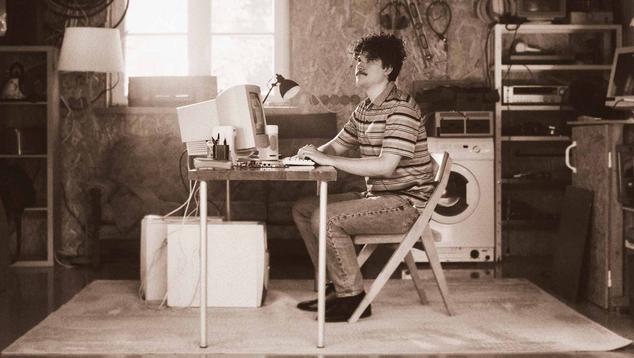
In 1998, when desktop computers dominated homes and dial-up internet seemed cutting-edge, Americans began to envision a future where online shopping would replace trips to the mall and working from home would become increasingly common. At the same time, they harbored significant worries about the future: a rise in terrorism, more wars and environmental disasters, and trouble finding and keeping good jobs.
In science and medicine, the possibilities felt expansive. In 1996, Dolly the Sheep had been cloned, and Viagra was approved by the FDA two years later. Americans expected major advances by 2025, whether in terms of living longer, curing serious diseases or improving access to medical care. But most also foresaw more difficulty in affording healthcare and expected a deadly new disease to emerge.
Americans anticipated progress on race relations and broader representation in the Oval Office, but they also predicted higher crime rates and an erosion of moral values.
Some of these predictions have materialized, others have not, and others are subject to interpretation.
Explore other topics in the Gallup Vault. Stay up to date with the latest insights by following @Gallup on X and on Instagram.