GALLUP NEWS SERVICE
PRINCETON, NJ -- Gallup's recent annual poll on the mood of the country shows that most people have a positive assessment of their personal lives today. They are a little more positive about their current situation than their situation five years ago, and they are much more positive about where they will be five years from now. These views are highly correlated with income and age.
The poll, conducted Jan. 9-12, asked respondents to place themselves on a ladder of life, with the top step being "10" and the lowest step being "0." The average step where people place themselves today is 6.8, compared with an average of 6.6 for five years ago and 7.7 looking five years into the future.
A comparison of the number of people who place themselves on the top three steps (steps 8, 9, and 10) finds a similar pattern, with 37% placing themselves that high five years ago, 41% today, and 64% in the future.
The results also show that people's assessments of their personal lives are highly related to income and age, with little differences by gender. People who attend religious services frequently are a little more positive than people who don't.
|
Percentage of Americans Placing Themselves on the |
|||
|
Past |
Present |
Future |
|
|
% |
% |
% |
|
|
Overall |
37 |
41 |
64 |
|
Income |
|||
|
<$30K |
39 |
26 |
52 |
|
$30K-<$50K |
32 |
30 |
58 |
|
$50K-<$75K |
34 |
44 |
65 |
|
$75K+ |
38 |
60 |
79 |
|
Age |
|||
|
18-29 |
32 |
46 |
83 |
|
30-49 |
28 |
37 |
73 |
|
50-64 |
40 |
41 |
54 |
|
65+ |
53 |
43 |
41 |
|
Gender |
|||
|
Male |
34 |
40 |
63 |
|
Female |
39 |
42 |
63 |
|
Church Attendance |
|||
|
Weekly |
40 |
47 |
69 |
|
Almost weekly/Monthly |
30 |
42 |
64 |
|
Less often |
37 |
37 |
60 |
In general, people are more positive about the present than the past, and more positive about the future than the present. But for lower-income Americans, and for Americans aged 65 and over, that pattern does not prevail.
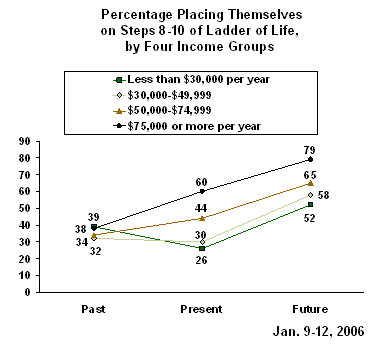
The lowest-income Americans (less than $30,000 annual income) are more pessimistic today than they were five years ago, though they are more optimistic about the future than the present. Thirty-nine percent of these people would place themselves on steps 8 to 10 five years ago, compared with just 26% who say they are that high on the ladder now. The next higher income group, $30,000 to less than $50,000 annual income, shows little difference between five years ago (32% on steps 8 to 10) and now (30%). More than a majority of each income group expects to be on steps 8 to 10 five years from now.
By contrast, the two higher-income groups both show a strong positive pattern from the past to the present to the future, with 79% of the highest-income group and 65% of the second-highest income group expecting to be on the top three steps of the ladder in five years.
Among people 65 and older, the pattern of evaluation runs directly contrary to the general pattern. Fifty-three percent of these people say that five years ago they were on the top three steps of the ladder, the highest percentage of the four age groups. But today, 43% say they are on steps 8 to 10, and five years from now, 41% expect to be there - the lowest percentage of the four age groups.
People in the pre-retirement age group (50 to 64) also manifest a different pattern from the norm. Today, 41% say they are on steps 8 to 10, virtually the same as five years ago (40%). However, 54% expect to be there in five years, showing an increase in optimism for the future, despite showing no recent improvement over the past.
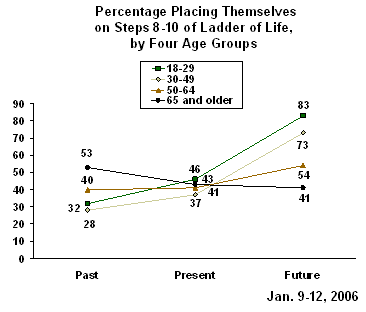
The two age groups of people under 50 are much more positive about the future than the present. They are also significantly more positive about the present than the past.
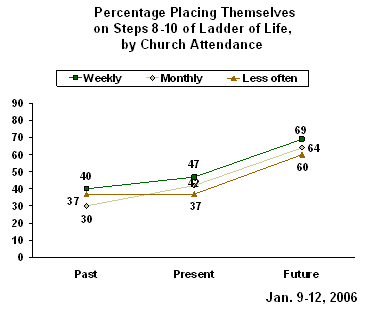
Apart from age and income, church attendance is also positively related to how well people feel about their lives, though the correlation is only a modest one. Whether rating their lives in the past, the present, or the future, frequent church-goers are a little more likely than less frequent church-goers to place themselves on steps 8 to 10 of the life ladder.
Survey Methods
Results are based on telephone interviews with 1,003 national adults, aged 18 and older, conducted Jan. 9-12, 2006. For results based on the total sample of national adults, one can say with 95% confidence that the maximum margin of sampling error is ±3 percentage points. In addition to sampling error, question wording and practical difficulties in conducting surveys can introduce error or bias into the findings of public opinion polls.
22. Again, please think about a picture of a ladder. Suppose that the top of the ladder represents the best possible life for you, and the bottom represents the worst possible life for you. If the top step is "10" and the bottom step is "0", on which step of the ladder do you feel you personally stand at the present time?
|
Worst 0 |
1 |
2 |
3 |
4 |
5 |
6 |
7 |
8 |
9 |
Best 10 |
DK/ REF |
6-10 |
|
|
|
% |
% |
% |
% |
% |
% |
% |
% |
% |
% |
% |
% |
% |
||
|
2006 Jan 9-12 |
* |
* |
2 |
3 |
6 |
16 |
13 |
20 |
24 |
9 |
8 |
* |
74 |
6.8 |
|
2005 Jan 3-5 |
1 |
1 |
* |
3 |
5 |
17 |
14 |
22 |
23 |
7 |
6 |
1 |
72 |
6.7 |
|
2004 Jan 12-15 |
1 |
* |
1 |
3 |
7 |
15 |
16 |
23 |
21 |
9 |
4 |
* |
73 |
6.6 |
|
2003 Jan 13-16 |
* |
1 |
2 |
2 |
6 |
15 |
12 |
24 |
23 |
8 |
6 |
1 |
73 |
6.8 |
|
2002 Jan 7-9 |
* |
0 |
1 |
2 |
6 |
18 |
16 |
22 |
20 |
9 |
6 |
* |
73 |
6.7 |
|
2001 Jan 10-14 |
* |
* |
1 |
2 |
4 |
13 |
16 |
22 |
23 |
10 |
8 |
1 |
79 |
7.0 |
|
1998 Apr 23-May 31 |
1 |
* |
* |
2 |
4 |
13 |
12 |
24 |
27 |
8 |
9 |
* |
80 |
7.1 |
|
1985 Mar 8-11 |
0 |
1 |
2 |
5 |
7 |
18 |
16 |
20 |
19 |
6 |
6 |
* |
67 |
6.4 |
|
1979 Aug 10-13 |
1 |
1 |
1 |
5 |
6 |
19 |
13 |
18 |
18 |
8 |
8 |
2 |
65 |
6.5 |
|
1976 Jun |
1 |
1 |
2 |
3 |
6 |
19 |
13 |
17 |
17 |
8 |
13 |
* |
68 |
6.7 |
|
1974 Apr |
2 |
3 |
2 |
3 |
6 |
20 |
12 |
16 |
18 |
8 |
10 |
* |
64 |
6.4 |
|
1972 May |
1 |
1 |
2 |
4 |
7 |
23 |
13 |
15 |
16 |
8 |
10 |
* |
62 |
6.4 |
|
1971 Jan 8-11 |
1 |
1 |
2 |
3 |
6 |
21 |
11 |
19 |
17 |
8 |
9 |
2 |
64 |
6.5 |
|
1964 Sep |
1 |
1 |
1 |
2 |
4 |
21 |
14 |
19 |
16 |
7 |
13 |
1 |
69 |
6.7 |
|
* = Less than 0.5% |
||||||||||||||
23. On which step would you say you stood five years ago?
|
Worst 0 |
1 |
2 |
3 |
4 |
5 |
6 |
7 |
8 |
9 |
Best 10 |
DK/ REF |
6-10 |
|
|
|
% |
% |
% |
% |
% |
% |
% |
% |
% |
% |
% |
% |
% |
||
|
2006 Jan 9-12 |
* |
1 |
3 |
4 |
7 |
15 |
15 |
17 |
19 |
9 |
9 |
* |
69 |
6.6 |
|
2005 Jan 3-5 |
1 |
1 |
3 |
4 |
9 |
20 |
13 |
16 |
17 |
9 |
6 |
1 |
61 |
6.3 |
|
2004 Jan 12-15 |
1 |
* |
3 |
8 |
11 |
18 |
13 |
16 |
19 |
6 |
5 |
* |
59 |
6.1 |
|
2003 Jan 13-16 |
* |
2 |
4 |
6 |
9 |
17 |
15 |
16 |
18 |
6 |
6 |
1 |
61 |
6.1 |
|
2002 Jan 7-9 |
1 |
1 |
3 |
7 |
10 |
17 |
15 |
17 |
16 |
7 |
6 |
1 |
61 |
6.2 |
|
2001 Jan 10-14 |
2 |
2 |
3 |
7 |
11 |
19 |
13 |
14 |
15 |
6 |
7 |
1 |
55 |
5.9 |
|
1998 Apr 23-May 31 |
3 |
3 |
5 |
8 |
11 |
19 |
11 |
13 |
13 |
5 |
8 |
1 |
50 |
5.7 |
|
1985 Mar 8-11 |
2 |
3 |
5 |
9 |
10 |
19 |
14 |
13 |
13 |
6 |
6 |
* |
52 |
5.7 |
|
1979 Aug 10-13 |
2 |
3 |
5 |
9 |
11 |
18 |
13 |
11 |
13 |
7 |
8 |
* |
52 |
5.8 |
|
1976 Jun |
4 |
3 |
6 |
9 |
11 |
16 |
11 |
11 |
12 |
7 |
10 |
* |
51 |
5.7 |
|
1974 Apr |
4 |
4 |
7 |
11 |
11 |
17 |
11 |
11 |
10 |
6 |
8 |
* |
46 |
5.4 |
|
1972 May |
4 |
4 |
6 |
8 |
12 |
19 |
11 |
12 |
11 |
6 |
7 |
* |
47 |
5.5 |
|
1971 Jan 8-11 |
2 |
3 |
5 |
9 |
10 |
18 |
12 |
13 |
11 |
7 |
9 |
1 |
52 |
5.8 |
|
1964 Sep |
2 |
3 |
5 |
8 |
10 |
19 |
13 |
11 |
11 |
6 |
11 |
1 |
52 |
5.8 |
|
* = less than 0.5% |
||||||||||||||
24. And just your best guess, on which step do you think you will stand in the future, say about five years from now?
|
Worst 0 |
1 |
2 |
3 |
4 |
5 |
6 |
7 |
8 |
9 |
Best 10 |
DK/ REF |
6-10 |
|
|
|
% |
% |
% |
% |
% |
% |
% |
% |
% |
% |
% |
% |
% |
||
|
2006 Jan 9-12 |
1 |
1 |
1 |
2 |
2 |
9 |
5 |
12 |
25 |
19 |
20 |
2 |
81 |
7.7 |
|
2005 Jan 3-5 |
* |
* |
2 |
1 |
4 |
10 |
7 |
14 |
23 |
19 |
18 |
2 |
81 |
7.6 |
|
2004 Jan 12-15 |
* |
1 |
1 |
2 |
3 |
6 |
5 |
14 |
28 |
20 |
19 |
1 |
86 |
7.8 |
|
2003 Jan 13-16 |
1 |
1 |
1 |
2 |
2 |
6 |
6 |
14 |
23 |
18 |
24 |
2 |
85 |
7.8 |
|
2002 Jan 7-9 |
* |
1 |
* |
1 |
4 |
7 |
5 |
14 |
26 |
21 |
20 |
1 |
86 |
7.9 |
|
2001 Jan 10-14 |
1 |
* |
1 |
1 |
1 |
4 |
5 |
12 |
26 |
24 |
23 |
2 |
90 |
8.1 |
|
1998 Apr 23-May 31 |
1 |
* |
* |
1 |
2 |
5 |
4 |
10 |
24 |
22 |
26 |
5 |
86 |
8.2 |
|
1985 Mar 8-11 |
1 |
1 |
2 |
2 |
3 |
7 |
7 |
12 |
23 |
18 |
18 |
6 |
78 |
7.6 |
|
1979 Aug 10-13 |
1 |
2 |
1 |
3 |
3 |
9 |
6 |
12 |
20 |
18 |
19 |
6 |
75 |
7.5 |
|
1976 Jun |
2 |
1 |
2 |
2 |
2 |
5 |
6 |
12 |
19 |
18 |
23 |
8 |
78 |
7.7 |
|
1974 Apr |
2 |
2 |
2 |
3 |
2 |
7 |
6 |
12 |
18 |
16 |
21 |
9 |
73 |
7.4 |
|
1972 May |
1 |
1 |
2 |
2 |
3 |
7 |
6 |
11 |
20 |
17 |
21 |
9 |
75 |
7.6 |
|
1971 Jan 8-11 |
2 |
1 |
2 |
2 |
2 |
7 |
7 |
11 |
18 |
15 |
19 |
14 |
70 |
7.5 |
|
1964 Sep |
1 |
0 |
1 |
1 |
2 |
6 |
7 |
15 |
20 |
15 |
22 |
10 |
79 |
7.8 |
|
* = Less than 0.5% |
||||||||||||||