LONDON — Ahead of the 23rd anniversary of the U.S. invasion of Iraq, Gallup trends show long-term increases in Iraqis’ feelings of safety and confidence in institutions. With those foundations increasingly secure, questions about the economy and work dominated the national psyche in 2025.
But recent events in the Middle East — U.S. and Israeli strikes on Iran, the killing of Iranian Supreme Leader Ali Khamenei, and retaliatory strikes across the region — cast a shadow over whether Iraq's relative stability can endure the wider regional conflict.
One of the World’s Biggest Safety Turnarounds
Since 2009, Iraq has seen one of the biggest sustained increases in perceptions of safety anywhere in the world. In 2025, 81% of adults said they feel safe walking alone in their area at night, up from a low of 34% in 2009 after the peak of the sectarian civil war. That 47-percentage-point increase is one of the largest ever measured in the World Poll, and for the first time on record, slightly more Iraqis report feeling safe than the average for the Middle East and North Africa region (78%).
Iraq’s security environment has improved after many years of instability following the U.S.-led invasion in 2003, including rampant sectarian violence, civil war and the rise of the Islamic State group. Earlier this year, a United Nations coordinator described Iraq as a country “at peace with increased security,” unrecognizable compared with the early years of political transition after the toppling of Saddam Hussein.
Whether that description holds depends on what unfolds in the weeks and months ahead. Shortly after the strikes, Iran-aligned paramilitary groups in Iraq attacked a U.S. military base in Erbil, as well as a range of civilian and infrastructure targets. In response, U.S. and Israeli forces struck several of those same groups inside Iraq.
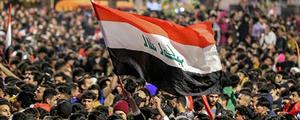
Security forces also fired tear gas at protesters in Baghdad who attempted to breach the U.S. Embassy. As regional hostilities intensify, Iraq is at risk of becoming a battleground for regional rivalries. For now, Iraq’s gains in public safety show how far it has come — and potentially how much it has to lose.
Confidence in Institutions Climbs
Steady improvements in feelings of safety have been accompanied by rising confidence in institutions. Over time, Iraqis have grown more trusting in the national military and local police, both reaching 82% in 2025. Confidence levels in the national judicial system, the government and financial institutions are all also higher than in recent years, each sitting above 50%. Public trust in the honesty of elections is somewhat lower, at 30%, but still roughly three times higher than in 2019, when only 11% felt elections were honest.
Iraq has taken several steps toward reforming its institutions in recent years, which — while not solely explaining them — do provide important context about the gains. The army has rebuilt over time after fighting the Islamic State group, new regulation has brought Iraq’s financial infrastructure more in line with global standards, and the coalition government that came to power in October 2022 after a year of deadlock has established more political stability than Iraq enjoyed in the two preceding decades.
Following Iraq’s November 2025 elections, the country is still forming a government. While Iran has long exerted influence over Iraqi politics, its recently weakened position could prompt political changes in Baghdad.
Economy and Work Are Top National Issues
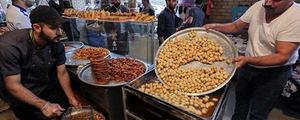
For the first time in 2025, Gallup asked people around the world to name the single biggest issue facing their country, in their own words. At least half of adults in Iraq name either the economy (28%) or work (24%) as the most important issue, both above the global averages (23% and 10%, respectively). Only 5% name safety and security, slightly below the global median of 7%.
The countries most likely to name safety and security as the top national issue in 2025 are those involved in major wars, such as Ukraine, Russia, Israel and the State of Palestine. In times and places of conflict and instability, safety and security tend to dominate national concerns. Where greater stability exists, more often than not, the economy is seen as the most important problem.
Iraq’s economy is heavily reliant on oil earnings, which account for about 90% of all government revenue. This makes Iraq’s economy highly vulnerable to external shocks affecting oil prices, which have risen sharply following the onset of the war and concerns over shipping in the Strait of Hormuz. Iran is Iraq’s main supplier of electricity, and bilateral trade between the two neighbors totals around $12 billion. Further instability in Iran puts Iraq’s economy at greater risk.
Iraqis Had Been Warming to Tehran, With Growing Sectarian Divide
Events in recent weeks have thrown Iraq’s increasing stability into question. In 2025, before the strikes on Iran, 36% of Iraqis approved of Tehran's leadership — significantly higher than in recent years, though still a minority view overall, with 64% disapproving. Iraqis now view Tehran in a similar light to Riyadh (32% approval), whose long-standing edge over Iran among Iraqi public opinion has eroded.
The rise in approval of Tehran is driven primarily by Shia Iraqis, 52% of whom approved in 2025, more than twice the rate among Sunni Iraqis (23%). That represents the biggest sectarian gap in approval of Iran’s leadership since Gallup consistently began tracking this question in 2022. Iraq is no stranger to sectarian division, and with Shia Iraqis already more positively disposed toward Tehran going into the current crisis, the prospect of further domestic tensions cannot be discounted.
Bottom Line
Twenty-three years after the U.S. invasion and subsequent turmoil, Iraq has taken meaningful steps toward stability. Perceptions of public safety continue to rise, and national institutions are earning greater levels of trust than at any point in recent memory.
But stability alone does not guarantee prosperity. The economy and unemployment weigh heavily on Iraq’s population, and deep-rooted perceptions of corruption persist, both of which have driven thousands of young Iraqis onto the streets in protest in recent years. The country’s economic dependence on oil remains a structural vulnerability in a region that is once again highly volatile.
With volatility comes a great deal of uncertainty. While not inevitable, swings in oil prices, sectarian fallout from Ali Khamenei’s killing, and a broader regional escalation could all pull Iraq back into a period of instability. Two decades of hard-won progress have brought Iraq to a more hopeful place. Whether it can stay there may ultimately be determined by forces outside of Baghdad’s control.
Stay up to date with the latest insights by following @Gallup on X and on Instagram.
For complete methodology and specific survey dates, please review Gallup's Country Data Set details. Learn more about how the Gallup World Poll works.