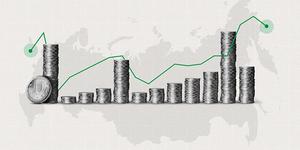
LONDON — With no end to Russia’s war with Ukraine in sight, a record-high 60% of Russians interviewed between March and May said their local economic conditions are getting worse. Less than half as many (27%) said things are getting better.
This marks the first time since 2006 that a majority of Russian adults have said their economy is getting worse. The previous highs were in 2020 (45%) and 2021 (50%) during the COVID-19 pandemic.
Between 2010 and 2016, the plurality of Russians — roughly 40% each year — were neutral about the trajectory of their local economy, volunteering that things were getting neither better nor worse. However, in recent years, only about one in 10 Russians have said their local economy is staying the same, and more have said the economy is either getting better or getting worse.
Russians also feel gloomy about their own living standards, with 56% in the latest poll saying their standard of living is getting worse. That’s the highest level of pessimism recorded yet and the first time in two decades that a majority of Russian adults have expressed this view.
The increasingly negative outlook comes as Russia’s wartime economy shows signs of slowing. Growth in recent years has been supported by high defense spending, but the government recently lowered its growth forecast for 2026 from 1.3% to 0.4%, despite higher global oil prices because of the Iran war. Labor shortages are also intensifying as military recruitment and defense production compete with the civilian economy for workers.
As the civilian economy weakens, higher military spending is needed to sustain economic output and employment. This dynamic makes Russia even more reliant on higher defense spending, making it harder to pull back from the war without triggering a further downturn.
Job Market Positivity Sinks
Russians’ views of the job market have deteriorated sharply this year. Thirty-five percent in the 2026 survey say now is a good time to find a job where they live, while 58% say it is a bad time.
The decline follows an unusually strong period for job market perceptions. A year after Russia’s full-scale invasion of Ukraine, perceptions of the job market improved sharply and remained elevated through last year. During this period, an average of 51% of Russians said it was a good time to find a job where they live, the highest level Gallup had recorded in two decades and significantly higher than any reading since the global financial crisis of 2008 and 2009.
Unemployment in Russia remains low, primarily because of labor shortages linked to the war and mass mobilization rather than because of economic strength. Historically, Russians’ views of their job market have typically tracked closely with the unemployment rate — but perceptions are worse than conditions in 2026, reflecting wider economic pessimism across the country.
Biggest Year-Over-Year Declines in Confidence in Institutions, Media Freedom
This year, the public’s confidence levels in the military, national government and the honesty of elections have suffered their largest single-year declines on record. Confidence in the military has dropped by 13 percentage points to 66%, confidence in the government by 14 points to 53%, and confidence in the honesty of elections by 16 points to 40%.
Perceptions of media freedom have fallen even further, declining 25 points from a trend high of 59% to a new low of 34%. The sudden downturn in trust in institutions and views of media freedom — after years of stability in the wake of the 2022 invasion — demonstrates that Russians’ discontent is not limited to the economy.
Bottom Line
Moscow’s pared-back Victory Day parade in May offered a visible sign that Russia remains far from victorious in Ukraine. Shortly after the full-scale invasion, when Russia hoped to take Kyiv in a matter of days, Russian public opinion rallied around the flag, and people grew considerably more positive about many areas of life.
More than four years later, pessimism has replaced that initial optimism. Pessimism about the economy and living standards has reached a record high. Job market optimism has sunk, as has confidence in key national institutions and perceptions of media freedom.
Russian ministers have admitted publicly in recent months that the economy is overheating, with the effects now showing up in the public’s mood. The longer the war grinds on, the more it may test people's patience with the conflict and the sacrifices it demands.
Stay up to date with the latest insights by following @Gallup on X and on Instagram.
For complete methodology and specific survey dates, please review Gallup's Country Data Set details. Learn more about how the Gallup World Poll works.