WASHINGTON, D.C. — U.S. consumers expressed increased concern about the economy and jobs in November during a period that encompassed the final stretch of the nation’s longest federal government shutdown, significant stock market volatility and uncertainty about the nation’s labor market. Consumers also reported a sharply lower holiday spending estimate than they had forecast in October.
Economic Confidence Drops to 17-Month Low
Gallup’s Economic Confidence Index (ECI) fell seven points to -30 in November, the lowest since a -35 reading in July 2024. The decline reflects slightly worsening views on both components of the index: Americans’ ratings of current economic conditions (as excellent, good, only fair or poor) and their perceptions of whether the economy is getting better or getting worse.
- Twenty-one percent of U.S. adults in November, down slightly from 24% in October and the lowest percentage since March, described current economic conditions as excellent or good. By contrast, 40% now rate current conditions as poor, compared with 37% in October.
- Fewer than three in 10 adults in the latest poll, 27%, said the economy is getting better, four percentage points below the October reading and the lowest since July 2024. About two-thirds (68%) said the economy is getting worse.
The ECI has a theoretical range of +100 to -100. The all-time high in Gallup’s trend since 1992 is +56, recorded in January 2000, and the lowest is -72, in October 2008. More recently — within the past five years — the high point was +41 in February 2020, and the low was -58 in June 2022.
After two years of gradual improvement from that inflation-fueled slump, the index stood at -26 in October 2024. It then increased to -14 in December, mainly driven by Republicans’ newfound optimism about the economy after President Donald Trump was elected to a second term, and was -19 when former President Joe Biden left office in January. Since then, the index ranged from -14 to -22 throughout most of 2025 before dipping to -23 in October and to -30 last month.
Confidence in Labor Market Also Erodes
Americans’ views on the labor market also worsened in November, with 33% saying it is a good time to find a quality job and 63% calling it a bad time. Optimism about jobs is down eight points from the prior measure in August and is the most negative Gallup has recorded since the closing days of Trump’s first term, in January 2021 during the pandemic.
The latest poll was conducted Nov. 3-25, with about two-thirds of the interviews conducted before the federal government shutdown ended on Nov. 12. Most of the interviews were also conducted before the release of the delayed September jobs report on Nov. 20, which showed stronger-than-expected employment growth in the U.S. but also a slight rise in the unemployment rate, to 4.4%
Holiday Gift Budgets Contract by Record Amount
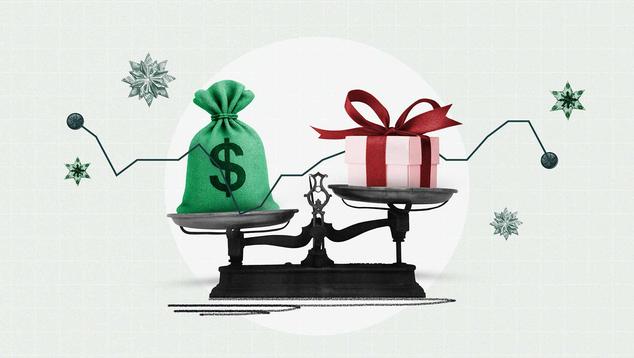
Along with their heightened economic anxiety in November, consumers expressed much less of an appetite for holiday gift spending compared with earlier in the season. Americans now estimate they will spend an average $778 on Christmas or other holiday gifts, down $229 from October’s $1,007. The figure is also significantly below last year’s November estimate of $1,012.
Consumers often trim their holiday spending plans as the season progresses, including by more than $40 in 11 of the 19 years since 2006 for which Gallup has both October and November readings. It has only increased by at least $40 in four. However, this year’s midseason decline is the largest Gallup has recorded, surpassing the $185 drop seen during the 2008 global financial crisis.
Both high- and low-income Americans have pulled back considerably in their intended spending on gifts since October, while middle-income earners’ estimate is about the same.
- Americans in households earning $100,000 or more now predict spending $1,230 on holiday gifts, down from $1,479 in October and $1,578 in November 2024.
- Those in households earning less than $50,000 have cut their projected spending to $384, down from $651 in October and $607 last November.
- Middle-income earners currently predict spending an average of $842, similar to their October estimate of $847 and last year’s $839.
Consumers Still Reluctant to Say They Will ‘Spend Less’
At the same time, a question asking Americans how the amount they plan to spend on gifts this year compares with their outlays in 2024 shows consumers aren’t fully embracing their own spending caution.
Despite the historic contraction in the predicted holiday spending dollar amount, only 29% of Americans say they plan to spend less than last year. This reading is up modestly from 23% in October and from November 2024, but well below the 46% recorded in November 2008. Fewer say they will spend more (14% now vs. 19% in October and last year), but the majority of Americans (53%) still say they will spend “about the same.”
Bottom Line
Consumer attitudes about the job market and overall economy slipped in November to their worst levels in over a year, seemingly chilling their gift-buying mood. Though now over, the protracted government shutdown, which delayed pay for federal workers and disrupted key benefit programs, likely contributed to the dampened mood.
Consumers’ latest average holiday spending estimate of $778 represents the sharpest year-over-year decline Gallup has recorded, even exceeding 2008 when holiday retail sales actually contracted. Yet, with far fewer Americans today than in 2008 saying they will spend less than last year, it’s possible they aren’t as shaken as the dollar figure conveys.
Retailers may also hope that with the shutdown over, consumer attitudes and enthusiasm for holiday spending will rebound to their prior levels. The public would still be in a subpar economic state of mind — one that has contributed to Trump’s anemic job approval ratings since June. But it could be enough to prevent the 2025 holiday season from turning out like 2008.
Stay up to date with the latest insights by following @Gallup on X and on Instagram.
Learn more about how the Gallup Poll Social Series works. View complete question responses and trends (PDF download).