This article launches the "Gallup World Poll at 20" series, examining two decades of global trends using Gallup World Poll data collected in more than 140 countries since 2006. Additional articles in the series will be published throughout 2026.
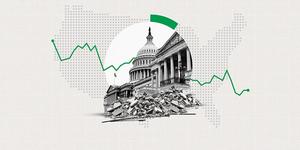
LONDON — Nearly two decades after the 2008 global financial crisis, confidence in banks is back and stronger than before in countries that experienced major financial-sector losses and economic decline. In 2025, across 25 countries most affected by the crisis, a median of 63% expressed confidence in their financial institutions and banks, marking a new high.
The recovery has taken time. Before the crisis took hold, confidence in banks in these countries stood at 57%. It fell sharply to 40% in 2009 after financial institutions collapsed, and it reached a record low of 37% in 2012 amid the eurozone crisis. Trust in banks rose gradually after that, reaching 56% in 2020, where it remained until rising notably last year.
The loss of confidence in banks after the global financial crisis was concentrated in countries with large financial sectors and substantial exposure to the crash. The 25 countries looked at for this report were those that experienced the largest financial-sector losses. These losses are defined as declines in stock-market capitalization as a share of GDP between 2006 and 2009, as well as where GDP contracted after the crisis.
By contrast, countries with smaller financial sectors and less exposure to the crisis did not experience the same loss of trust in their financial institutions. Confidence in banks in the rest of the world increased between 2008 and 2011. The recent rise among the 25 most affected countries means that, for the first time since the crisis, they are now as confident in their financial institutions as the rest of the world is.
Banks Reclaim Status as One of Most Trusted Institutions
Before the global economic crisis, banks were among the most trusted national institutions in these 25 countries. Only the military elicited more confidence. That changed in 2009, when trust in banks sank to levels closer to those of the least trusted institution: the national government.
For the next decade, banks and governments closely tracked each other at the bottom of the trust rankings. As confidence in financial institutions has gradually improved, so has banks’ standing among institutions. By 2025, they had reclaimed their former position among the more trusted national institutions such as electoral systems.
What Drove the Recovery in Trust in Banks?
After the crash, several countries introduced reforms and more regulation to their financial systems, including higher capital requirements and enhanced supervision. Among many that suffered most — such as Ireland, Greece and Portugal — these reforms often came with European Union financial conditions and requirements.
However, across these 25 countries, the recovery in people’s trust could stem from broader economic positivity rather than regulatory reform alone. The rise in confidence in banks has closely matched improvements in how comfortable people feel living on their household income.
Confidence in Banks Has Returned in Different Ways Across 25 Countries
Eight countries — Czech Republic, Japan, United Arab Emirates, Argentina, Croatia, Germany, Italy and Mexico — all recorded higher levels of trust in banks (by at least five percentage points) in 2025 than they did at their precrash peaks in 2006 or 2007. A further seven countries are within five points of — and therefore broadly in line with — their precrash levels, including some that took the biggest economic hits, like Ireland, Austria, Hungary and Slovenia.
In nine countries, however, levels of confidence remain at least five points lower in 2025 than before the crash. These include Belgium, Spain, Greece and the United States, all of which posted 2025 scores at least 14 points below their precrash peaks.
Trust in financial systems did not collapse and rebuild in a uniform way. Ireland stands out for experiencing the world's largest-ever single-year decline in trust in banks (-43 points between 2008 and 2009), and a global-low figure of 13% in 2011, which has since climbed 51 points to 64%. This represents a significant turnaround for a country whose banking sector lost nearly 75% of its stock market value and whose economy contracted 9% after the crash.
Several countries — including the United Kingdom, United States, Portugal, Germany and Austria — have followed broadly similar trends in their recoveries in trust, whereas Greece, Hungary, Belgium and Spain all exhibit more unique trends. This shows how varied the recovery has been across the world and how the financial crash did not affect every country at the same time or in the same way.
Why Trust in Banks Matters
Regardless of what drove the recovery, understanding public confidence in banks is important because trust underpins the financial system. If people don’t trust banks, and they withdraw their money, it can trigger bank runs and wider panic. The more trust there is in the system, the more willing people are to save and invest. Trust keeps money flowing through the financial system and helps support growth.
Data from the Gallup World Poll support this relationship. While many factors influence economic growth, public confidence in financial institutions shows a positive relationship to GDP growth. This connection is particularly strong in low- and lower-middle-income countries, where trust in banks has a much clearer relationship to economic growth.
Bottom Line
It has taken nearly two decades to restore trust in the financial system to precrash levels across nations that suffered the most severe losses. In most cases, confidence has recovered to or exceeded previous highs.
Understanding public confidence in banks is important because trust underpins the wider economy and is tied to economic performance. Although trust has recovered, disentangling the role of structural reforms from broader economic recovery is challenging, especially because confidence in banks tracks closely with perceptions of subjective household income in these same countries.
The test will be whether banks can retain these levels of confidence when the global financial system faces its next shock. Only that will reveal if trust has been rebuilt on a strong foundation of institutional reform, or on more temporary scaffolding of wider economic optimism and fading memories.
Stay up to date with the latest insights by following @Gallup on X and on Instagram.
For complete methodology and specific survey dates, please review Gallup's Country Data Set details. Learn more about how the Gallup World Poll works.