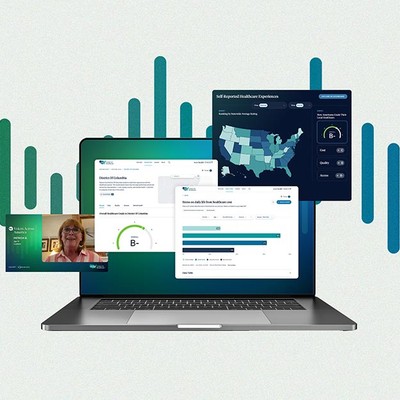
Editor’s Note: This research was conducted in partnership with West Health through the West Health-Gallup Center on Healthcare in America, a joint initiative to report the voices and experiences of Americans within the healthcare system.
WASHINGTON, D.C. — For the first time in five years, fewer than half of Americans can consistently afford healthcare. According to the latest data from the West Health-Gallup Affordability Index, just 49% of U.S. adults are now classified as “Cost Secure,” meaning they can afford access to quality care and have been able to pay for visits and prescriptions in recent months.
The share of Americans who are Cost Secure has fallen seven percentage points from 2021 (56%), when measurement began, and is in steady decline from its peak of 61% in 2022. Between 2024 and 2025 alone, an estimated 2.8 million Americans dropped out of the Cost Secure category. Notably, these latest findings reflect conditions prior to the expiration of the enhanced ACA subsidies.
West Health and Gallup developed the Healthcare Affordability Index in 2021. Drawing on self‑reported experiences from nationally representative surveys, the Index categorizes individuals into one of three groups based on their ability to afford and access needed care using the following criteria:
- Cost Secure individuals say they have access to quality, affordable care and have recently been able to pay for both needed care and medicine (49% of U.S. adults in 2025).
- Cost Insecure individuals say they lack access to quality, affordable care or have recently been unable to pay for either needed care or medicine (41% of U.S. adults in 2025).
- Cost Desperate individuals say they lack access to quality, affordable care and have recently been unable to pay for both needed care and medicine (10% of U.S. adults in 2025).
The latest findings are from an Oct. 27-Dec. 22, 2025, study conducted by the West Health-Gallup Center on Healthcare in America. The study included a nationally representative sample of 5,660 adults aged 18 and older via the Gallup Panel and used both web and mail surveys.
The new data largely extend last year’s downward trends, with continued declines in affordability evident among Black and Hispanic adults. Currently, just 38% of Black adults and 32% of Hispanic adults are classified as Cost Secure, compared with 55% of White adults. Since 2021, these gaps have consistently widened, with cost security declining more dramatically among Black (-16 percentage points) and Hispanic (-19 points) adults than among White adults (-3 points).
Americans Struggle to Afford Healthcare Across Income Levels
Although the percentage of U.S. adults classified as Cost Secure is greater among those with higher household income, substantial shares of middle-income ($48,000 to $119,999 annual income) and upper-middle-income ($120,000 to $179,999) households are not — and this share increased from 2024 to 2025.
Even among households earning six figures annually, affordability gaps appear. About a third of U.S. households with incomes between $120,000 and $179,999 per year are not Cost Secure, nor are one in five respondents living in households earning $180,000 or more.
Sharp Decline in Healthcare Affordability for Younger and Older Adults
Adults aged 18 to 29 have experienced the sharpest decline in healthcare affordability since 2021, with the share classified as Cost Secure falling from 46% to 32%. This group also exhibited one of the largest year-over-year declines between 2024 and 2025, decreasing by seven percentage points.
Adults aged 65 and older, who are typically covered by Medicare, remain the most likely to be Cost Secure, but this group has also seen meaningful declines. The share of Cost Secure older adults fell from 73% in 2021 to 61% in 2025. Similar to young adults (those aged 18 to 29), those 65 and older showed a substantial year-over-year decline, from 69% in 2024 to 61% in 2025.
Affordability Gaps Higher for Those With Chronic and Mental Health Conditions
On average, Americans with chronic conditions are significantly less likely to be Cost Secure than those without any chronic conditions, and for certain diagnoses, the gap is substantial. Only 34% of adults with COPD are Cost Secure, as are just 38% of adults with compromised immune systems, reflecting wider affordability gaps for those facing conditions which often require intensive, expensive and ongoing medical care to manage.
People with mental health conditions are also more likely to struggle with healthcare affordability. Just 39% of those with anxiety and 37% of those with depression are Cost Secure, meaning that more than six in 10 are struggling to pay for healthcare services and prescriptions. These affordability gaps may, in turn, impact their ability to manage these conditions.
Even after accounting for key demographic factors associated with healthcare affordability, including age, gender, race/ethnicity and income, individuals reporting chronic conditions are more likely to report struggling to afford healthcare than those without these conditions.
Largest Gender Gaps in Healthcare Affordability to Date
The percentage of women who are Cost Secure has trailed that of men since measurement began in 2021, averaging about nine points lower between 2021 and 2024. In 2025, this gap widened to 15 percentage points, the largest difference so far.
Healthcare affordability has declined more sharply among women since 2022, with the steepest drop occurring between 2024 and 2025, when the share classified as Cost Secure fell from 48% to 42%.
Concerns About Affording Healthcare in the Year Ahead Reach New High
A growing share of Americans are worried about their ability to pay for healthcare in the year ahead, reaching the highest level recorded since tracking began in 2021.
Concern about affording prescription drugs has risen steadily, climbing from 30% in 2021 to 42% in 2025. Worry about paying for needed healthcare services has followed a similar pattern, rising from 42% to 51% over the same period, underscoring a broad and increasing sense of financial strain tied to healthcare costs.
Implications
For the first time since measurement began in 2021, fewer than half of Americans are classified as “Cost Secure,” meaning they can consistently afford the care they need. Amid an increasingly challenging economic environment, this steady erosion of healthcare affordability in recent years suggests that rising costs are continually outpacing households’ ability to pay.
Although inflation and other cost-of-living pressures likely contribute, trends within the U.S. healthcare system also play an important role. In recent years, health spending has generally increased faster than both inflation and wage growth over time. For example, healthcare spending reached $5.3 trillion — or $15,474 per person — in 2024, representing 7.2% growth from the previous year, while inflation rose by less than half that amount (2.9%).
Healthcare prices also continue to rise. Overall prices increased by about 2.7% in 2023 and 3.4% in 2024, with hospital prices alone climbing 3.4% in 2024, the fastest rate of increase since 2007. Prescription drug spending has also grown considerably in recent years, rising about 7.9% in 2024, while insurance premiums have increased about 20% following the expiration of enhanced ACA subsidies.
Healthcare affordability pressures are being felt across the population. Younger adults, in particular, are finding it increasingly difficult, likely owed to the fact that people of this age often have less stable incomes, health insurance coverage or savings. However, declines in cost security among older adults (those 65 and older) indicate that affordability challenges persist despite participation in Medicare and other benefits.
Women, who have been disproportionately affected by COVID-era economic shifts, inflation and healthcare prices, have also seen more substantial declines, as have those who need frequent care or medications to manage chronic conditions. Even middle-income households are feeling the squeeze with no end in sight.
Taken together, declining cost security and rising concern about future affordability point to healthcare as a serious and significant financial challenge facing Americans in 2026. If left unaddressed, these trends risk contributing to delayed care, poorer health outcomes, increased medical debt, greater health system burden and, by extension, even more cost.
Explore more of the data and insights at westhealth.gallup.com.
Stay up to date with the latest insights by following @Gallup on X and on Instagram and @WestHealth on X and LinkedIn.