WASHINGTON, D.C. — After years of political and economic crises, Pakistanis are less negative, but they remain cautious about where their country and their lives are headed. While major challenges remain, Pakistanis in 2025 were more positive about their economy, their leadership and their wellbeing than they had been in years.
Last year, just over three in 10 Pakistanis (31%) said their living standards were getting better, while 41% said they were getting worse. Although views are still more negative than positive, they have improved since 2023, when a record-low 15% said their standard of living was getting better. At that time, only Lebanon and Afghanistan ranked lower than Pakistan for optimism about living standards.
Broader economic optimism follows a similar pattern. In 2025, 25% of Pakistanis said their local economy was getting better, more than double the level from 2024 (12%).
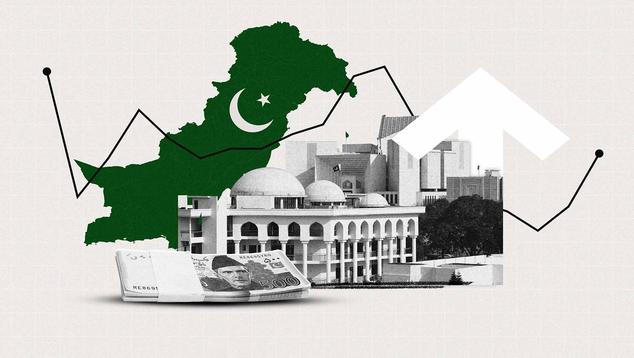
These somewhat brighter perceptions follow years of severe economic strain marked by surging inflation, sustained depreciation of the rupee, and an acute balance-of-payments crisis exacerbated by post-pandemic shocks. Recently, however, macroeconomic indicators have steadied. The currency has strengthened, foreign reserves have inched upward, and inflation — near 40% in May 2023 — has fallen below 6%.
Leadership Approval Up, Corruption Concerns Down
As Pakistanis’ economic perceptions have improved, so have their views of their leaders. Although approval of the country’s leadership remains low, it reached 36% last year — a 14-percentage-point increase from the previous year and the highest rating since 2020. However, 61% continued to disapprove.
Leadership approval has fluctuated sharply over the past decade. From 2014 to 2019, much of which was during Prime Minister Nawaz Sharif's PML-N government, approval consistently equaled or surpassed 50% amid economic expansion. Some analysts argue that policies such as artificially propping up the rupee contributed to later financial instability.
Imran Khan’s PTI government came to power in 2018 with strong support but implemented strict austerity measures tied to an International Monetary Fund bailout, straining household budgets. The COVID-19 pandemic further weakened the economy, and approval ratings fell sharply. Khan’s removal in a 2022 no-confidence vote — and the subsequent Pakistan Democratic Movement coalition government — ushered in a period of deep public pessimism, with leadership approval hitting 22% in 2024.
At the same time, perceptions of corruption have fallen from record highs in 2023, when Pakistan was tied at the top of the World Poll rankings for the perception that corruption was widespread throughout government. While these views remain in the majority — 71% for government, 63% for business — they are appreciably lower than in recent years.
Khan rose to political prominence on a strong anti-corruption agenda. Since his removal from office and subsequent imprisonment, public discussion about corruption has diminished at the same time that media freedom has weakened. This quieter environment may contribute to the perception that corruption has decreased, even if, according to the IMF, underlying conditions remain largely unchanged.
Wellbeing Improves in 2025
Pakistanis’ ratings of their lives also improved in 2025. For the first time since 2018, significantly more adults rate their lives positively enough to be classified as “thriving” than rate their lives poorly enough to be considered “suffering” (25% vs. 19%, respectively). In 2024, 11% were thriving, tying the record low for the country and among the lowest figures worldwide. The 14-point increase since then means Pakistan now ranks above average for wellbeing in South Asia.
The rise in wellbeing tracks closely with improvements in living standards and leadership approval, suggesting a broader shift in how people view their lives after several difficult years. Notably, improvements in subjective wellbeing are widespread. Men and women, young and old, urban and rural, poor and rich alike have seen similar increases in their levels of thriving in 2025.
Bottom Line
After a period marked by political upheaval, economic crises and devastating floods, Pakistan’s public mood appears to be cautiously improving. Economic optimism and perceptions of living standards are up; leadership approval has risen; and fewer people see corruption as widespread. Wellbeing indicators have also improved across demographic groups.
Pakistan has long experienced cycles of economic peaks and valleys. While today’s trajectory is pointed upward, sustaining this momentum will require continued stability, effective governance and broad-based economic gains that translate into better lives for more Pakistanis.
Stay up to date with the latest insights by following @Gallup on X and on Instagram.
For complete methodology and specific survey dates, please review Gallup's Country Data Set details. Learn more about how the Gallup World Poll works.