LONDON — Israelis head to the polls next week with their confidence in the honesty of elections at an eight-year low and divided along political lines. The election takes place as safety and security dominate national concerns, while leadership approval ratings of Israel’s closest ally, the United States, have dropped.
Israelis’ Election Doubts Grow
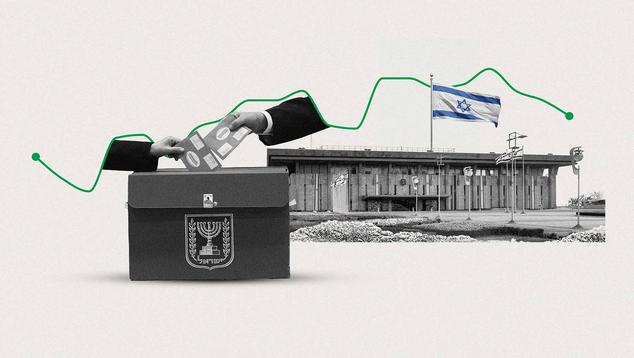
In Gallup polling completed in July, a majority of Israelis (56%) said they have confidence in the honesty of their country’s elections. This represents a 15-percentage-point decline from the high point of 71% in 2023, measured just weeks after the Oct.7 attacks. It is also one of the lowest levels of electoral confidence recorded in Israel since 2013, a few months after the Knesset election, but remains higher than at any point between 2006 and 2012.
Israel has held multiple elections in recent years, reflecting the difficulty of forming and maintaining governing coalitions within its fragmented political system. However, the coming election will be the first since the Oct. 7, 2023, Hamas attacks and the subsequent conflicts involving Israel in Gaza, Lebanon, Syria, Yemen and Iran.
Political Divides in Electoral Confidence Among Widest on Record
Israelis’ confidence in the honesty of elections has become increasingly tied to their approval of their country’s leadership. A clear majority of Israelis who approve of the country’s leadership say they have confidence in elections (82%), more than twice the percentage of those who disapprove (37%). This 45-percentage-point gap is as wide as Gallup has recorded in Israel, essentially tied with the gap in 2025. Two in five Israelis (40%) approve of national leadership this year, broadly in line with the average since 2020 (42%).
The confidence gap between Israelis who approve of and those who disapprove of national leadership has widened over the past two decades. In 2008, when 32% overall were confident in electoral honesty, there was a six-point difference in confidence between those approving and disapproving of leadership. By 2013, the gap had increased to 22 points as overall levels of confidence rose to 55%. Confidence remains near that level today, at 56%, yet the leadership approval gap underneath it has doubled to 45 points.
Safety and Security Dwarf All Other National Problems
Three years after the Oct. 7 Hamas attacks, safety and security still dominates public consciousness in Israel. When asked in an open-ended question to name the single biggest problem facing the country, more than half of Israelis (56%) mention an issue related to safety and security, such as conflict, war or public safety. This is more than five times the percentages naming the next highest national issues — the economy and politics, both at 10% — making security concerns more salient in Israel than in nearly any other country Gallup surveys.
Despite leading Israelis’ top-of-mind concerns, safety and security is not as salient an issue as it was in 2025 (71%), the first time Gallup asked the question in Israel and globally. The decline since then mainly reflects a drop among those who disapprove of their national leadership, down 18 points over the past year, compared with seven points among those approving of leadership.
Israelis’ Approval of U.S. Leadership Continues to Seesaw
A majority of Israelis (62%) approve of U.S. leadership in 2026, well above the United States’ global median, but down 14 points from last year.
Israeli attitudes toward Washington have fluctuated since the Hamas attacks of Oct. 7. In the weeks after the attacks, U.S. approval rose to a record-high 81% in 2023, up 16 points from the previous year, with most fieldwork taking place after President Joe Biden's unprecedented wartime visit to Israel. Approval then fell to 63% in 2024 as the war in Gaza intensified during Biden’s final year in office. Upon President Donald Trump’s return to the White House in 2025, Israeli approval of Washington rebounded 13 points to 76%, before falling by a similar amount again this year.
Such sustained volatility in ratings of U.S. leadership is rare globally. In the past two decades of the Gallup World Poll, only in Mexico between 2006 and 2010 has the rating swung by double digits in four consecutive years.
Bottom Line
The Oct. 27 election will take place just over three years after the Hamas attacks on Israel that triggered the war in Gaza and wider conflicts. Since then, much has changed in Israel’s domestic politics and in its relationships with other countries.
As Israelis prepare to vote, a majority remain confident in the honesty of their elections, but that confidence has declined and has become increasingly divided according to views of national leadership.
Stay up to date with the latest insights by following @Gallup on X and on Instagram.
For complete methodology and specific survey dates, please review Gallup's Country Data Set details. Learn more about how the Gallup World Poll works.