Editor’s Note: This research was conducted in partnership with West Health through the West Health-Gallup Center on Healthcare in America, a joint initiative to report the voices and experiences of Americans within the healthcare system.
Amid a landscape of elevated prices and a rising cost of living, Americans are feeling financial strain from both a range of daily expenses, such as groceries and utilities, and healthcare expenses.
The West Health-Gallup Affordability Index indicates that Americans’ ability to afford healthcare has deteriorated in recent years. In 2026, millions are expected to face higher insurance premiums and rising out-of-pocket costs as the expiration of some Affordable Care Act subsidies and upcoming cuts to Medicaid enrollment threaten coverage. Collectively, these shifts could leave millions of Americans without health insurance at a time when financial stress is already running high.
New findings from the West Health-Gallup Center on Healthcare in America reveal that some Americans are cutting back on a wide range of other expenses, including utilities, driving less to save gas money to pay for healthcare, and stretching out doses of prescription drugs or borrowing money.
Americans also report that healthcare expenses are influencing long-term planning and major life decisions. Even middle-income households are feeling the strain.
Healthcare Costs Impact Daily Life
In a nationally and state-representative survey of nearly 20,000 U.S. adults conducted from June through August 2025, roughly one-third of respondents — the equivalent of more than 82 million Americans — said they have made at least one trade-off with daily living expenses to afford healthcare.
These financial trade-offs are far more common among Americans who do not have health insurance, with 62% saying they have made at least one sacrifice to pay for healthcare, including 32% who have borrowed money and 24% who have prolonged medication. But even among those with insurance, close to three in 10 have made at least one sacrifice.
More than half of U.S. adults (55%) in households earning less than $24,000 per year report having made at least one trade-off in their daily life to pay for healthcare. The rate is slightly lower (47%) among adults in households earning $24,000 to less than $48,000. Still, a quarter of adults report making trade-offs in households earning $90,000 to less than $120,000 annually (equivalent to about 9 million U.S. adults), as do 11% in households earning $240,000 or more (roughly 1.6 million U.S. adults).
Americans who report being in poor or fair health are also more likely to report having made financial trade-offs to pay for their care or medicine, compared with those who report better health, suggesting that those who rely most on the healthcare system may be the most affected.
In 2025, the West Health-Gallup Center on Healthcare in America released state rankings based on Americans’ experiences with healthcare costs. The findings showed that residents in states ranking in the bottom 10 based on Americans' experiences with healthcare costs were substantially more likely to report making financial trade-offs to pay for care, compared with residents in states ranking in the top 10 — including nearly twice as likely to report stretching prescriptions or borrowing money. However, even in states ranking at the top of the list, such as Massachusetts, Rhode Island and Iowa, about one in 10 still report taking these actions.
Healthcare Costs Impact Life Decisions
In another nationally representative survey of 5,660 U.S. adults that the West Health-Gallup Center on Healthcare in America conducted in 2025 (October to December), Americans report having delayed a life event or change within the past four years due to healthcare costs, such as buying a new home or taking a vacation.
Nearly one in 10 adults — or an estimated 24 million Americans — say they have postponed their retirement due to healthcare costs. Twice as many (18%) report delaying a job change, while 14% report putting off buying a new home and 6% say they have postponed growing their family.
Postponing important life changes or goals due to healthcare costs is widespread even among middle-income households. About half of those in households earning between $48,000 and $180,000 per year report putting off at least one of these decisions in the past four years due to healthcare costs.
Even higher earners are affected. One-third of adults (34%) in households earning $180,000 to less than $240,000 per year and one in four (25%) in households earning at least $240,000 report delaying life events due to healthcare costs.
Implications
Americans are facing cost pressures from all sides. Nearly every aspect of daily life has become more expensive — and healthcare is no exception. Since 2021, West Health and Gallup have consistently found that tens of millions of people forgo needed care or prescription medications because of cost, a trend that continues to this day.
As living costs continue to rise, the effects of unaffordable healthcare are not only confined to medical expenses and decisions. These findings show that healthcare costs are shaping how Americans think about the way they live, work, and plan for the future. While low-income households and those who lack health insurance are most acutely affected, middle-income earners are far from insulated. Even many Americans with six-figure incomes report making financial sacrifices, underscoring that affordability challenges are systemic rather than isolated to any one group.
These findings underscore that healthcare affordability is not just a health issue: It is a significant economic and societal challenge that affects nearly every aspect of life. If the current trend continues, the situation is likely to worsen unless significant healthcare reforms are enacted.
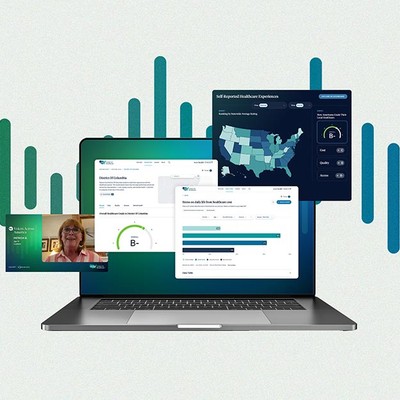
Explore more of the data and insights at westhealth.gallup.com.
Stay up to date with the latest insights by following @Gallup on X and on Instagram and @West Health on X and LinkedIn.